
Many people turn to St. John’s Wort because they want something "natural" for mild depression. It’s available over the counter, doesn’t require a prescription, and many users swear it helped them feel better. But here’s the part no one tells you: St. John’s Wort doesn’t just sit quietly in your system. It actively changes how your body handles prescription drugs - sometimes dangerously.
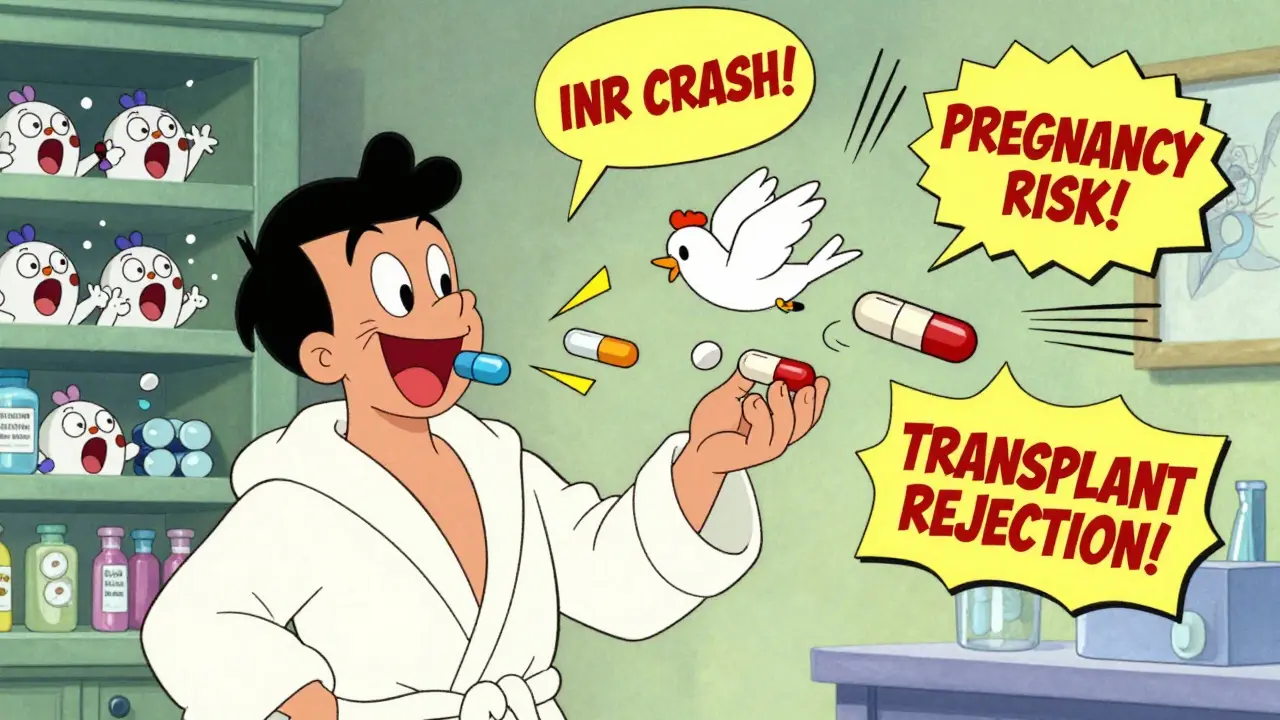
Imagine you’re on warfarin to prevent blood clots. Your INR is stable at 2.4, right in the safe zone. Then you start taking St. John’s Wort for low mood. Within days, your INR drops to 1.3. You don’t feel different. No bruising, no dizziness. But now your blood is clotting too fast. You could have a stroke or a pulmonary embolism - and your doctor has no idea why.
This isn’t a rare case. The Therapeutic Goods Administration (TGA) in Australia recorded over 20 such incidents between 1998 and 2000. And it’s not just warfarin. St. John’s Wort messes with a whole list of medications you might be taking - from birth control pills to antidepressants, from HIV drugs to transplant meds.
How St. John’s Wort Changes How Your Body Processes Drugs
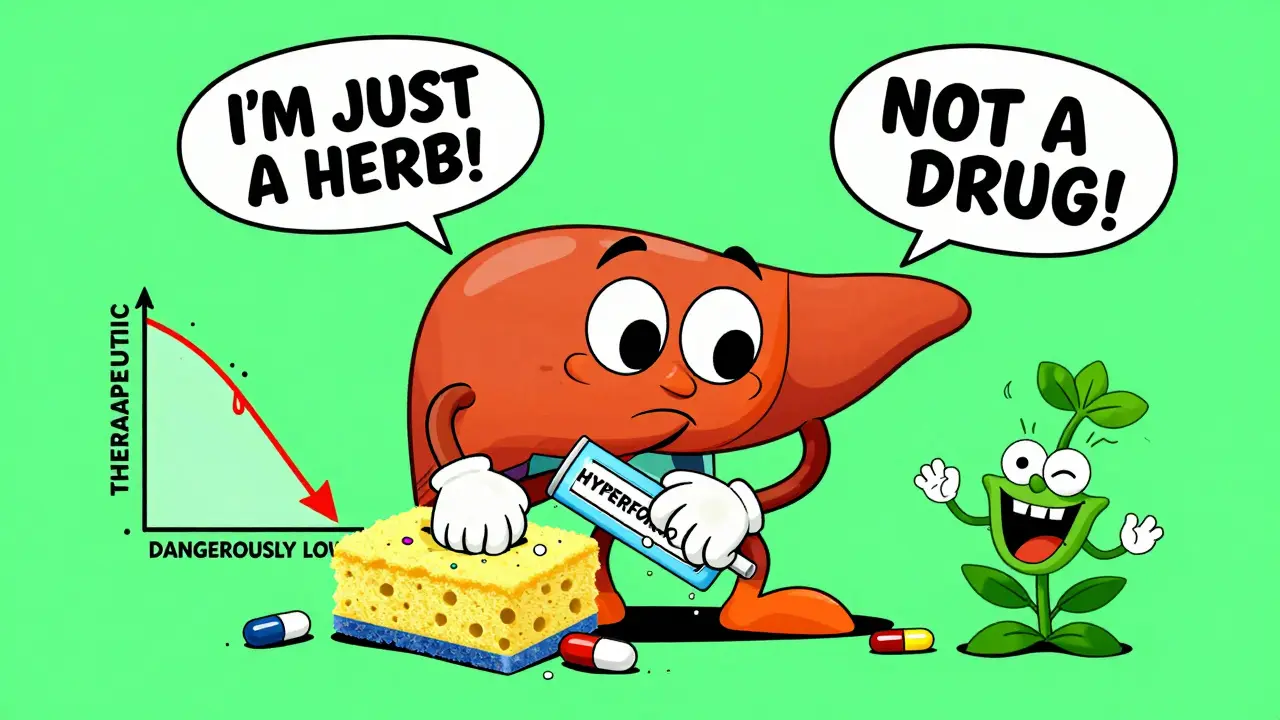
St. John’s Wort doesn’t work like a typical vitamin. Its active ingredients - hyperforin and hypericin - trigger your liver to speed up the breakdown of other drugs. Specifically, it turns on a group of enzymes called CYP3A4 and CYP2C9. These enzymes are like factory workers that clean out foreign substances from your bloodstream. When St. John’s Wort wakes them up, they start working overtime.
That means drugs like atorvastatin (Lipitor), simvastatin, cyclosporine, and many antidepressants get flushed out of your system faster than normal. Your body isn’t absorbing them properly. The result? The drug stops working.
Studies show St. John’s Wort can cut the blood levels of some medications by 30% to 50%. For example, one study found that after two weeks of taking 900 mg of St. John’s Wort daily, CYP3A4 activity jumped by up to 40%. That’s not a small change. That’s enough to make your HIV meds ineffective, your transplant organ reject, or your seizure medication fail.
And it’s not just metabolism. St. John’s Wort also affects P-glycoprotein, a protein that controls how drugs move in and out of your cells. This adds another layer of interference - especially for drugs like digoxin, which is used for heart failure. If digoxin levels drop by 25%, your heart could start failing again.
Medications That Can Become Dangerous or Useless with St. John’s Wort
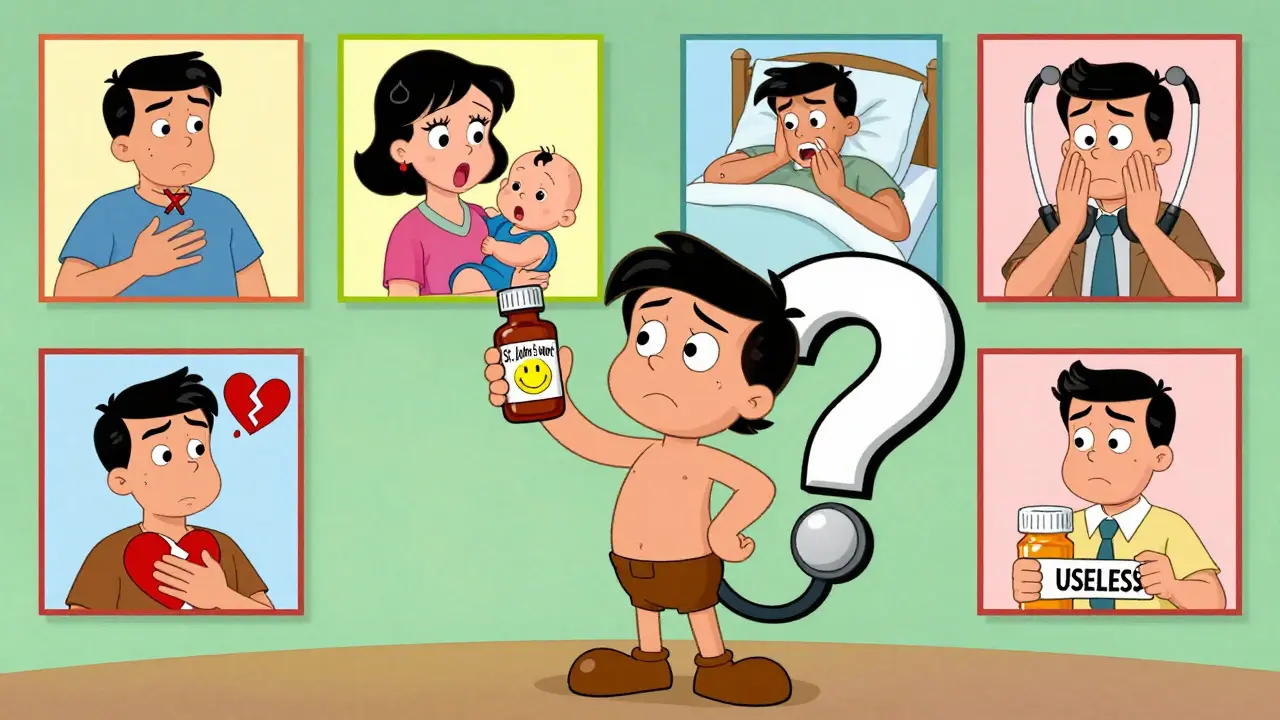
Here’s the hard truth: if you’re on a prescription drug, St. John’s Wort might be a ticking time bomb. These are the categories with the most documented, serious interactions:
- Anticoagulants - Warfarin and phenprocoumon. INR levels can crash from therapeutic (2.0-3.0) to dangerous (below 1.5). One patient’s INR fell from 2.8 to 1.5 in just 10 days.
- Immunosuppressants - Cyclosporine and tacrolimus. A transplant patient in Australia saw cyclosporine levels drop 40%. His doctor said he was hours from organ rejection.
- HIV Medications - Protease inhibitors like saquinavir and non-nucleoside reverse transcriptase inhibitors like efavirenz. Blood levels can drop by up to 50%. That means the virus can come back, develop resistance, and become untreatable.
- Antidepressants - SSRIs like sertraline, fluoxetine, and even nefazodone. Combining them with St. John’s Wort can trigger serotonin syndrome - a life-threatening condition with high fever, seizures, irregular heartbeat, and confusion. There are six documented cases in Australia alone.
- Oral Contraceptives - Ethinyl estradiol levels drop 25-35%. Thirteen cases of unintended pregnancy have been reported in women who took birth control perfectly but added St. John’s Wort.
- Anticonvulsants - Phenytoin, carbamazepine, phenobarbital. Levels drop by 30-40%. Seizures can return, even in patients who were seizure-free for years.
- Benzodiazepines - Alprazolam (Xanax), diazepam. Plasma levels drop by up to 40%. Anxiety returns, sometimes worse than before.
- Statins - Atorvastatin and simvastatin lose effectiveness. Pravastatin and fluvastatin are safer - but only because they’re metabolized differently.
- Other drugs - Theophylline (for asthma), opioids, proton pump inhibitors, and even some migraine meds can all be affected.
There are over 50 documented major interactions. Dr. John R. Horn, who helped build the Drug Interaction Facts database, says St. John’s Wort has one of the most dangerous interaction profiles of any herbal product.
Why People Don’t Realize the Risk
Most people think "natural" means "safe." That’s the biggest mistake.
A 2022 Johns Hopkins study found that 73% of patients who had an interaction with St. John’s Wort didn’t know it could interfere with their meds. And 41% of those patients never told their doctor they were taking it. Why? Because they didn’t consider it a "medicine."
"I just thought it was a supplement," one Reddit user wrote. "I didn’t know it was like a drug."
Pharmacists in Australia and the U.S. report the same thing: patients will say they take "vitamins" or "herbs," but when asked directly about St. John’s Wort, they’ll say, "Oh, that? I don’t take that - I just take the pill for my mood."
Even online reviews paint a misleading picture. WebMD has over 1,200 reviews, and 68% say it helped with depression. But none of those reviews mention the risk of stopping their blood thinner or getting pregnant while on birth control.
What You Should Do If You’re Taking St. John’s Wort
If you’re on any prescription drug - and you’re taking St. John’s Wort - stop. Not tomorrow. Not after your next doctor’s visit. Now.
Don’t just quit cold. Talk to your doctor or pharmacist first. St. John’s Wort can stay active in your system for up to two weeks after you stop taking it. That means if you’re switching to an antidepressant, you need to wait at least two weeks after stopping St. John’s Wort before starting the new drug. Otherwise, you risk serotonin syndrome.
If you’re on warfarin, your INR needs to be checked within 3-5 days after stopping St. John’s Wort. For cyclosporine, trough levels need to be monitored twice a week for the first two weeks. For birth control, you need backup contraception for at least one full cycle.
And if you’re thinking of starting St. John’s Wort? Don’t. Especially if you’re on any of the medications listed above. The TGA, the FDA, and the American Psychiatric Association all now advise against using it if you’re on prescription drugs.
The Australian TGA requires warning labels on all St. John’s Wort products since 2018. The FDA now requires the same. But labels are easy to ignore. The real solution? Ask the right question.
How to Talk to Your Doctor About Supplements
Don’t say: "Do you take any other medications?" That’s what most doctors ask. And most patients say no - because they don’t think of supplements as meds.
Instead, ask: "Do you take any herbal supplements, vitamins, or over-the-counter products?" Be specific. Mention St. John’s Wort by name. If you’re not sure what’s in your bottle, bring it in.
Pharmacists are trained to spot these interactions. If you fill your prescriptions at a pharmacy, ask them to run a drug interaction check every time you add something new - even if it’s "just a herb."
There’s a checklist developed by the University of Adelaide that lists 57 prescription drugs with documented interactions. Ask your pharmacist for it. Keep a copy in your wallet.
The Bigger Picture: Why This Keeps Happening
St. John’s Wort is a $287 million global market. In the U.S., 4.8 million adults used it in 2022. It’s easy to buy, heavily marketed as "natural depression relief," and rarely regulated like real medicine.
Hospitals in the U.S. report an average of one interaction incident every year - and each one costs about $18,450 in extra tests, ER visits, and emergency treatment. That’s not just a health risk. It’s a financial burden on the whole system.
Some researchers argue that with careful monitoring, St. John’s Wort can be used safely. But the European Food Safety Authority says there’s no safe threshold - because people react differently. One person’s body might barely notice it. Another’s might go into overdrive.
And here’s the kicker: newer extracts with less than 0.3% hyperforin may be safer. But they’re not widely available. Most products on the shelf still have enough hyperforin to trigger dangerous enzyme induction.
So if you’re looking for a natural way to manage depression, there are safer options. Exercise. Light therapy. Cognitive behavioral therapy. Even talking to a counselor. None of those will make your blood thinner useless.
St. John’s Wort isn’t harmless. It’s not a gentle herb. It’s a powerful drug - one that doesn’t care if you think it’s "natural." It reacts with your body the same way as any other chemical. And if you’re on prescription meds, it’s not worth the risk.
Can I take St. John’s Wort with my antidepressant?
No. Combining St. John’s Wort with SSRIs like sertraline, fluoxetine, or paroxetine can cause serotonin syndrome - a potentially fatal condition. Symptoms include high fever, rapid heart rate, confusion, muscle rigidity, and seizures. Six cases have been documented in Australia alone. Never mix them without direct medical supervision - and even then, it’s strongly discouraged.
Does St. John’s Wort affect birth control?
Yes. St. John’s Wort can reduce ethinyl estradiol levels in birth control pills by 25-35%. This can lead to breakthrough bleeding and unintended pregnancy. Thirteen cases of pregnancy have been reported in women who took their pills correctly but also used St. John’s Wort. Use backup contraception for at least one full cycle after stopping it.
How long does St. John’s Wort stay in your system?
The enzyme-inducing effects of hyperforin can last up to two weeks after you stop taking St. John’s Wort. That means if you’re switching to a new medication - like an antidepressant or blood thinner - you need to wait at least 14 days after stopping St. John’s Wort before starting the new drug. Otherwise, you risk dangerous interactions.
Is St. John’s Wort safe if I’m not on any meds?
If you’re not taking any prescription drugs, it’s generally considered low-risk for short-term use in mild depression. But it’s not risk-free. It can still cause side effects like dry mouth, dizziness, or increased sun sensitivity. And if you start a new medication later - even something as simple as an antibiotic - you could trigger an interaction. Always check with your doctor before starting any supplement.
Are there safer herbal alternatives for depression?
Yes. Exercise, sunlight exposure, and cognitive behavioral therapy have strong evidence for improving mild depression without drug interactions. Omega-3 fatty acids and saffron extract are also being studied as alternatives with fewer risks. None of these have the same dangerous interaction profile as St. John’s Wort.
Why do some people say St. John’s Wort works for them?
It does work for some people with mild depression - studies show it can be as effective as low-dose SSRIs. But effectiveness doesn’t equal safety. Many users don’t realize they’re at risk because they’re not on other meds. Or they’re on meds that don’t interact - like pravastatin or fluvoxamine. But if you’re on warfarin, cyclosporine, or birth control, the risk outweighs the benefit.
Can I take St. John’s Wort if I’ve had a heart transplant?
Absolutely not. St. John’s Wort can reduce cyclosporine levels by 30-50%. That means your immune system can attack your new heart. There are documented cases of transplant rejection linked to St. John’s Wort. If you’ve had an organ transplant, avoid it completely. Your life depends on stable drug levels.
What should I do if I already took St. John’s Wort with my prescription?
Stop taking St. John’s Wort immediately. Contact your doctor or pharmacist. Tell them exactly what you took, how long, and what meds you’re on. If you’re on warfarin, get an INR test within 72 hours. If you’re on an immunosuppressant or HIV med, ask for a blood level check. Don’t wait for symptoms. The damage can happen before you feel anything.
Final Takeaway
St. John’s Wort isn’t a harmless herb. It’s a potent drug with serious, life-threatening interactions. It doesn’t matter if you bought it at a health store, got it from a friend, or think it’s "natural." If you’re on a prescription medication, the risk is real - and the consequences can be deadly.
Don’t assume your doctor knows you’re taking it. Don’t assume it’s safe because it’s on the shelf. And don’t wait until something goes wrong to ask questions.
When it comes to your health, natural doesn’t mean safe. And sometimes, the thing you think is helping you is quietly making you sick.




Sheila Garfield
January 29, 2026 AT 20:37Okay but like... I’ve been taking this for 3 years and my INR’s been stable. My doc even said it’s fine as long as I don’t switch brands. Maybe it’s not the herb, it’s the damn lack of regulation in supplements?
April Allen
January 31, 2026 AT 14:57The real issue isn’t St. John’s Wort-it’s the regulatory vacuum around herbal products. CYP3A4 induction isn’t some obscure pharmacokinetic quirk; it’s a well-documented, reproducible phenomenon with a clear dose-response curve. The problem is that consumers are treated like children who can’t handle data, while corporations profit from the ambiguity. This isn’t about ‘natural = safe’-it’s about profit-driven misinformation masquerading as wellness culture.
And yes, the TGA and FDA warnings are necessary, but they’re reactive, not preventative. We need mandatory interaction screening at point-of-sale, not just warning labels that get ignored because they’re buried under ‘non-GMO’ and ‘vegan’ stickers.
Shawn Peck
February 2, 2026 AT 04:03Y’all are overthinking this. It’s a plant. You take it, you get better. If your meds stop working, maybe you’re on too much crap to begin with. I took this with my blood pressure pills and never had an issue. Stop scaring people with science jargon.
Diana Dougan
February 3, 2026 AT 13:34So let me get this straight… you’re telling me that a plant that’s been used for 2000 years is suddenly a ‘dangerous drug’ because some lab rats in a 2003 study showed a 30% drop in statin levels? And now we’re all supposed to panic because a pharmacist said so? Lmao. I’ll stick with my herbal tea thank you very much.
Beth Cooper
February 4, 2026 AT 09:23Did you know the FDA doesn’t regulate supplements because Big Pharma paid them to? St. John’s Wort is a threat because it’s cheap and works. They want you dependent on $200/month antidepressants. That’s why they’re pushing this fear campaign. The real danger is the pharmaceutical industry, not the herb. 🤡
kate jones
February 5, 2026 AT 04:04As a clinical pharmacist, I’ve seen this play out too many times. A patient comes in with a ‘mild mood boost’ from St. John’s Wort and doesn’t mention it because ‘it’s just a supplement.’ Then their cyclosporine level crashes and they’re back in the hospital. We don’t scare people to sell more pills-we scare people because people die. The enzyme induction is real, measurable, and irreversible until the hyperforin clears. There’s no ‘sometimes it’s fine.’ If you’re on anything metabolized by CYP3A4 or CYP2C9, the risk is non-negotiable.
And yes, I’ve had patients tell me ‘my cousin took it for years.’ That’s anecdote, not evidence. We treat populations, not anecdotes.
Kathleen Riley
February 6, 2026 AT 11:30It is not merely a matter of pharmacological interaction; it is a profound epistemological failure of the modern consumer. We have collectively surrendered our agency to the myth of the ‘natural,’ a semantic sleight-of-hand that conflates botanical origin with moral innocence. The herb does not care for your intentions. It does not negotiate. It is a biochemical agent, indifferent to your worldview, your ideology, your lifestyle brand. To treat it as benign is to commit a category error of the highest order.
Marc Bains
February 8, 2026 AT 00:12As someone from a culture where herbal medicine is part of daily life, I get why people trust this. But here’s the thing: in my village, elders didn’t mix herbs with Western meds. They knew the rules. We need to bring that wisdom back-not fear, but respect. If you’re on prescription meds, don’t just assume. Ask. Bring the bottle. Get the interaction check. It’s not about giving up your herbs-it’s about being smart with them.
Sarah Blevins
February 8, 2026 AT 14:33Of the 13 documented cases of unintended pregnancy linked to St. John’s Wort, 10 involved concurrent use of low-dose estrogen pills (≤20mcg ethinyl estradiol). The interaction is dose-dependent and clinically significant only above a threshold of 900 mg hyperforin-containing extract daily. The article conflates correlation with causation by failing to disclose this nuance. Also, the TGA data cited is from 1998–2000. More recent data shows a 67% decline in reported interactions since mandatory labeling was implemented. Context matters.
Holly Robin
February 9, 2026 AT 21:03So you’re telling me that a plant that’s been used for centuries is suddenly dangerous because some guy in a lab coat said so? And now we’re supposed to trust Big Pharma’s ‘science’ over centuries of traditional use? Meanwhile, they’re selling you antidepressants that make you numb and fat. I’d rather risk a clot than lose my soul to a pill. This is control, not care.
Shubham Dixit
February 10, 2026 AT 23:54Look, I’m from India, we’ve used St. John’s Wort in Ayurveda for depression for generations. But we never mixed it with allopathic drugs. We knew the boundaries. Now Americans think they can take five pills and a herbal tea and call it ‘holistic.’ It’s not holistic-it’s reckless. You don’t mix fire and gasoline and then cry when the house burns down. Your body isn’t a cocktail party. It’s a complex system. Respect the science or pay the price. Simple.
Blair Kelly
February 12, 2026 AT 01:55Let me be crystal clear: if you’re on warfarin and you take St. John’s Wort, you are playing Russian roulette with your life. Not metaphorically. Literally. The odds are worse than you think. And no, your ‘natural wellness influencer’ friend doesn’t know what they’re talking about. I’ve seen the charts. I’ve seen the lab results. I’ve seen the obituaries. This isn’t debate. This is emergency medicine. Stop romanticizing herbs. They don’t care if you’re ‘spiritual.’ They’re enzymes. And enzymes don’t negotiate.
Beth Beltway
February 13, 2026 AT 12:01And yet, despite all this evidence, 73% of patients still don’t disclose it. Why? Because they’re ashamed. Because they know they’re breaking the rules. Because they think their doctor will judge them. So instead of asking for help, they risk death. The real tragedy isn’t the herb-it’s the stigma around supplement use in clinical settings. We need better communication, not more fearmongering.
Melissa Cogswell
February 15, 2026 AT 07:46My dad was on cyclosporine after his kidney transplant. He started St. John’s Wort because he hated the side effects of his antidepressant. Two weeks later, his rejection markers spiked. He was hospitalized for 10 days. They had to increase his dose by 40% and switch him to a different med. He’s fine now-but he’ll never take another herb without checking with his pharmacist. If one story saves one life, it’s worth sharing.
kate jones
February 15, 2026 AT 15:20And just to be clear: if you’re not on any meds, and you’re using a standardized extract (0.3% hyperforin or less), short-term use may be low-risk. But even then, monitor for sun sensitivity or GI upset. And if you ever start a new prescription-antibiotics, statins, anything-stop it immediately and consult your pharmacist. It’s not paranoia. It’s pharmacology.