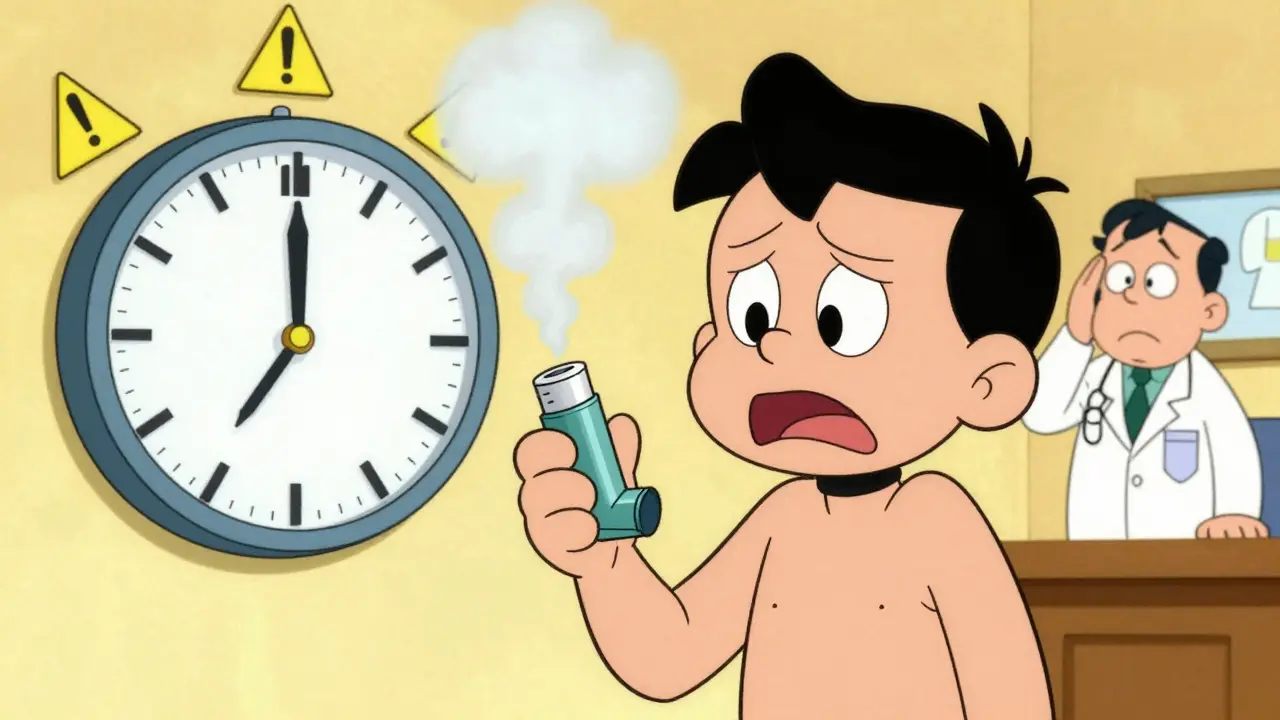
Using an expired inhaler during an asthma attack isn’t just risky-it could be life-threatening. You might think, "It’s only been a few months past the date," or "I still feel a spray when I use it," but that doesn’t mean it’s working. The same goes for eye drops and topical creams. Expired doesn’t always mean dangerous, but it almost always means unreliable. And when you’re depending on that medication to save your life or ease a flare-up, reliability isn’t optional.
Why Expiration Dates Matter More Than You Think
Expiration dates aren’t random. They’re based on real-world testing by manufacturers under controlled conditions. The FDA requires drugmakers to prove their products maintain potency and safety up to that date. For most pills and liquids, that’s usually 12 to 24 months after production. But for inhalers, eye drops, and creams, the rules are stricter-and the risks are higher. Take metered-dose inhalers like Ventolin or ProAir. These devices rely on pressurized canisters to deliver precise doses. Once the expiration date passes, the propellant starts to break down. Studies show that at 12 months past expiration, the dose delivered can vary by up to 35%. That means one puff might give you half the medicine you need, and the next puff might give you nothing. During an asthma attack, that inconsistency can mean the difference between breathing and calling 911. Eye drops are even more alarming. A 2022 study in Clinical Ophthalmology found that 42% of expired eye drops showed bacterial growth just 30 days after their expiration date. That’s not just ineffective-it’s a direct path to eye infections, corneal ulcers, or even vision loss. And once you open a bottle, the clock ticks faster. Even if it’s before the printed date, most eye drops should be tossed after 28 days of opening. Topical medications like hydrocortisone cream behave differently. They don’t carry the same infection risk, but they still lose strength. At room temperature, hydrocortisone drops to 65% potency after just six months past expiration. If you’re using it for eczema or a rash, you might think it’s working-but you’re not getting the full dose. And if you’re storing it in a hot bathroom or car, degradation speeds up even more.What Happens When You Use Expired Medications?
Some people swear they’ve used expired inhalers for years without issue. But anecdotal stories don’t replace science. A 2021 study in the Chest Journal found that expired albuterol inhalers delivered only 60-70% of the labeled dose. That’s not enough to stop a severe attack. And in a 2023 case report, a 24-year-old ended up in the ER because his expired inhaler failed during a flare-up. The problem isn’t just effectiveness-it’s unpredictability. You might get a full dose one time, then a weak one the next. That’s terrifying when you’re gasping for air. The American College of Allergy, Asthma, and Immunology says expired respiratory meds contribute to 12% of avoidable asthma ER visits each year. Eye drops? The risk is infection. Bacteria like Pseudomonas and Staphylococcus thrive in moist environments. Once the preservatives in eye drops break down, the bottle becomes a breeding ground. One contaminated drop can ruin your vision. Topical meds? You’re mostly losing effectiveness. But if you’re using an expired steroid cream on broken skin, the weakened formula might not control inflammation-and that can lead to worsening rashes or secondary infections.How to Properly Dispose of Expired Medications
Don’t flush them. Don’t throw them in the trash. Don’t dump them down the sink. These are old, outdated habits that pollute waterways. The U.S. Geological Survey found medication residues in 80% of U.S. waterways. That’s not just bad for fish-it’s bad for us. The safest, easiest way to dispose of expired meds is through a drug take-back program. The DEA runs over 11,000 collection sites across the U.S., including pharmacies like CVS and Walgreens. These programs are free, anonymous, and designed to safely destroy medications. In 2023 alone, these programs collected over 1.2 million pounds of expired drugs. For inhalers, disposal is trickier. Because they contain pressurized gas, they’re classified as hazardous waste. You can’t just toss them. Washington State and several other states now offer free prepaid mailers specifically for inhalers. Amazon Pharmacy launched a similar program in late 2023 and processed 12,000 units in its first three months. If you can’t get to a take-back site, here’s what to do:- Remove the inhaler from its packaging.
- Press the canister to release any remaining medicine into a sink or toilet (away from children or pets).
- Once empty, remove the plastic mouthpiece if possible.
- Place the metal canister in a sealed container with coffee grounds or cat litter to make it unappealing.
- Throw it in the trash-not the recycling.

What to Do If You Have No Access to Take-Back Programs
In rural areas, take-back locations are scarce. Only 22% of rural counties have accessible disposal sites, compared to 78% in cities. If you’re in one of those areas, here’s your best plan:- Call the Medicine Safe Disposal Hotline at 1-800-222-1222. They’ll connect you with the nearest drop-off point, even if it’s hours away.
- Check with your local pharmacy-even if they don’t have a program, they might know of one nearby.
- Ask your doctor or clinic. Many community health centers now distribute free disposal kits, especially for asthma patients.
When Is It Okay to Use an Expired Medication?
The short answer: almost never. The FDA says expiration dates are about potency, not safety. That doesn’t mean it’s safe to use them. Some drugs, like epinephrine auto-injectors (EpiPens) or nitroglycerin, degrade rapidly and become useless or even dangerous after expiration. Others, like certain antibiotics, may lose effectiveness slowly. There’s one exception: the Shelf Life Extension Program (SLEP), run by the FDA and Department of Defense. They tested over 120 drugs and found 88% still worked 1-5 years past expiration-if stored perfectly. But here’s the catch: SLEP excludes inhalers, eye drops, and topical creams. Why? Because they’re too sensitive to heat, humidity, and time. So if you’re holding an expired inhaler, eye drop, or cream-don’t gamble. Replace it.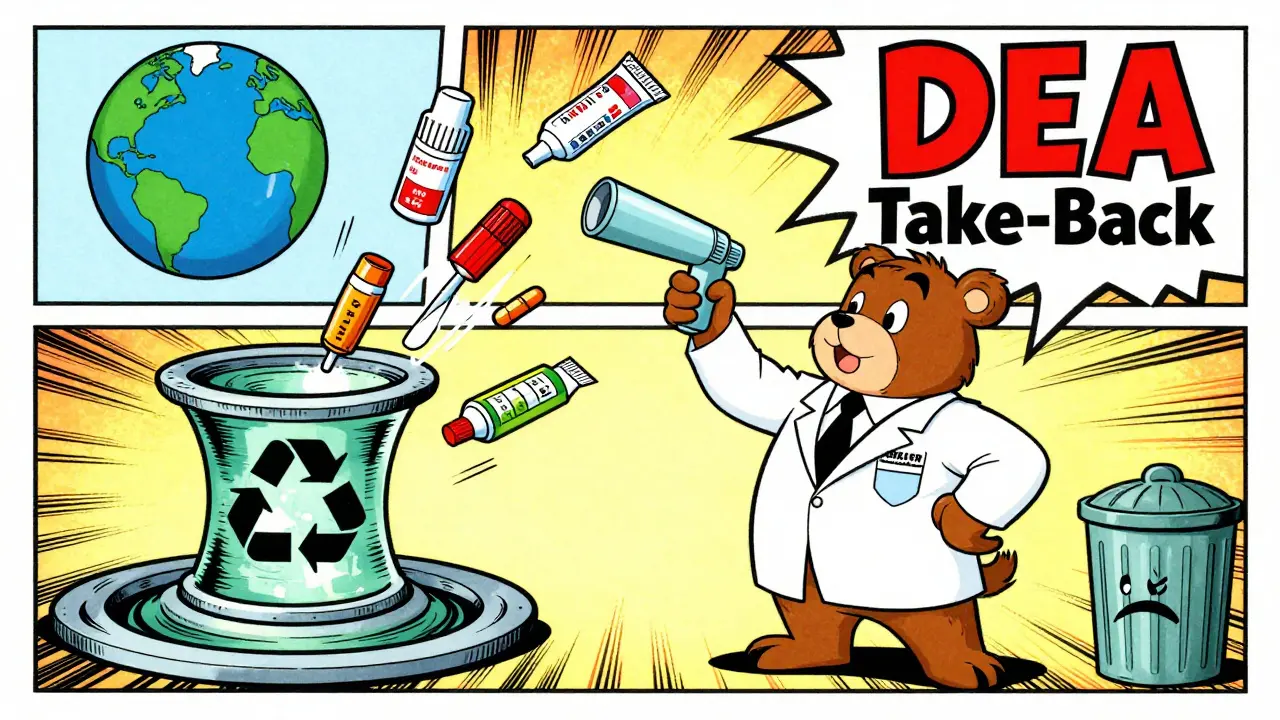
How to Prevent Expired Medications in the First Place
The best way to manage expired meds is to avoid letting them expire.- Check your medicine cabinet every 3 months. Set a calendar reminder.
- Keep inhalers in their original foil packaging until you need them. Once opened, they degrade faster.
- Store medications in a cool, dry place-not the bathroom. Humidity kills potency.
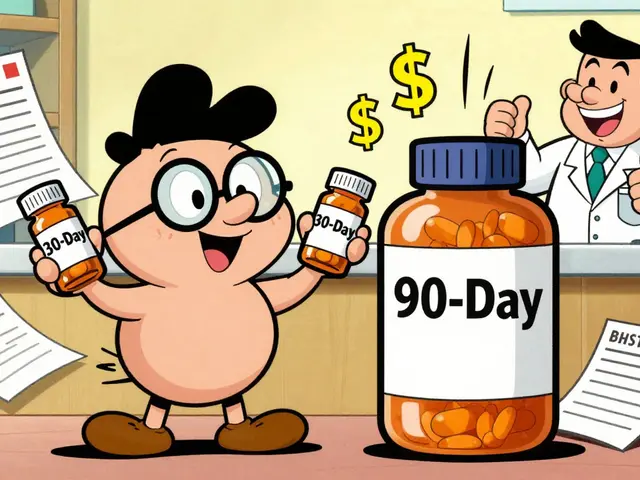
- Ask your pharmacist for smaller quantities if you don’t use a med often. A 30-day supply is better than a 90-day one you’ll forget about.
- Use smart packaging. Propeller Health’s inhaler cap, released in 2023, alerts you 30 days before expiration and even tells you how to dispose of it.
What’s Changing in 2026?
New rules are coming. The FDA is drafting guidance to extend expiration dates for certain inhalers under ideal storage conditions. That might sound good-but don’t wait for it. Until then, treat every expiration date as final. More states are requiring pharmacies to offer disposal services. By 2027, 90% of major pharmacies are expected to have full take-back programs. But right now, you can’t rely on that. Take action now.Final Warning
You might be tempted to use an expired inhaler because it’s expensive. Or because you’re worried about running out. But using a weak or contaminated medication doesn’t save money-it costs more in ER visits, hospital stays, and long-term damage. If you can’t afford a new inhaler, ask your doctor about patient assistance programs. Many drugmakers offer free or low-cost options. The Asthma and Allergy Foundation of America helps people access these programs every day. Your health isn’t worth gambling with. Expired meds aren’t a cost-saving hack-they’re a hidden danger.Can I still use an expired inhaler if it still sprays?
No. Just because you feel a spray doesn’t mean you’re getting the right dose. Studies show expired inhalers can deliver as little as 60% of the labeled amount. During an asthma attack, that’s not enough to open your airways. The spray may feel the same, but the medicine inside has degraded.
Is it dangerous to throw expired eye drops in the trash?
Yes, if you just toss the bottle. Expired eye drops can leak, contaminate groundwater, or be accidentally ingested by children or pets. Always mix the liquid with coffee grounds or cat litter, seal it in a plastic bag, then throw it away. Never flush them-pharmaceuticals in water harm aquatic life and enter our drinking supply.
Where can I find a free disposal site for expired inhalers?
CVS and Walgreens offer free inhaler disposal at over 18,000 locations combined. You can also use the DEA’s National Prescription Drug Take Back Day, which has over 11,000 drop-off sites nationwide. In some states, like Washington and California, you can request a free prepaid mailer. Amazon Pharmacy also offers a free mail-back program for expired inhalers.
Do all expired medications become unsafe?
Not all become toxic, but most lose effectiveness. Inhalers and eye drops are high-risk because they can deliver inconsistent doses or harbor bacteria. Topical creams mostly just weaken. But even if a pill looks fine, you can’t be sure it’s still working. For life-saving meds like inhalers, epinephrine, or insulin, never use anything past its date.
Why can’t I recycle the metal canister from my inhaler?
Inhaler canisters contain pressurized gas, even after use. Recycling facilities aren’t equipped to handle them safely-they can explode under pressure. The metal itself can be recycled, but only after the canister is completely emptied and the plastic parts are removed. Most local recycling programs won’t accept them. Always dispose of them as hazardous waste or through a take-back program.