
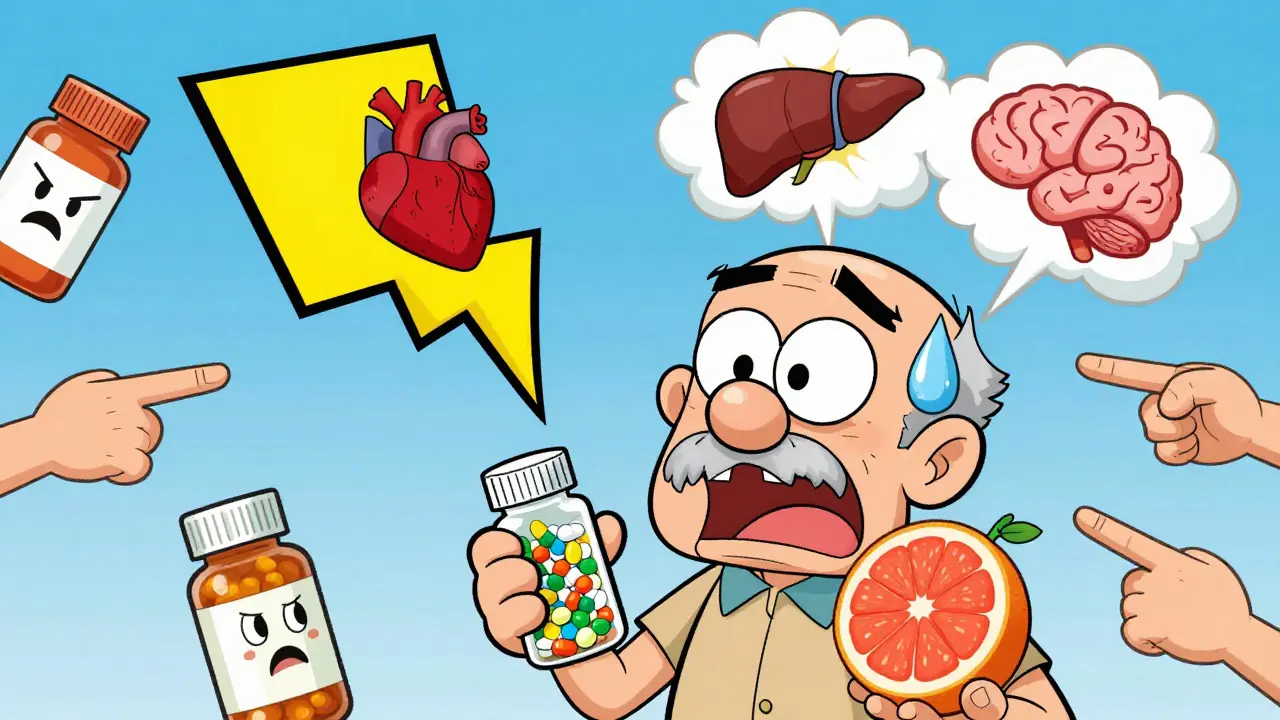
Many people take multiple medications every day - prescriptions, over-the-counter pills, vitamins, or herbal supplements. It’s easy to assume that if you’re taking them as directed, you’re safe. But that’s not always true. Drug interactions happen when one substance changes how another works in your body. Sometimes, it’s harmless. Other times, it can be life-threatening. Knowing when to act isn’t just smart - it’s essential.
What Counts as a Dangerous Drug Interaction?
Not every interaction causes problems. But some are serious enough to send you to the emergency room. The most dangerous ones happen between drugs with a narrow therapeutic index - meaning the difference between a helpful dose and a toxic one is tiny. Warfarin, digoxin, and phenytoin fall into this category. A 20% change in blood levels can cause bleeding, heart failure, or seizures. These interactions often come from combinations you wouldn’t expect. For example, taking an SSRI antidepressant with a painkiller like fentanyl can trigger serotonin syndrome. That’s when your brain gets flooded with serotonin, leading to high fever, muscle stiffness, confusion, and rapid heartbeat. In one study, 41% of patients who developed this condition after dental procedures needed ICU care. Even common things like grapefruit juice can interfere with blood pressure meds or cholesterol drugs. Herbal supplements like St. John’s wort can reduce the effectiveness of birth control pills or antivirals. And if you’re over 65 and taking five or more medications, you have a 57% chance of experiencing a major interaction, according to the Journal of the American Geriatrics Society.Symptoms That Require Immediate Emergency Care
If you notice any of these signs after starting a new medication or changing a dose, call emergency services right away - don’t wait, don’t Google it, don’t hope it passes.- Difficulty breathing or oxygen levels below 90% (measured by a pulse oximeter). This can mean anaphylaxis or airway swelling.
- Swelling of the face, lips, tongue, or throat. This is angioedema - it can block your airway in under 20 minutes.
- Systolic blood pressure below 90 mmHg with a heart rate over 120 beats per minute. This signals shock from a severe allergic or toxic reaction.
- Seizures lasting more than two minutes or sudden loss of consciousness with a Glasgow Coma Scale score below 13. This could be from drug toxicity like lidocaine or anticonvulsant overdose.
- Temperature above 41.1°C (106°F), rigid muscles, and extreme agitation. That’s severe serotonin syndrome or neuroleptic malignant syndrome - both can kill within hours if untreated.
Symptoms That Need Medical Attention Within 24 Hours
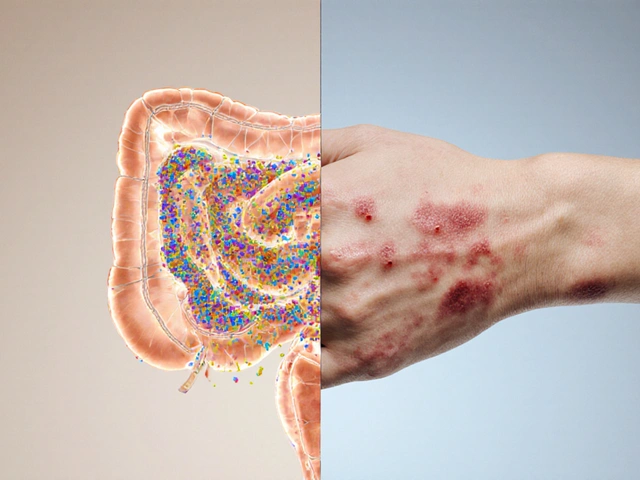
These signs are less immediately life-threatening, but still serious. Ignoring them can lead to organ damage or long-term complications.- A widespread rash covering more than 30% of your body, especially if it’s red, blistering, or peeling. This could be DRESS syndrome - a delayed allergic reaction that can damage your liver, kidneys, or lungs.
- Unexplained fever above 38.5°C (101.3°F) lasting more than two days, especially if you’re on antibiotics or anticonvulsants. It might be serum sickness or another immune reaction.
- Unusual bruising or bleeding, or a sudden drop in hemoglobin (more than 2 g/dL). This could mean drug-induced anemia or low platelets.
- Yellowing of the skin or eyes, dark urine, or severe nausea. These point to drug-induced liver injury. ALT levels over 120 U/L are a red flag.
- Little or no urine output for six hours or more, with rising creatinine. That’s a sign of kidney damage from certain painkillers, antibiotics, or blood pressure meds.
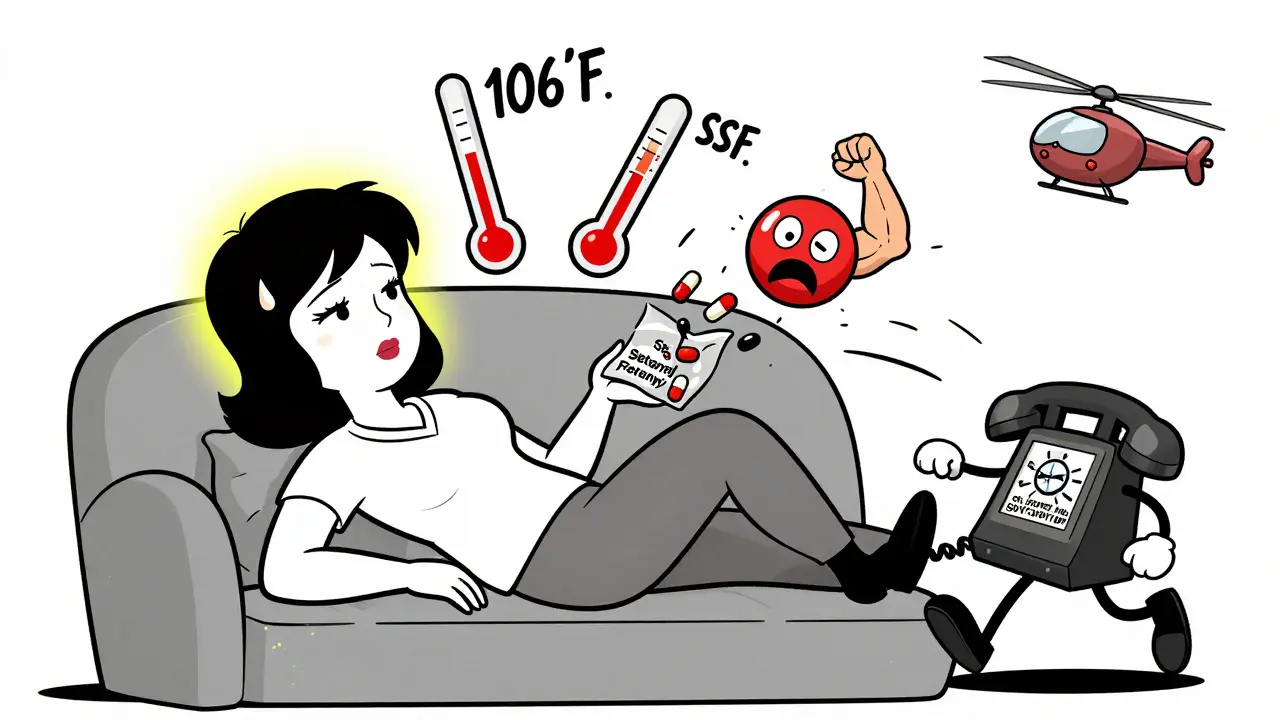
What to Do When You Suspect an Interaction
If you’re unsure whether your symptoms are serious, use the STOP protocol recommended by Kaiser Permanente:- Stop taking the medication you think caused it - unless told otherwise by a doctor.
- Telephone your doctor or pharmacist immediately. If you can’t reach them, call poison control. In Australia, that’s 13 11 26.
- Observe your symptoms. Write down when they started, what they feel like, and if anything makes them better or worse.
- Present all your medications - including supplements, creams, and herbal teas - to the healthcare provider. Many interactions happen because people forget to mention what they’re taking.
Why People Delay - And Why That’s Risky
Most people don’t realize they’re having a drug interaction. They think their symptoms are just stress, the flu, or aging. One Reddit user described feeling "weirdly dizzy and sweaty" after a new antidepressant was added to their regimen. They waited three days - then collapsed. They ended up in ICU with serotonin syndrome. A study in JAMA Internal Medicine found that 68% of patients couldn’t identify serious interaction symptoms from the leaflets that come with their meds. That’s not their fault - those leaflets are written in tiny print, full of medical jargon, and often ignore common combinations. The truth is, your body doesn’t always warn you gently. Some reactions build slowly. Others hit like a truck. Either way, early action saves lives.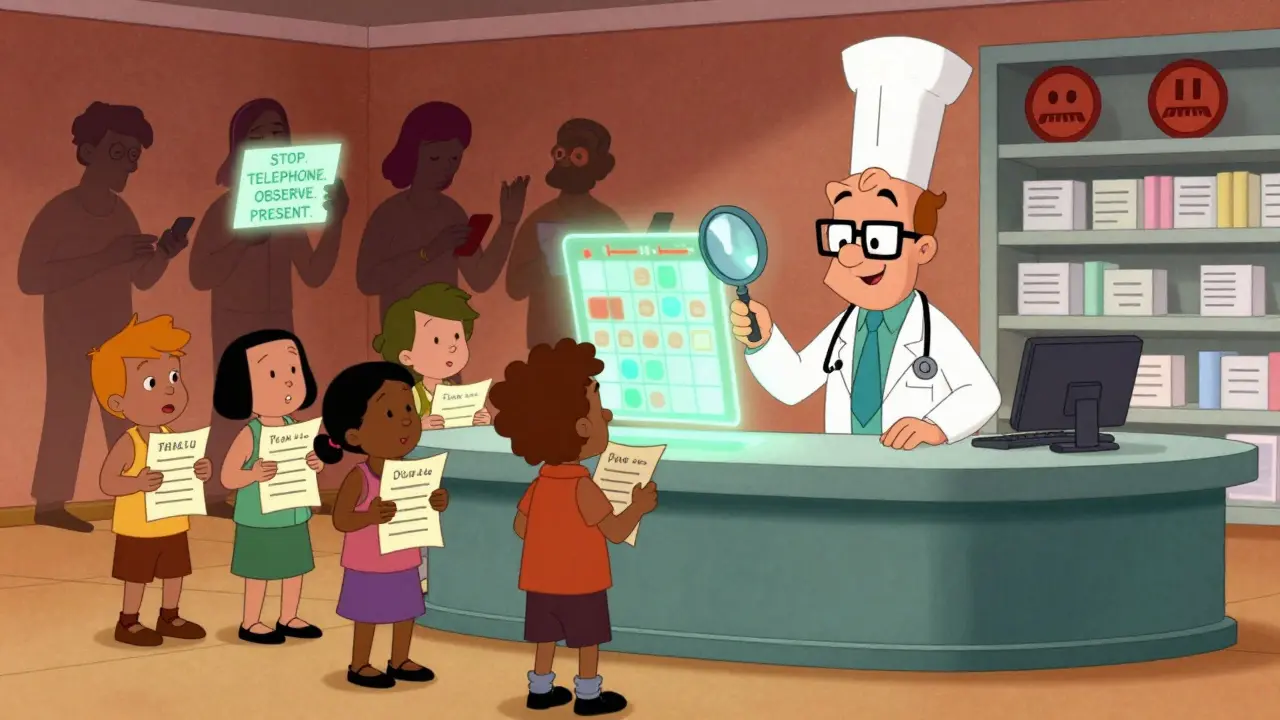
How to Prevent Drug Interactions
Prevention is always better than emergency care. Here’s how to stay safe:- Keep a current list of everything you take - name, dose, frequency. Include vitamins, supplements, and even occasional OTC painkillers.
- Use a reliable drug interaction checker like Drugs.com or Lexicomp. Enter every substance you’re taking - even if you think it’s harmless.
- Ask your pharmacist every time you pick up a new prescription. They’re trained to spot interactions. Don’t assume your doctor knows everything you’re taking.
- Don’t mix alcohol with sedatives, painkillers, or antidepressants. It multiplies the risk of dizziness, breathing problems, and liver damage.
- Get your medications filled at one pharmacy if you can. That way, your pharmacist has a full picture of your regimen.
Final Thought: Trust Your Body
You know your body better than any algorithm. If something feels wrong after starting a new medication - even if it seems minor - don’t ignore it. That dizziness, that rash, that strange nausea - they’re signals. The medical system isn’t perfect. Doctors miss things. Pharmacies get busy. Apps glitch. But you have control over one thing: your response. If you suspect a drug interaction, don’t wait for permission to act. Call your provider. Call poison control. Go to the nearest clinic. It’s better to be checked and cleared than to risk it getting worse.Can over-the-counter medications cause dangerous drug interactions?
Yes. Many people assume OTC drugs are safe because they don’t require a prescription, but that’s not true. Ibuprofen can increase bleeding risk when taken with warfarin. Antihistamines like diphenhydramine can cause confusion or urinary retention in older adults. Even common pain relievers like acetaminophen can damage the liver when combined with alcohol or certain antibiotics. Always check interactions - even for "simple" meds.
What should I do if I accidentally take a dangerous combination?
Stop taking the medications immediately. Call poison control - in Australia, that’s 13 11 26. They’ll guide you on whether to go to the hospital or monitor at home. Don’t try to induce vomiting unless instructed. Bring all your medication containers with you if you go to the ER. The more details you provide, the faster they can help.
Are herbal supplements safe to take with prescription drugs?
Not necessarily. St. John’s wort can reduce the effectiveness of birth control, antidepressants, and HIV meds. Garlic and ginkgo can increase bleeding risk with blood thinners. Ginseng can interfere with blood sugar control in diabetics. Many people don’t realize supplements are drugs too - they have active ingredients and can interact. Always tell your doctor or pharmacist what herbal products you use.
Can drug interactions happen with food?
Absolutely. Grapefruit juice is the most well-known - it can raise levels of statins, blood pressure meds, and some anti-anxiety drugs to toxic levels. Dairy products can block absorption of antibiotics like tetracycline. Leafy greens high in vitamin K can reduce the effect of warfarin. Even high-salt diets can interfere with blood pressure medications. Always ask if your medication has food restrictions.
How often do drug interactions lead to hospitalization?
In the U.S., drug interactions cause about 350,000 hospitalizations each year, according to the CDC. That’s one every 90 seconds. In Australia, while exact numbers aren’t tracked the same way, studies show similar trends - especially among older adults taking multiple medications. Many of these cases are preventable with better communication and awareness.
Is it safe to rely on drug interaction apps or websites?
They’re helpful tools, but not foolproof. Apps like Drugs.com and Medscape screen thousands of combinations, but they can miss rare interactions or ones involving supplements. They also can’t account for your unique health conditions. Always use them as a supplement - not a replacement - for professional advice. If an app flags an interaction, discuss it with your doctor or pharmacist before making any changes.


Jonny Moran
December 16, 2025 AT 22:38Just had my grandma almost get hospitalized last month because she was mixing her blood thinner with a "natural" turmeric supplement. She thought it was "just herbs" so it was fine. Turns out, it spiked her INR to 8.4. We’re lucky she didn’t bleed out. If you’re taking anything besides your Rx, assume it’s a grenade until proven otherwise.
Start writing down everything. Even that gummy vitamin you take "for energy." Your pharmacist will thank you.
And yeah - grapefruit juice is a silent killer. I used to drink it every morning with my statin. Now I drink black coffee. No regrets.
Rulich Pretorius
December 18, 2025 AT 22:05The real tragedy isn’t the interactions themselves - it’s that the medical system treats patients like passive recipients of information, not active participants in their own survival. We’re handed leaflets written in 8-point font with 300 side effects listed in alphabetical order, then expected to remember which one applies to us.
There’s no systemic incentive to simplify. Pharmacies are rushed. Doctors are overworked. The burden of safety falls entirely on the patient - often elderly, often overwhelmed.
So yes, check your meds. But also demand better. Ask for a printed interaction summary. Request a med review. Don’t just comply - advocate. Your life isn’t a footnote in a drug monograph.
Thomas Anderson
December 20, 2025 AT 01:22Bro I took ibuprofen with my blood pressure med and felt like I was gonna pass out. Thought it was just stress. Turned out my kidneys were crying. Ended up in urgent care. Now I use a free app called Medscape to check everything before I take anything. Even Advil. Even melatonin. Even that gummy I take for sleep. No more guessing. Just scan and go.
Sinéad Griffin
December 21, 2025 AT 01:48OMG YES!! 🇺🇸 AMERICA NEEDS TO STOP LETTING PEOPLE BUY ST. JOHN’S WORT OVER THE COUNTER LIKE IT’S A CANDY BAR. This isn’t Europe. We don’t have regulated herbal standards here. Some of that stuff is laced with unlisted pharmaceuticals. I saw a woman in Walgreens buy it to "cure her anxiety" while on Zoloft. I wanted to scream.
Also - grapefruit juice is a war crime. Just say no. And if you’re on statins? Stick to orange juice. Or water. Or whatever. Just not grapefruit.
STOP TRUSTING "NATURAL" = SAFE. That’s how people die.
Dwayne hiers
December 21, 2025 AT 15:21It’s worth noting that pharmacokinetic interactions - specifically CYP450 enzyme inhibition or induction - account for over 80% of clinically significant drug interactions. SSRIs like fluoxetine and paroxetine are potent CYP2D6 inhibitors, which explains their synergy with fentanyl, tramadol, and certain beta-blockers. Concurrent use elevates plasma concentrations of substrates, pushing them beyond therapeutic thresholds.
Similarly, St. John’s wort induces CYP3A4 and P-glycoprotein, reducing serum concentrations of digoxin, cyclosporine, and oral contraceptives by up to 60%. This is not anecdotal - it’s pharmacologically robust.
Patients must understand that "natural" does not equate to inert. Herbal products are pharmacologically active compounds with documented metabolic consequences. Ignorance is not a defense against toxicity.
jeremy carroll
December 22, 2025 AT 05:33yo i just started a new med and felt kinda off for 2 days but i thought "eh its just my body adjusting"... then i got dizzy and threw up at work. called my doc next day and turns out it was interacting with my old blood pressure pill. they changed it and i feel 100% now.
point is: if you feel weird after a new med? don’t be a hero. call someone. even if it’s 10pm. better safe than sorry. i was lucky.
ps: i use the drugs.com app now. it’s free and dumb simple. even my mom uses it.
Daniel Thompson
December 23, 2025 AT 19:28It’s interesting how you frame this as a personal responsibility issue, when the real failure lies in the pharmaceutical industry’s deliberate obfuscation of interaction risks. Drug labels are intentionally vague. Warnings are buried. Marketing materials emphasize efficacy while downplaying danger.
And yet, we’re told to be vigilant. To read the fine print. To self-educate. But the fine print was designed to be unreadable. The system is rigged. You can’t out-educate corporate negligence.
So yes - check your meds. But also demand regulation. Demand transparency. Demand that the FDA require plain-language interaction summaries on every prescription bottle. Until then, you’re not just at risk - you’re being exploited.
Daniel Wevik
December 24, 2025 AT 14:16Let’s be real - the real hero here isn’t the patient who googles their meds. It’s the pharmacist who catches the interaction before the patient even walks out the door.
I’ve seen it too many times: patient comes in with 12 prescriptions, 3 supplements, and a bottle of melatonin gummies. Pharmacist runs the script. Flags the warfarin + garlic + NSAID combo. Calls the doctor. Saves the patient from a GI bleed.
Don’t just go to the pharmacy to pick up your meds. Talk to the pharmacist. Ask them to review everything. They’re the unsung heroes of medication safety. And they’re usually the only ones who actually know what’s going on.
Rich Robertson
December 24, 2025 AT 18:28I’m from rural Kentucky. Most folks here don’t have a primary care doctor. They see the ER doc once a year and get prescriptions from a telehealth app. I’ve seen grandpas take 14 pills a day, all from different doctors, none of them ever asking if they interact.
My cousin took fluoxetine and then started using kava root tea for "calm." Ended up in ICU with serotonin syndrome. They didn’t even know kava was a drug.
Education isn’t just about apps or leaflets. It’s about culture. We need community health workers going door to door, especially in places where trust in medicine is low. People need to hear this from someone who looks like them, talks like them, lives like them.
Knowledge isn’t power if it’s locked behind a website.
Natalie Koeber
December 26, 2025 AT 02:37Did you know the FDA approves drugs based on corporate-funded trials that hide adverse events? And that most "drug interaction" data comes from post-market surveillance - meaning people die first, then they update the label?
And now you want me to trust an app? A company that gets paid by Big Pharma to promote their drugs? LOL. The entire system is a lie.
St. John’s wort? It’s banned in Germany because it’s too dangerous. But here? We sell it next to gummy bears.
Don’t take any pills. Don’t trust doctors. Don’t trust apps. Just eat food. Drink water. Sleep. The body heals itself - if you don’t poison it first.
Wade Mercer
December 26, 2025 AT 14:40People think they’re being responsible because they "looked up their meds." But half of you don’t even know what your pills are for. You take them because your doctor said so. You don’t ask why. You don’t ask about alternatives. You just swallow.
And then you wonder why you’re tired, bloated, or confused.
It’s not the interaction that’s the problem - it’s the blind obedience. You handed your autonomy to a system that doesn’t care about you. You’re not a patient. You’re a product.
Start asking questions. Demand explanations. Refuse to be a passive participant in your own decline.
Sarthak Jain
December 27, 2025 AT 01:11bro i live in india and we have this thing called "doctor-pharmacist collusion" - they give you 5 meds at once, don’t tell you anything, and charge extra for "consultation." i once took a painkiller with my diabetes med and my sugar dropped to 42. i blacked out in the bus.
now i carry a little notebook. write down every pill, even the ones from the street vendor. i use google translate to read the english labels. i ask my cousin who’s a med student to check.
if you’re reading this and you’re not tracking your meds - start today. your life is worth more than your pride.
Tim Bartik
December 27, 2025 AT 13:06Y’all act like drug interactions are some new scary thing. Nah. They’ve been killing people since the 1950s. Thalidomide. Fen-phen. Vioxx. And now you’re shocked because someone took grapefruit juice with their statin?
Big Pharma doesn’t want you to know. They profit from ER visits. From hospital stays. From lawsuits. They make billions off the chaos they create.
So yeah - check your meds. But don’t stop there. Burn the system down. Demand accountability. Stop buying into the lie that you’re safe if you just follow the rules.
The rules were written to protect them - not you.
Edward Stevens
December 27, 2025 AT 22:09Wow. A whole post about how to not die from your meds. And not one mention of the fact that most of these interactions are preventable if we just… stopped prescribing so many drugs in the first place?
Maybe the real problem isn’t that people don’t know about interactions.
Maybe it’s that we’ve turned every minor discomfort into a chemical problem.
Just saying. Maybe the solution isn’t more apps.
Maybe it’s less pills.
Alexis Wright
December 29, 2025 AT 15:54Let me be the one to say it: this entire post is a distraction. You’re not teaching people how to avoid drug interactions - you’re teaching them to be obedient consumers of a broken system. You give them a checklist, a website, a hotline - and then you pat yourself on the back for "raising awareness." But awareness doesn’t fix structural failure. The real issue? We’ve medicalized normal human experience. A little anxiety? Take a pill. A little insomnia? Take a pill. A little sadness? Take a pill. Then we compound it with 10 more pills because the first one caused side effects. And then we blame the patient for not reading the fine print. This isn’t about education. It’s about control. And you’re complicit. Stop telling people how to survive the system. Start asking why the system exists in the first place.