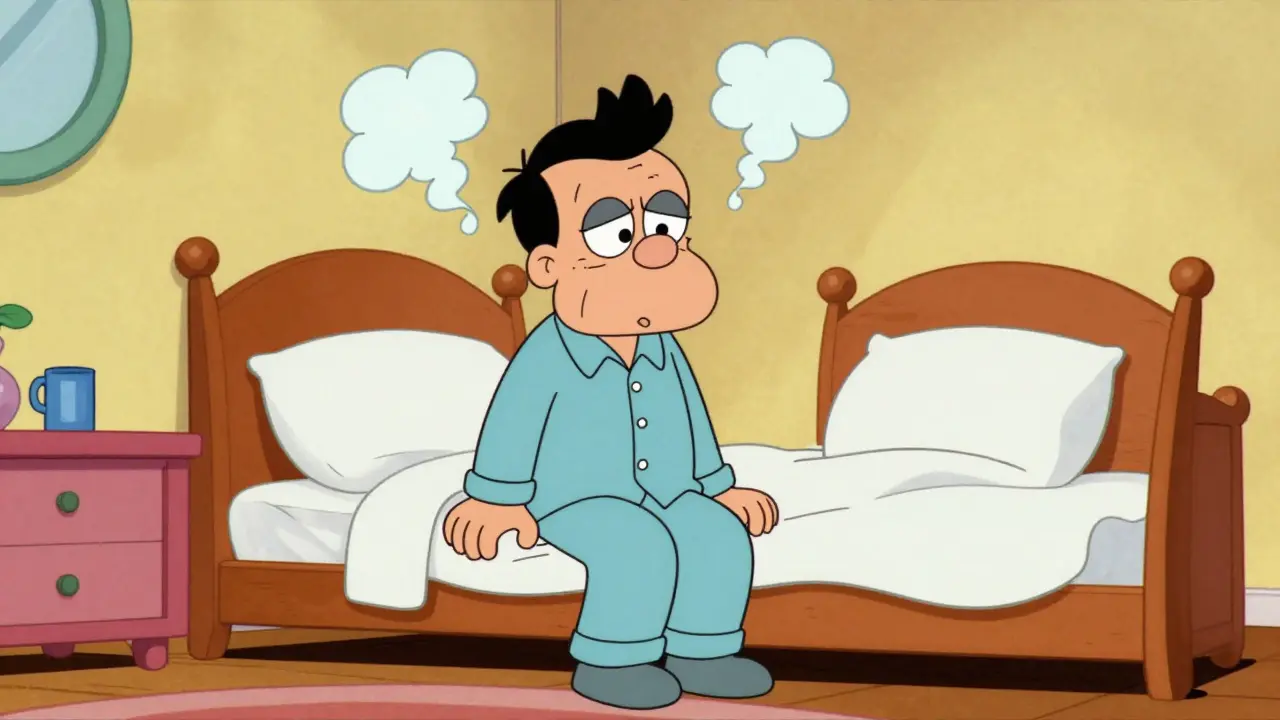
The Gold Standard: Understanding CPAP Therapy
When doctors talk about the "gold standard" for moderate to severe OSA (specifically those with an Apnea-Hypopnea Index or AHI, which measures how many times you stop breathing per hour of 15 or more), they are talking about CPAP is Continuous Positive Airway Pressure, a non-invasive therapy that delivers a steady stream of pressurized air to keep the airway open. Developed in Australia in 1981, this tech has evolved from clunky boxes to smart devices. A standard CPAP delivers a fixed pressure, while an Auto-CPAP (APAP) adjusts the pressure (usually between 4-20 cm H2O) in real-time based on your breathing patterns. For those who find it hard to exhale against the pressure, BiPAP provides two different pressure levels-one for inhaling and a lower one for exhaling.| Device Type | How it Works | Best For | Key Benefit |
|---|---|---|---|
| Standard CPAP | Fixed pressure setting | Consistent airway needs | Simplicity and stability |
| Auto-CPAP (APAP) | Dynamic pressure adjustments | Varying needs throughout the night | Increased comfort |
| BiPAP | Dual pressure (Inhale/Exhale) | Patients with lung issues or high pressure needs | Easier breathing rhythm |
Does CPAP Actually Work?
If you use it consistently-meaning at least 7 hours a night-the results are often dramatic. In a 2020 NCBI study, patients saw their AHI drop from severe levels (around 39 events per hour) to near-normal levels (about 7 events per hour) within six months. Beyond just stopping the snoring, the systemic benefits are huge. We're talking about a 40% reduction in daytime sleepiness and a noticeable drop in systolic blood pressure (by 5-10 mmHg), which is a win for anyone with hypertension. For commercial drivers, using CPAP has been linked to a 70% reduction in traffic accidents, making it a literal lifesaver. However, it's not a magic switch. The benefits depend on your "arousal threshold." Some people wake up more easily than others; those with high thresholds often see a massive boost in brain function (like a shot of espresso for the mind), while those with low thresholds might not feel as much of a cognitive jump.The Struggle with Adherence: Why People Quit
Here is the elephant in the room: many people hate wearing it. About 35% of new users report mask discomfort, and 12% struggle with claustrophobia. If you feel like you're suffocating or the air is leaking everywhere, you aren't alone. In fact, over 60% of people who start with a nasal mask end up switching to a full-face mask within six months because of mouth leaks. If you're struggling, check these common fixes:- Dry Mouth or Nose: Use a heated humidifier. It works for nearly 80% of people dealing with nasal congestion.
- Mouth Leaks: Try a chin strap if you use a nasal mask to keep your jaw closed.
- The Wrong Mask: Switch between nasal pillows, nasal masks, and full-face masks. A simple switch can be the difference between 2 hours of use and 7.
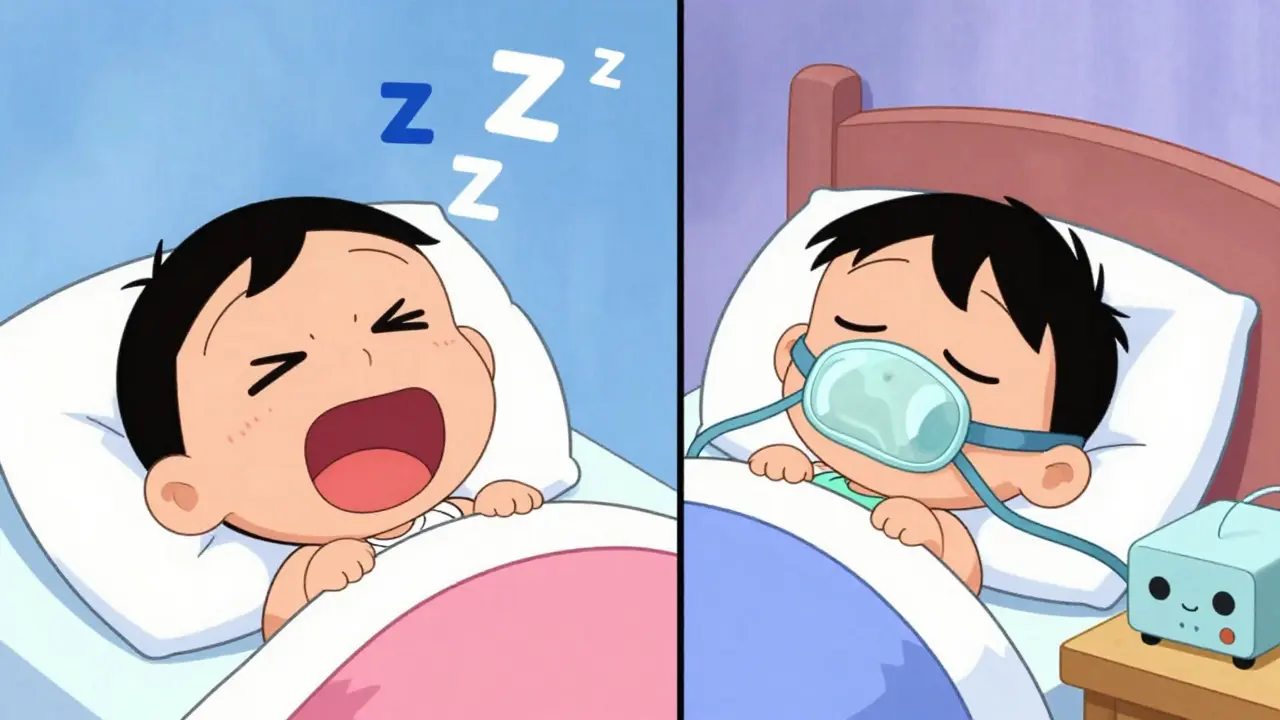
Alternatives to CPAP: When the Mask Isn't for You
If CPAP just isn't happening for you, you have other options. None are quite as effective as a perfectly used CPAP, but the best treatment is the one you'll actually use. Oral Appliances is custom-fit dental devices (like Mandibular Advancement Devices) that shift the lower jaw forward to keep the airway open. These are a huge hit for travel and comfort. While they don't lower AHI as much as CPAP, adherence is much higher-around 77% of people still use them after a year, compared to a much lower median for CPAP. For those who can afford it and want a permanent fix, there's Hypoglossal Nerve Stimulation is an implanted device (like Inspire) that stimulates the tongue muscle to prevent airway collapse. This can reduce AHI by 79%, but it's a surgical procedure and can cost around $35,000 out-of-pocket. Then there are surgical options like UPPP is Uvulopalatopharyngoplasty, a surgery to remove excess tissue from the soft palate and uvula. Unfortunately, these have lower success rates, often only between 40-60%.Getting Started and Staying on Track
Starting therapy isn't as simple as plugging in a machine. You need a diagnostic sleep study (polysomnography) to figure out your optimal pressure, usually between 6-12 cm H2O. Don't try to wear the mask for 8 hours on night one. The American Academy of Sleep Medicine suggests a gradual approach: start with 1-2 hours during the day while you're awake to get used to the feeling, then slowly transition to full-night use over 2-4 weeks. Modern tech makes this easier. Apps like ResMed's AirView or Philips DreamMapper sync via Bluetooth, giving you and your doctor a clear view of your leak rates and how many hours you're actually getting. Most insurance providers (including Medicare) require you to use the machine for at least 4 hours a night on 70% of nights to keep covering the cost.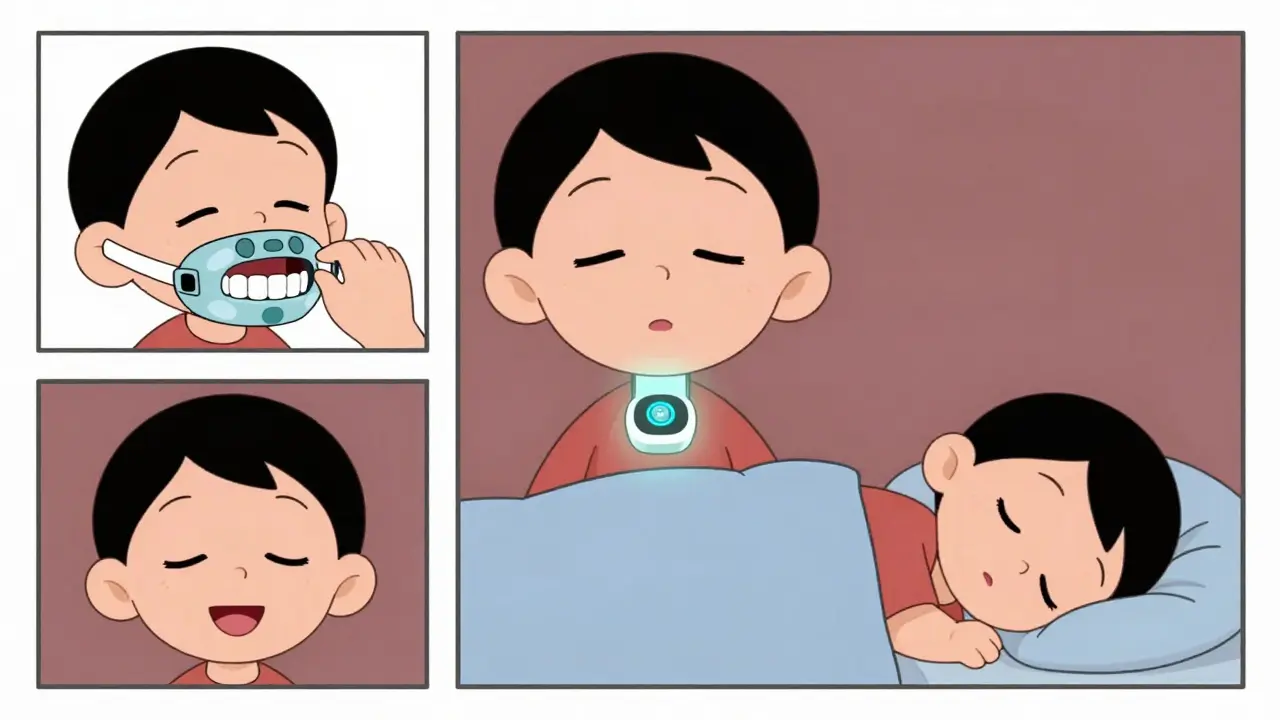
What's Next in Sleep Apnea Treatment?
We are moving toward "personalized sleep medicine." Instead of a one-size-fits-all pressure setting, new systems are using 3D airway imaging to tailor the pressure to your specific anatomy. We're also seeing the rise of "closed-loop" systems that detect an apnea event before it even happens and adjust the pressure instantly. For those with "positional OSA" (where you only stop breathing when lying on your back), devices like NightBalance can reduce AHI by 51% just by gently nudging you to sleep on your side. This might eventually become a first-line recommendation for a specific subset of patients.What is a "normal" AHI score?
An AHI (Apnea-Hypopnea Index) below 5 is generally considered normal. A score between 5 and 14 is mild OSA, 15 to 29 is moderate, and 30 or more is severe. The goal of CPAP therapy is to bring that number back down below 5.
Can I use a CPAP machine without a prescription?
In the US and many other regions, CPAP machines are Class II medical devices and require a prescription. This is because the pressure needs to be titrated by a professional to ensure it's safe and effective for your specific airway.
Why do I wake up with a dry mouth on CPAP?
This usually happens because of air leaks-either through your nose or because your mouth is hanging open. Using a heated humidifier or adding a chin strap to keep your mouth closed can solve this for the majority of users.
Is a mouthguard the same as an oral appliance for sleep apnea?
No. Over-the-counter mouthguards for teeth grinding are not designed to move the jaw forward. Professional oral appliances are custom-made by dental sleep specialists to specifically keep the airway open.
Does CPAP cause any side effects?
Common side effects include nasal dryness, skin irritation from the mask, and feelings of claustrophobia. These are usually managed by adjusting the mask style or adding humidification.
Next Steps for Different Needs
- If you are a new patient: Focus on the "acclimatization phase." Wear your mask for an hour while watching TV before you try to sleep with it.
- If you can't tolerate the mask: Talk to your doctor about a referral to a dental sleep specialist for an oral appliance evaluation.
- If you travel frequently: Look into "Travel CPAPs" which are smaller, lighter versions of the standard machines, or consider an oral appliance as a backup.
- If you're still tired despite using CPAP: Ask your doctor about your "arousal threshold" and check if your mask is leaking air during the night.