
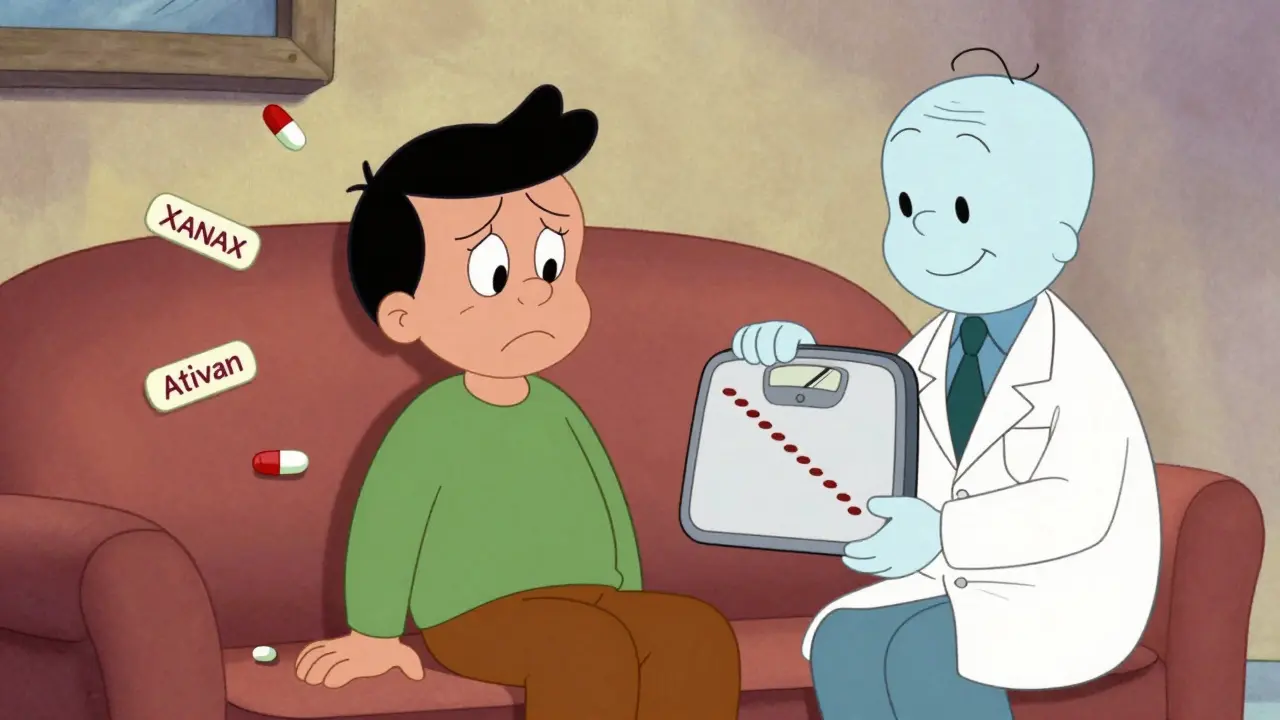
Stopping benzodiazepines after long-term use isn’t as simple as just quitting cold turkey. For many people, this class of medications - used for anxiety, insomnia, or muscle spasms - becomes a crutch over months or years. But the longer you take them, the higher the risk of dependence, cognitive decline, falls, and even seizures if you stop suddenly. The good news? You can safely reduce your dose - if you do it right.
Why Tapering Matters
Benzodiazepines like alprazolam (Xanax), lorazepam (Ativan), and diazepam (Valium) work fast. That’s why they’re so commonly prescribed. But your brain adapts. Over time, it starts relying on the drug to maintain calm or sleep. When you stop, your nervous system goes into overdrive. Withdrawal symptoms aren’t just uncomfortable - they can be dangerous.
Studies show that abrupt discontinuation after more than a month of daily use carries a 20-40% risk of severe withdrawal, including seizures, hallucinations, and extreme anxiety. These aren’t rare side effects - they’re predictable outcomes. That’s why medical groups like the American Academy of Family Physicians and the Department of Veterans Affairs now recommend tapering as the standard of care.
And it’s not just about avoiding symptoms. Long-term use increases your risk of dementia, falls in older adults, and motor vehicle crashes. The Beers Criteria - a widely accepted guide for safe prescribing in older adults - lists benzodiazepines as potentially inappropriate for people over 65. If you’re on these meds for more than a few months, it’s worth asking: are the benefits still outweighing the risks?
The Science Behind Safe Tapering
In 2024, ten major medical societies came together to publish the first joint clinical guideline on benzodiazepine tapering. Their message was clear: slow and steady wins the race.
The recommended starting point? Reduce your total daily dose by 5-10% every 2 to 4 weeks. That might sound painfully slow - and it is. But rushing this process increases the chance of rebound anxiety, insomnia, or worse. Each reduction gives your brain time to readjust without triggering a full-blown withdrawal response.
How long should the whole process take? It depends on how long you’ve been taking the drug:
- 2-8 weeks of use → taper over at least 2 weeks
- 8 weeks to 6 months → taper over at least 4 weeks
- 6 months to 1 year → taper over at least 8 weeks
- Over 1 year → taper over 6 to 18 months
These aren’t arbitrary numbers. They’re based on how long the drug stays in your system. Short-acting benzos like alprazolam leave your body quickly, which is why they cause sharper withdrawal. Longer-acting ones like diazepam (Valium) build up slowly and clear out gradually, making them better for tapering.
Choosing Your Tapering Strategy
There are three main ways to taper, and the best one for you depends on your history, current dose, and what you’ve responded to before.
Option 1: Stick with what you’re on - If you’re on a low dose and have been stable for a while, you might be able to reduce your current medication directly. But this works best with longer-acting drugs. Short-acting ones like Xanax are harder to manage this way because their effects wear off too fast.
Option 2: Switch to a longer-acting benzodiazepine - This is the most common and safest approach. Doctors often switch patients from alprazolam or lorazepam to diazepam. Why? Diazepam has a half-life of up to 100 hours, meaning it stays in your system longer and provides a smoother decline. The conversion isn’t one-to-one: 1 mg of alprazolam equals about 20 mg of diazepam. Your doctor will use a conversion table to make this switch safely.
Option 3: Use adjunctive support - Sometimes, other medications help manage withdrawal symptoms. For example, some clinicians use anticonvulsants like gabapentin for nerve-related anxiety, or low-dose antidepressants like SSRIs for underlying mood disorders. These aren’t replacements for tapering - they’re support tools.
One thing to avoid: switching between different benzos repeatedly. That confuses your system and makes symptoms worse. Stick to one tapering plan - and stick with it.
What to Watch For
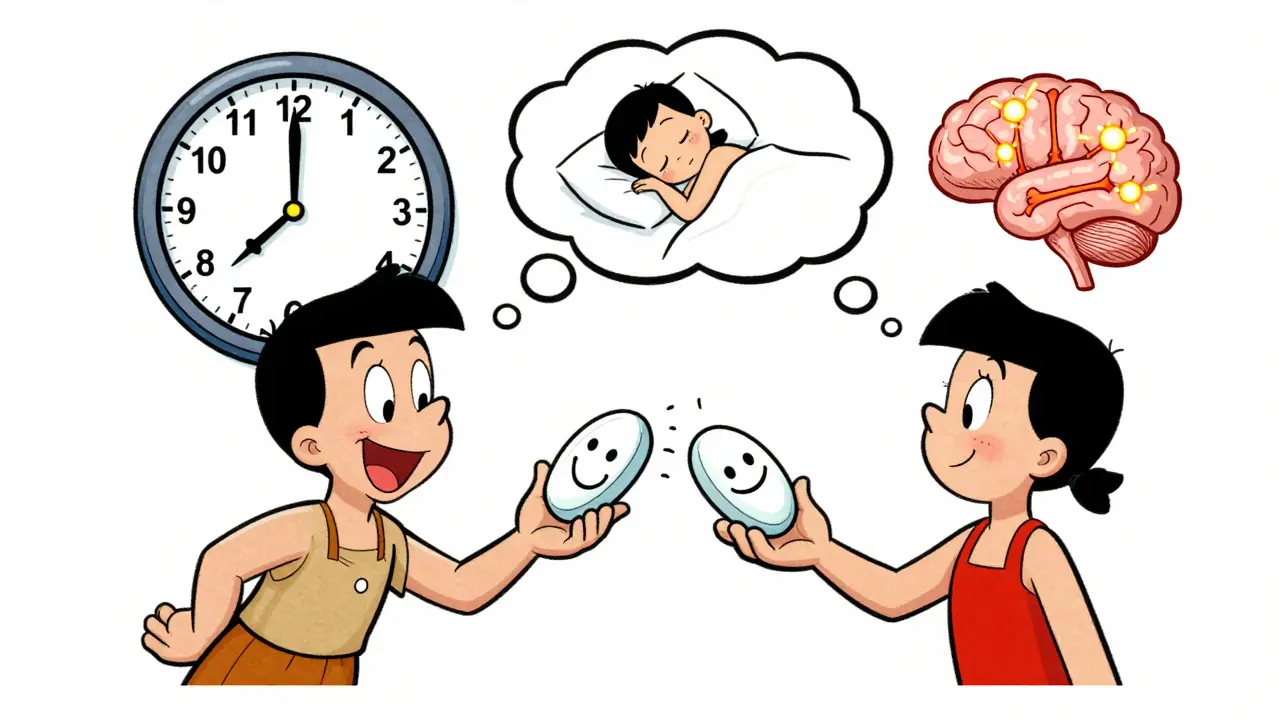
Withdrawal symptoms can show up hours or days after a dose reduction. Common signs include:
- Increased anxiety or panic attacks
- Insomnia or nightmares
- Tremors, muscle twitching, or tingling
- Heart palpitations or dizziness
- Sensitivity to light, sound, or touch
- Depersonalization or feeling detached from reality
If you notice these symptoms, don’t panic - but don’t ignore them either. Talk to your prescriber. You might need to slow down the taper, hold at your current dose for longer, or temporarily increase the dose slightly before trying again.
Some people experience “protracted withdrawal” - symptoms that linger for weeks or even months. This doesn’t mean you’re addicted forever. It means your nervous system is still healing. Support, sleep, stress reduction, and time are your best allies.
Support Beyond the Prescription
Medication alone won’t fix what’s underneath the need for benzos. If you’ve been using them for anxiety or insomnia, those issues didn’t disappear - they were just masked.
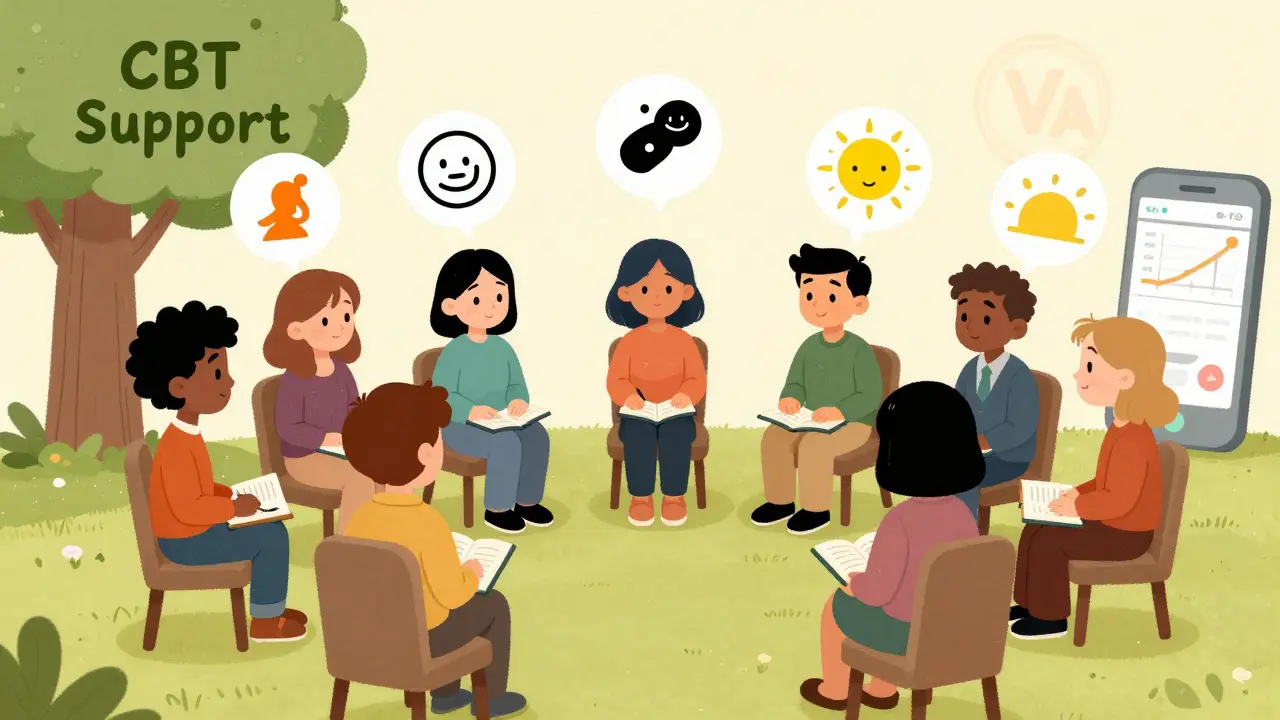
Studies show that combining tapering with cognitive behavioral therapy (CBT) doubles your chances of success. One 2024 study in JAMA Psychiatry found that 68.3% of people who got CBT alongside tapering successfully stopped their benzos, compared to just 42.1% who only received medical management.
CBT helps you relearn how to cope with stress without drugs. Techniques like breathing exercises, sleep hygiene, and challenging anxious thoughts make a huge difference. Many people also benefit from peer support - talking to others who’ve been through it. The VA, for example, now includes peer-support providers in their tapering programs.
Don’t try to do this alone. Build a team: a doctor, a therapist, and maybe a trusted friend or family member who understands what you’re going through.
Practical Steps to Start
If you’re thinking about tapering, here’s how to begin:
- Don’t change your dose on your own. Talk to your prescriber first.
- Make sure you have one doctor and one pharmacy managing your meds. This prevents accidental overdoses or diversion.
- Ask for time-limited refills - like one prescription every 1-2 weeks. This helps you stay on schedule.
- Keep a symptom journal. Note your mood, sleep, anxiety levels, and physical symptoms each day. This helps your doctor adjust your plan.
- Plan for low-stress weeks. Avoid big life changes during tapering if you can.
- Consider therapy. Even a few sessions of CBT can make the difference between success and relapse.
Also, be honest about your history. If you’ve used alcohol, opioids, or stimulants with benzos, your taper needs extra care. Combining substances increases withdrawal risks significantly.
Who Shouldn’t Taper - and Why
Not everyone needs to stop. If you’ve tried other treatments and benzos are the only thing keeping your anxiety manageable, your doctor might recommend staying on a low, stable dose. That’s okay - if it’s intentional, monitored, and safe.
But tapering should be prioritized for:
- Older adults (65+), due to fall and cognitive risks
- People with a history of substance use disorders
- Those with traumatic brain injury or dementia
- Veterans with PTSD - benzos reduce the effectiveness of trauma-focused therapies
- Anyone taking multiple benzodiazepines or combining them with opioids or stimulants
In these cases, the risks of continuing far outweigh the benefits. The VA has seen a 23.7% drop in long-term benzo prescriptions among veterans since 2020 - and better mental health outcomes followed.
The Future of Tapering
The landscape is changing fast. In 2019, the FDA required all benzodiazepine labels to include warnings about gradual tapering. By 2024, 28 U.S. states had laws requiring tapering plans for prescriptions over 90 days. And by 2026, demand for specialists in tapering is expected to rise by 35%.
Technology is helping too. The NIH is funding a mobile app that tracks symptoms in real time and suggests adjustments based on your data. It’s still in testing, but early results are promising.
What’s clear? Benzodiazepine tapering is no longer a fringe idea - it’s becoming standard care. And with the right plan, support, and patience, most people can get off these drugs safely - and feel better for it.


Christopher Wiedenhaupt
February 24, 2026 AT 10:14Just wanted to say this post is incredibly well-researched and balanced. I’ve been tapering off lorazepam for 11 months now, and the 5-10% every 3 weeks rule saved me from a full-blown panic spiral. Switching to diazepam was the smartest move my psychiatrist suggested-way smoother than trying to micro-dose Xanax.
Also, keeping a symptom journal? Non-negotiable. I tracked my sleep efficiency with an app and saw a 40% improvement in REM cycles even before I hit my final dose. It’s slow, but it’s real progress.
Larry Zerpa
February 25, 2026 AT 14:38Let’s be honest-this is just Big Pharma’s latest PR stunt to make you feel guilty for taking a drug that works. If benzos were so dangerous, why are they still prescribed for decades? Because they’re effective. Your ‘cognitive decline’ scare tactics ignore the fact that untreated anxiety kills faster than withdrawal.
And CBT? Sure, it’s great if you’ve got $200/session and 6 months of paid leave. Most people work two jobs and can’t afford to ‘relearn coping skills.’ This isn’t wellness porn-it’s real life.
Gwen Vincent
February 27, 2026 AT 01:13I’m so glad someone finally put this together so clearly. I was on 2mg of alprazolam daily for 5 years after my mom passed. I thought I was just managing grief-but it was masking everything. Switching to diazepam and cutting 5% every 4 weeks felt impossible at first.
But I cried less. Slept better. Started walking again. It wasn’t magic. It was patience. And yes, I did CBT. It didn’t fix me, but it helped me stop running from myself. Thank you for writing this.
Nandini Wagh
February 27, 2026 AT 17:15Wow. So you’re telling me the same doctors who prescribed me 10mg of Xanax for ‘stress’ for 8 years now want me to ‘taper slowly’ like I’m some delicate flower?
Remind me again why we don’t just ban these drugs entirely? I’m from Mumbai, and here, pharmacists hand them out like candy. No prescription. No questions. And now you want me to ‘journal my feelings’ while my body screams for the next pill?
Sarcasm? Maybe. Reality? Definitely.
Ashley Johnson
February 27, 2026 AT 17:35THIS IS A GOVERNMENT PLOT. THEY WANT YOU TO BE WEAK. BENZOS ARE NATURAL. THEY’RE JUST SYNTHETIC. THE FDA IS CONTROLLED BY PHARMA. CBT IS A CULT. I DID A TAPER AND HAD A SEIZURE. THEY LIED.
READ THE STUDIES. THE 2024 GUIDELINES? FAKED. I’M ON A 0.25MG DAILY NOW AND I’M FINE. THEY’RE TRYING TO TAKE MY STABILITY. DON’T TRUST THE SYSTEM.
tia novialiswati
February 28, 2026 AT 18:03You got this!! 💪 I was in your shoes 2 years ago-same dose, same fear. I started at 1mg Xanax and went down 0.1mg every 3 weeks. It felt like crawling out of a black hole, but I did it.
And guess what? I started painting again. I hiked for the first time in 7 years. I cried so much, but it was healing tears.
If you need someone to vent to, I’m here. No judgment. Just love. You’re not alone. 🌻
Christopher Brown
March 1, 2026 AT 21:27Stop coddling people. If you can’t quit benzos, you’re weak. This country is falling apart because we treat addiction like a medical condition instead of a moral failure.
Just stop. No taper. No journal. No therapy. Just quit. You’re not a child. Be an adult.
Kenzie Goode
March 2, 2026 AT 04:30I read this entire thing twice. Twice. And I cried-not because I’m sad, but because I finally felt seen.
I was on 4mg of clonazepam for 14 years. I thought I was ‘functioning.’ Turns out I was just numb. When I started tapering, I felt like I was losing myself.
But then… I remembered what joy felt like. The smell of rain. My dog’s tail wag. My sister’s laugh.
This isn’t about quitting drugs. It’s about coming back to life. And if you’re reading this? You’re already brave. Keep going. I’m rooting for you.