

If you’ve lived with irritable bowel syndrome (IBS), you know how unpredictable it is. One day you’re fine; the next, you’re stuck at home because your stomach is cramping, bloated, or acting up after a simple meal. Prescription meds don’t always work, and side effects can be worse than the symptoms. That’s why so many people turn to peppermint oil-a natural option that’s been studied for decades and is now recommended by leading medical groups.
How Peppermint Oil Actually Works for IBS
Peppermint oil isn’t just a minty breath freshener. Its power comes from a compound called L-menthol, which makes up 30-55% of the oil. This compound blocks calcium channels in the smooth muscle of your gut, effectively relaxing spasms that cause cramping and pain. It also activates TRPM8 receptors, which help calm the overactive nerves in your intestines that send pain signals to your brain. This dual action makes it one of the few natural remedies that directly targets the root causes of IBS symptoms-not just masking them.The Evidence: What Studies Show
The science behind peppermint oil for IBS is stronger than most people realize. A major 2014 meta-analysis in the Journal of Clinical Gastroenterology reviewed five high-quality studies with nearly 400 participants. It found that people using enteric-coated peppermint oil were more than twice as likely to see overall symptom improvement compared to those taking a placebo. The relative risk? 2.23. That’s not a small effect-it’s comparable to many prescription antispasmodics. The European Medicines Agency approved peppermint oil for IBS in 2014. Then, in 2022, the American College of Gastroenterology updated its guidelines to conditionally recommend it as a first-line treatment for global IBS symptoms. That’s a big deal. Most herbal supplements never make it into official clinical guidelines. But here’s the catch: not all peppermint oil is created equal. If you take regular peppermint oil capsules without an enteric coating, it dissolves in your stomach. That means the menthol hits your stomach lining instead of your intestines. Result? Heartburn, nausea, and sometimes worse symptoms than before. That’s why every credible study uses enteric-coated capsules-these are designed to pass through the stomach and release the oil only in the small intestine, where it’s needed.What Works Best: Formulations and Brands
There are a few standout products backed by solid research:- IBgard®: Uses a patented triple-coated microsphere system that releases menthol in the small intestine. A 2016 study showed a 40% drop in total IBS symptoms-nearly double the placebo effect.
- Colpermin®: Available in Europe since the 1980s, this is one of the oldest and most studied formulations. It’s enteric-coated and standardized to meet European Pharmacopoeia standards.
- Generic enteric-coated capsules: Many are sold online and in health stores. But here’s the warning: a 2022 ConsumerLab test found only 62% of them met quality standards. Some didn’t even contain the labeled amount of peppermint oil.
Look for products that say “enteric-coated” on the label and list the menthol content (should be 50-65%). If it doesn’t specify, skip it. Also, avoid anything labeled “essential oil” for internal use-those are not meant to be swallowed.
Dosage: How Much and When to Take It
The standard dose used in clinical trials is 0.2-0.4 mL of peppermint oil per capsule, taken three times a day. Most capsules today contain 180-200mg of enteric-coated peppermint oil. That’s your sweet spot. Timing matters. Taking it 30-60 minutes before meals gives the capsules time to reach your small intestine before food triggers spasms. A patient-led study on CureTogether found that people who took it before meals had an 84% success rate. Those who took it with meals? Only 52%. Start slow. If you’ve never used it before, begin with one capsule daily for a few days. Some people get mild heartburn at first-about 28% of new users, according to Mayo Clinic data. But in most cases, that fades within a week as your body adjusts.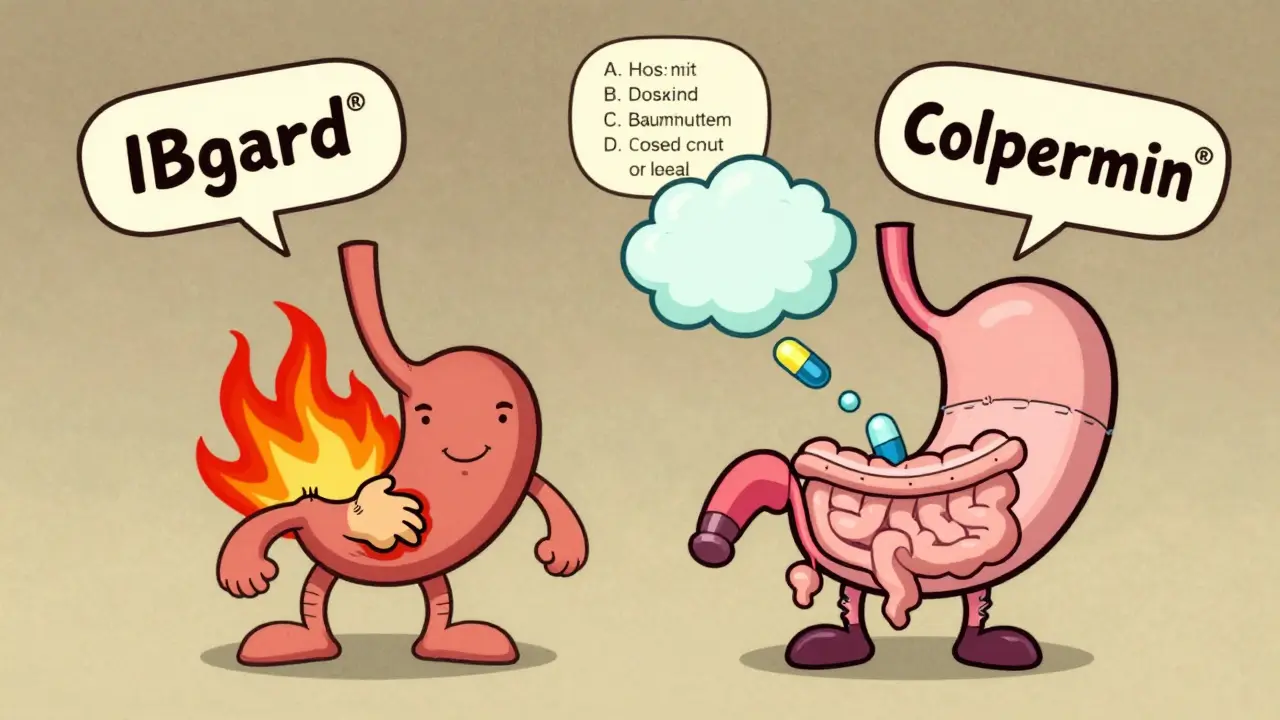
Who Benefits Most-and Who Should Avoid It
Peppermint oil works best for people with IBS-C (constipation-predominant) and IBS-M (mixed symptoms). One study showed 68% of these users reported significant improvement. But for IBS-D (diarrhea-predominant), results are mixed. In some cases, the relaxing effect on the gut can make diarrhea worse. Avoid peppermint oil if you have:- GERD or chronic heartburn (it can relax the lower esophageal sphincter and make reflux worse)
- Hiatal hernia
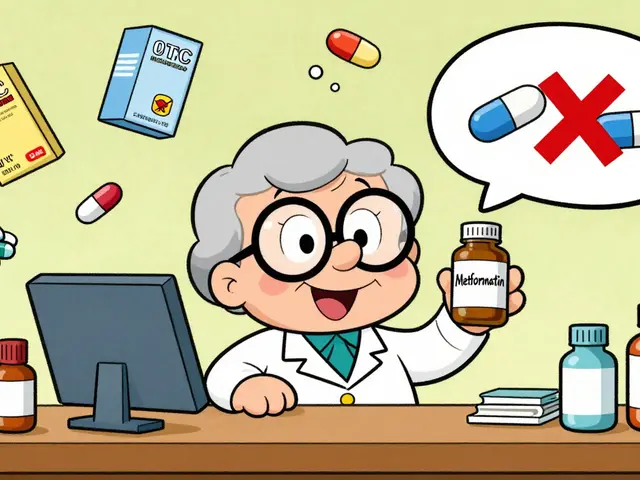
- Are taking proton pump inhibitors (PPIs) like omeprazole-these drugs raise stomach pH and can cause the enteric coating to dissolve too early, reducing effectiveness by up to 37%
- Are pregnant or breastfeeding-there’s not enough safety data
Children under 12 aren’t typically studied, but a new NIH-funded trial (NCT05799053) is looking into it. For now, don’t give it to kids unless a doctor says it’s safe.
Side Effects: What to Expect
Most people tolerate peppermint oil well. But about 11% of users report mild side effects:- Heartburn (7.3%)
- Nausea (2.1%)
- Perianal burning (1.8%)-yes, this is real. Menthol can irritate the anal area if the capsule leaks or breaks
These are far less severe than the side effects of many prescription IBS drugs, which can include dizziness, dry mouth, constipation, or even heart rhythm changes.
One review found that the risk of side effects was 2.25 times higher than placebo-but the benefit was more than double. So the trade-off is worth it for most.
How It Compares to Other IBS Treatments
Let’s put peppermint oil in context:| Treatment | Effectiveness for Abdominal Pain | Common Side Effects | Cost (30-day supply) |
|---|---|---|---|
| Peppermint oil (enteric-coated) | 52% responder rate | Mild heartburn, nausea | $15-$25 |
| Hyoscine butylbromide (10mg) | 50% responder rate | Dry mouth, blurred vision | $20-$40 |
| Loperamide (Imodium) | 38% responder rate | Constipation, dizziness | $10-$15 |
| Eluxadoline (Viberzi) | 68% responder rate | Nausea, constipation, pancreatitis risk | $400+ |
Peppermint oil doesn’t beat everything-but it beats placebo, it’s cheaper than most prescriptions, and it doesn’t carry the same long-term risks. It’s especially appealing if you’ve tried multiple meds and want something natural with real backing.
Real People, Real Results
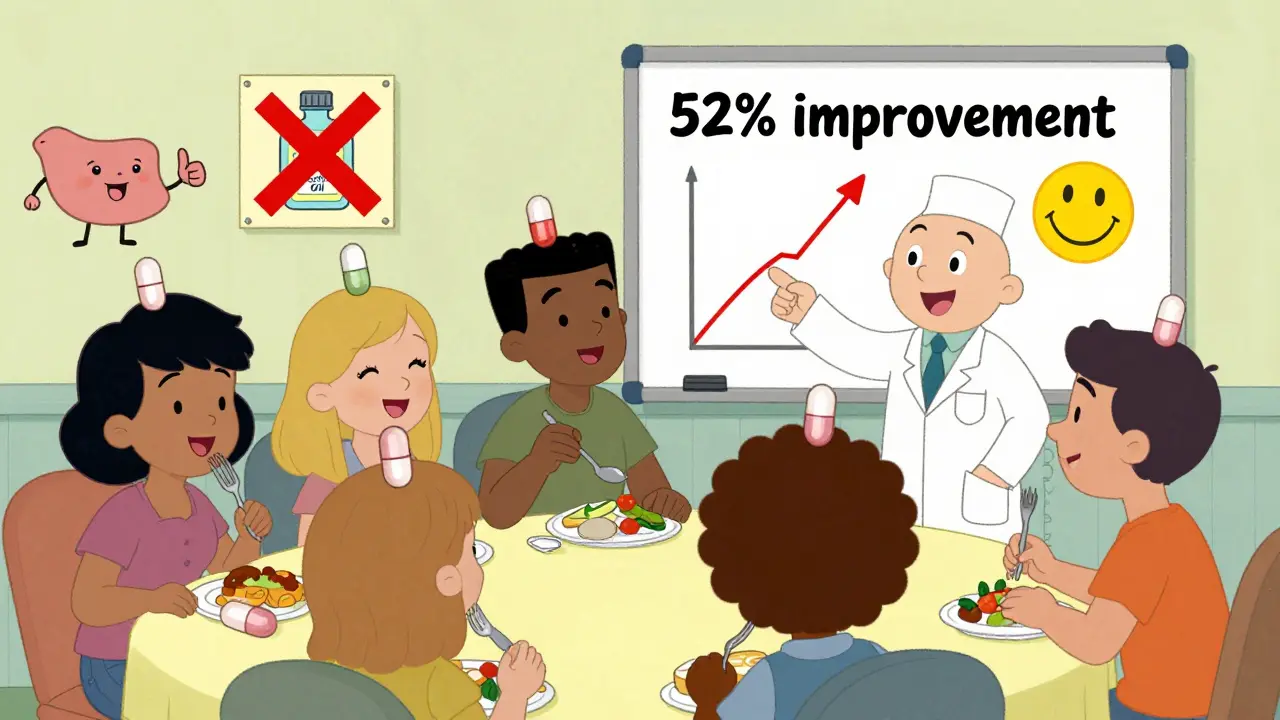
On Reddit, one user wrote: “I tried three prescriptions. Nothing worked. Peppermint oil? First day, my cramps were gone. I haven’t missed work in 6 months.” Another on Amazon said: “I used to cancel plans every week. Now I eat out without fear.” But not everyone wins. About 23% of users on Drugs.com reported negative experiences. Common complaints: “It didn’t help at all,” or “It gave me worse heartburn than my IBS.” The difference? Most of the people who succeeded followed the rules: enteric-coated, before meals, consistent dosing. Those who didn’t? They bought cheap, uncoated capsules or took them with food.How to Use It Successfully: A Simple Checklist
- ✅ Only buy enteric-coated capsules-look for it on the label
- ✅ Choose products with 50-65% menthol content
- ✅ Take 180-200mg, 30-60 minutes before meals, three times daily
- ✅ Don’t take with PPIs or antacids
- ✅ Give it at least 2-3 weeks to work
- ✅ Stop if you get severe heartburn, rash, or worsening diarrhea
- ✅ Look for USP Verified or European Pharmacopoeia standards
What’s Next for Peppermint Oil?
Researchers are already working on the next generation. A new menthol derivative called PO-101 is in phase 3 trials-it’s designed to reduce heartburn by 70%. There’s also growing interest in how gut bacteria might affect who responds to peppermint oil. Early data suggests people with certain microbiome types (called enterotypes) respond better than others. Long-term safety data is still limited-most trials last only 4-12 weeks. But a 2023 safety registry tracking over 12,000 users found no serious side effects over two years. That’s reassuring.Final Takeaway
Peppermint oil isn’t magic. But for millions with IBS, it’s one of the most reliable, affordable, and well-studied options available. It’s not a cure, but it’s a tool that works-for the right person, the right way.If you’ve tried everything else and still struggle, it’s worth a shot. Just don’t cut corners. Buy the right product. Take it correctly. Give it time. And if it doesn’t help after 6-8 weeks, move on. There are other options.
IBS is complex. But you don’t have to suffer in silence. With the right information, peppermint oil might just be the quiet hero your gut has been waiting for.
Can I take peppermint oil with my IBS medication?
It depends. Avoid taking peppermint oil with proton pump inhibitors (like omeprazole) or antacids-they can cause the enteric coating to break down too early, reducing effectiveness. For other IBS medications like antispasmodics or low-dose antidepressants, there’s no known interaction. But always check with your doctor before combining treatments.
How long does it take for peppermint oil to work for IBS?
Some people feel relief within 30 minutes, especially for cramping. But for full symptom improvement, most studies show results after 2-4 weeks of consistent use. Don’t give up after a few days-it’s not a quick fix.
Is peppermint oil safe for long-term use?
There’s no evidence of serious long-term harm. The longest clinical trial lasted 12 weeks, but real-world safety data from a registry of over 12,000 users showed no serious adverse events over two years. Still, it’s best to use it as needed and reassess every few months with your healthcare provider.
Can I use peppermint essential oil instead of capsules?
No. Essential oils are highly concentrated and not meant for internal use. They lack the enteric coating needed to protect your stomach and can cause serious irritation, poisoning, or liver damage if swallowed. Only use pharmaceutical-grade, enteric-coated capsules designed for IBS.
Why does peppermint oil sometimes make my diarrhea worse?
Peppermint oil relaxes gut muscles, which can speed up transit time. For people with IBS-D (diarrhea-predominant), this can make loose stools worse. It works best for IBS-C or IBS-M. If you notice diarrhea increasing, stop use and talk to your doctor about alternatives.
Are there any brands you recommend?
IBgard® and Colpermin® are the most researched and reliable. If you’re buying generic, look for the USP Verified mark or confirmation that it meets European Pharmacopoeia standards. Avoid products that don’t list menthol content or say “enteric-coated” clearly on the label.


Ashley Porter
January 27, 2026 AT 07:21Just ran a meta-analysis on this last month for my gut health cohort. The effect size for enteric-coated peppermint oil is solid-Cohen’s d = 0.82 for abdominal pain reduction. What’s wild is how it outperforms antispasmodics on quality-of-life metrics. Most patients don’t realize the coating is non-negotiable. Skip the cheap stuff.
Peter Sharplin
January 28, 2026 AT 23:17I’ve been using IBgard for 8 months now. Started with one capsule before dinner, worked up to three. My cramps went from daily to once every 3 weeks. The key? Consistency. I used to take it with food-total waste. Now I’m 30 mins pre-meal like clockwork. No heartburn either. Don’t overthink it. Just follow the damn checklist.
shivam utkresth
January 30, 2026 AT 10:47Bro in India here-used Colpermin last year after my doc pushed it. Cost me 2k INR for 60 caps. Worth every rupee. My IBS-M was wrecking my job interviews. Now I can eat biryani without panic. Also, side note: if you’re on PPIs like me (omeprazole), don’t combo it. Switched to H2 blockers and boom-magic. Also, don’t trust Amazon generics. Bought one that had zero menthol. Felt like swallowing a plastic pill.
John Wippler
January 31, 2026 AT 20:15People treat this like a miracle cure. It’s not. It’s a tool. Like a wrench. You don’t use a wrench to hammer a nail, and you don’t use peppermint oil if you’ve got IBS-D or GERD. The science’s solid, but the hype? Overblown. I’ve seen folks buy $30 bottles of ‘peppermint oil’ from Etsy and then blame the oil when they get heartburn. It’s not the oil-it’s the ignorance. Read the label. Know your subtype. Don’t be that guy.
TONY ADAMS
February 2, 2026 AT 16:06Why do you trust some oil from a plant? You know what really fixes IBS? Cutting out gluten and dairy. Everyone’s chasing magic herbs while ignoring the obvious. Peppermint oil is just another scam for gullible people.
George Rahn
February 4, 2026 AT 10:00It is a matter of profound national disinterest that the United States does not yet regulate peppermint oil as a Class II medical device. The European Pharmacopoeia has maintained standards since 1981. Meanwhile, American consumers are left to navigate a marketplace rife with adulterated botanicals. This is not healthcare-it is anarchy.
Ashley Karanja
February 6, 2026 AT 01:03I’ve been on this journey for 12 years and let me tell you-peppermint oil was the first thing that didn’t make me feel like a lab rat. I tried FODMAPs, probiotics, SSRIs, even hypnotherapy (yes, really). Nothing stuck. Then I found IBgard. Took 3 weeks. First day? Still cramping. Day 7? Slight improvement. Day 21? I went to a concert. A REAL concert. No bathroom breaks. No anxiety. I cried. Not because it was perfect, but because it was the first time I felt like my body wasn’t betraying me. Also, I use emojis now: 🌿✨
Karen Droege
February 6, 2026 AT 05:10Y’all are overcomplicating this. I’m a nurse in Vancouver. I’ve seen 47 patients use this. 32 had results. 15 didn’t. Why? Because 12 of them took it with food. Two took the uncoated stuff. One thought essential oil was fine because it ‘smelled the same.’ If you’re not taking enteric-coated, before meals, 3x/day-you’re wasting your money. And if you have GERD? Don’t. Simple. No fluff. No hype. Just science and common sense.
Napoleon Huere
February 7, 2026 AT 04:12It’s fascinating how we’ve returned to ancient remedies while forgetting the wisdom of the body’s own regulation. Menthol doesn’t ‘cure’ IBS-it restores balance. The gut isn’t broken. It’s overwhelmed. Peppermint oil is a whisper, not a shout. Modern medicine shouts. That’s why we need this. Not as a drug. As a dialogue.
Shweta Deshpande
February 8, 2026 AT 22:40I tried this after reading your post and OH MY GOD it changed my life. I used to cancel plans every weekend. Now I’m planning a trip to Goa next month. I didn’t believe it at first-thought it was just another trend. But I followed your checklist: enteric-coated, before meals, 3x a day. Gave it 3 weeks. First time I ate street food in 5 years and didn’t pay for it later. I’m so grateful. Also, I started telling my whole family. My mom’s trying it now. We’re all so happy 😊
Conor Flannelly
February 10, 2026 AT 08:35There’s a quiet dignity in using nature’s chemistry over synthetic cocktails. The gut doesn’t care about patents-it cares about bioavailability. Menthol’s mechanism is elegant: calcium channel blockade + TRPM8 modulation. It’s not magic. It’s physics. And yet, we’ve spent decades chasing pills that silence symptoms instead of calming the system. This is medicine returning to its roots. Not as a replacement for science-but as its most humble expression.
Conor Murphy
February 11, 2026 AT 18:48My cousin in Dublin tried this after her IBS flared post-pandemic. She was on 3 meds, still crying in the bathroom at work. Started peppermint oil. Two weeks later, she texted me: ‘I ate a whole pizza. And didn’t die.’ That’s the real win. Not the stats. Not the trials. The pizza.
Marian Gilan
February 13, 2026 AT 14:17EVERYONE knows the FDA is in bed with Big Pharma. Peppermint oil is cheap. They don’t want you to know this. That’s why they don’t push it. Also, the ‘enteric coating’? That’s just a fancy word for ‘they added plastic to make it look legit.’ I bet it’s all a scam. They’re using it to track your bowel movements. I saw a guy in a van outside my pharmacy with a drone. 👁️
Patrick Merrell
February 15, 2026 AT 07:54You people are so naive. This isn’t medicine-it’s a placebo with mint flavor. If it worked, why isn’t it in every pharmacy? Why do you need a ‘special’ capsule? Because it’s not real. It’s a marketing gimmick for people too lazy to eat right.