

Most people think fungal infections are just a minor annoyance-itchy feet, a little rash, maybe some flaky skin. But if you’ve had one, you know it’s more than that. It lingers. It comes back. And no matter how much you scrub, it won’t go away. That’s because fungal infections aren’t caused by dirt. They’re caused by organisms that thrive where you least expect them: between your toes, in your mouth, even deep inside your body.
What’s Really Going On With Athlete’s Foot?
Athlete’s foot, or tinea pedis, isn’t just for athletes. It’s one of the most common fungal infections on the planet. About 15% of people have it at any given time. In places like Brisbane, where it’s warm and humid, that number jumps. The culprit? Usually Trichophyton rubrum, a fungus that eats keratin-the protein in your skin, nails, and hair.
This fungus doesn’t need much to survive. A damp sock, a sweaty shoe, a shared shower floor-it’s all it takes. That’s why locker rooms, gyms, and public pools are hotspots. The infection shows up in three main ways:
- Interdigital: The most common. Peeling, cracking skin between your toes-especially between the fourth and fifth toes.
- Moccasin type: Dry, scaly skin covering the soles and sides of your feet. Looks like chronic dryness, but it’s not.
- Vesicular: Small blisters that burst and leave raw, painful patches.
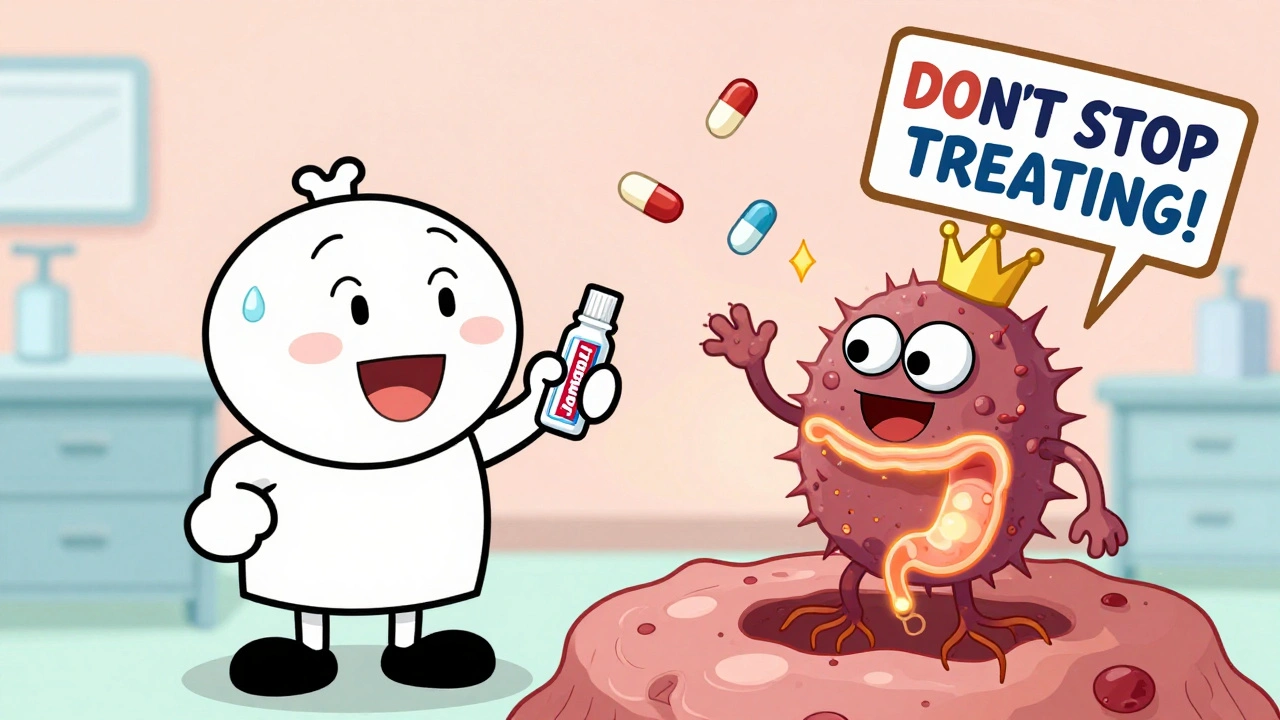
Here’s the thing: athlete’s foot doesn’t heal on its own. Even if the itching stops after a few days, the fungus is still there. That’s why so many people get it back. Stopping treatment early is the #1 reason it returns.
Candida: More Than Just a Yeast Infection
Then there’s candida. Most people know it as a vaginal yeast infection-but it’s not limited there. Candida albicans lives in your mouth, gut, and skin naturally. It only becomes a problem when it overgrows.
Why does that happen? Antibiotics, diabetes, a weak immune system, or even just wearing tight synthetic underwear can throw your body’s balance off. The CDC says 75% of women will get at least one yeast infection in their lifetime. For people with HIV or diabetes, it’s even worse-up to 90% develop oral thrush or recurring candida.
Candida is sneakier than athlete’s foot. It can switch forms-turning from a harmless yeast into a root-like structure that burrows into tissue. That’s why it can cause deep infections in the bloodstream, especially in hospitalized or immunocompromised patients. Invasive candidiasis kills up to 40% of those who get it. That’s not a minor infection. That’s a medical emergency.
Antifungal Treatments: What Actually Works
Not all antifungals are created equal. Topical creams, oral pills, powders-they each have their place.
For athlete’s foot:
- Terbinafine (Lamisil): This is the gold standard. Studies show it clears up 80% of cases in 2-4 weeks. Many users report itching stops in under 72 hours. It’s available over the counter as a cream or tablet.
- Clotrimazole and miconazole: These azoles work well for mild cases, but they take longer. If you’ve been using them for 3 weeks with no improvement, switch.
- Whitfield’s ointment: A mix of salicylic acid and benzoic acid. It doesn’t kill the fungus directly-it peels off the dead, infected skin so the antifungal can reach deeper. Great for thick, scaly moccasin-type infections.
Here’s the trick: apply the cream not just on the visible rash, but at least an inch beyond it. Fungus hides in the margins. And don’t stop when it looks better. Keep going for 1-2 weeks after symptoms disappear. Otherwise, you’re just giving the fungus a vacation.
For candida:
- Fluconazole: A single 150 mg pill often clears up a vaginal yeast infection. For recurring cases, weekly doses for months may be needed.
- Ibrexafungerp (Brexafemme): Approved in 2021, this is the first new antifungal class in 20 years. It’s especially useful when azoles stop working.
- Nystatin or clotrimazole creams: Used for oral thrush or skin candidiasis. Swish and swallow for mouth infections.
Oral antifungals like terbinafine or itraconazole are reserved for stubborn athlete’s foot or nail infections. They work better than creams for deep infections but can affect your liver. Always get blood tests if you’re on them for more than a couple of weeks.
Why Do These Infections Keep Coming Back?
Recurrence is the biggest complaint. One study found 40% of people get athlete’s foot again within a year. Why?
- You stopped treatment too soon.
- You didn’t treat your shoes or socks.
- You’re still walking barefoot in the shower.
- Your immune system is compromised.
Shoes are silent carriers. Fungus can live in them for months. Spray them with antifungal spray or toss them if they’re old and stinky. Rotate your shoes so they dry out fully between uses. Wear cotton socks, not synthetics. Change them daily-even twice a day if you sweat a lot.
And don’t underestimate hygiene. Wash your feet daily. Dry between your toes thoroughly. Use antifungal powder if you’re prone to moisture buildup. A 2% miconazole powder can make a huge difference.
When to See a Doctor
You don’t need to see a doctor for every itchy toe. But if you see any of these, get help:
- Redness, swelling, pus, or fever-signs of a bacterial infection on top of the fungus.
- The infection spreads to your nails or hands.
- You have diabetes or a weakened immune system.
- Over-the-counter treatments haven’t worked after 4 weeks.
People with diabetes are at special risk. A small crack in the skin can turn into a serious infection, even osteomyelitis (bone infection). That’s why foot checks are part of every diabetes visit.

What’s New in Fungal Treatment?
Science is catching up. In 2023, a new topical antifungal called olorofim showed 82% cure rates for stubborn athlete’s foot cases that didn’t respond to anything else. It’s not available yet, but it’s a sign that better options are coming.
The CDC’s My Action Plan program, launched in 2022, has cut recurrent infections by 35% in diabetes clinics by teaching patients how to care for their feet daily. Simple things: daily inspection, moisturizing (but not between toes), wearing proper footwear.
But there’s a warning. A new super-fungus called Trichophyton indotineae is spreading fast. First seen in India, it’s now in 28 countries. It resists common antifungals. The WHO has flagged it as a priority pathogen. This isn’t science fiction-it’s happening now.
Prevention: The Real Secret
The best treatment is avoiding infection in the first place.
- Wear flip-flops in public showers and pools.
- Don’t share towels, shoes, or nail clippers.
- Keep your feet dry. Use a hairdryer on low after bathing.
- Choose breathable shoes-leather or mesh, not plastic.
- If you have diabetes, check your feet every day. Look for cracks, redness, or swelling.
- Don’t ignore a rash just because it’s not painful. Fungi don’t always itch.
Fungal infections are common, but they’re not inevitable. They’re preventable. And treatable. But only if you treat them right.


Michael Robinson
December 9, 2025 AT 19:57It’s wild how something so small can wreck your life. I had athlete’s foot for years, thought it was just dry skin. Turns out I was just letting a fungus run a marathon in my socks. Now I dry my feet like they’re delicate porcelain. And yeah-I spray my shoes. No shame.
Kathy Haverly
December 10, 2025 AT 20:21Oh please. You’re all acting like this is some deep mystery. Fungi are everywhere. If you’re not scrubbing your feet with bleach and wearing rubber boots to bed, you’re doing it wrong. And stop pretending ‘candida overgrowth’ is a real thing unless you’re in a hospital on a ventilator. It’s just your body being lazy.
Evelyn Pastrana
December 11, 2025 AT 10:05Y’all are making this way harder than it needs to be. I used to get athlete’s foot every summer until I started wearing open sandals to the gym. No socks. No sweat. No problem. And for candida? Cut out sugar. Not because it’s ‘holistic’-because yeast eats sugar like it’s candy. Simple. Works. Done.
Also, flip-flops in the shower? That’s not a tip. That’s basic human survival. 🙃
Nikhil Pattni
December 11, 2025 AT 17:13Bro I live in Mumbai and here fungus is like family member, always there. I use neem oil, turmeric paste, and sometimes even garlic paste on feet, works better than any cream. Also, wash socks in hot water with vinegar, not just soap. And if you are diabetic, you must check feet daily, no excuses. I saw uncle lose toe because he ignored one crack. Fungus not joke. Also, I read in Indian journal that Trichophyton indotineae is now in Delhi too, so be careful. I use antifungal powder every day, even if no symptoms. Prevention is everything. Also, why people use plastic shoes? Bad choice. Leather good. Air good. Sweat bad. 😊
Arun Kumar Raut
December 12, 2025 AT 04:38Thanks for laying this out so clearly. I’ve seen too many people suffer in silence because they’re embarrassed. I’m a nurse, and I’ve had patients cry because they thought it was their fault. It’s not. It’s biology. The key is consistency-treat it like brushing your teeth. Do it daily, even when it looks fine. And yeah, shoes matter. I tell my patients to rotate them like you rotate tires. One day on, one day off. Simple. Effective.
precious amzy
December 13, 2025 AT 10:13How quaint. You reduce a complex microbiological phenomenon to a series of over-the-counter remedies, as if the human body were a malfunctioning appliance. The entire discourse around fungal colonization is steeped in reductionist, pharmaceutical-industrial dogma. Have you considered that perhaps the real issue is not the fungus, but the ontological rupture between the self and its microbial ecosystem? Fluconazole is not a cure-it’s a symptom of our alienation from nature.
William Umstattd
December 13, 2025 AT 18:04Everyone’s missing the point. If you’re getting recurrent fungal infections, it’s not your socks, it’s your immune system. You’re eating garbage, sleeping poorly, and stressing yourself to death. Stop blaming the fungus. Start blaming your lifestyle. And no, rubbing garlic on your toes won’t fix a compromised gut. Go see a doctor who actually knows immunology-not some wellness influencer with a blog.
Elliot Barrett
December 15, 2025 AT 09:23Why are we even talking about this? Just use Lamisil. Done. If it doesn’t work, you’re either lying about using it or you’ve got a super-fungus. Either way, stop posting essays and go buy the cream.
Tejas Bubane
December 15, 2025 AT 16:03Terbinafine is overrated and expensive. I used tea tree oil for 3 months and it worked better than Lamisil. Also, your CDC is just a marketing arm for Big Pharma. They don’t care about you. They care about repeat customers. And that ‘new antifungal’ olorofim? Probably just another branded version of something that’s been around since 1998. Don’t fall for the hype.
Ajit Kumar Singh
December 16, 2025 AT 00:10Bro I am from Delhi and we have this problem since childhood, my grandma used to say fungus is the curse of humid air, and she was right. I use neem leaves boiled in water, wash feet with it, then dry in sun. Works better than any cream. Also, shoes? Never wear same two shoes every day. Rotate. Always. And if you are Indian, you must know: if you wear sandals in temple, you better wash feet before entering. Fungus hates cleanliness. And stop using synthetic socks. Cotton is god’s gift. Also, my cousin got nail fungus, went to doctor, got prescription, paid 5000 rupees, still didn’t work. Then he tried vinegar soak. Gone in 2 weeks. Why do we trust pills over grandma wisdom? 🤔
Maria Elisha
December 16, 2025 AT 07:58I just use foot powder and call it a day. If it itches, I scratch. If it doesn’t itch, I ignore it. Maybe I’m just lucky.
Angela R. Cartes
December 17, 2025 AT 05:51Ugh. Another ‘wellness’ post pretending to be medical advice. The fact that you’re recommending ‘antifungal powder’ and ‘rotating shoes’ like it’s some profound insight… it’s embarrassing. Real medicine doesn’t need to be ‘simple.’ It needs to be evidence-based. And frankly, your entire post reads like a sponsored blog from a supplement company. 🙄