
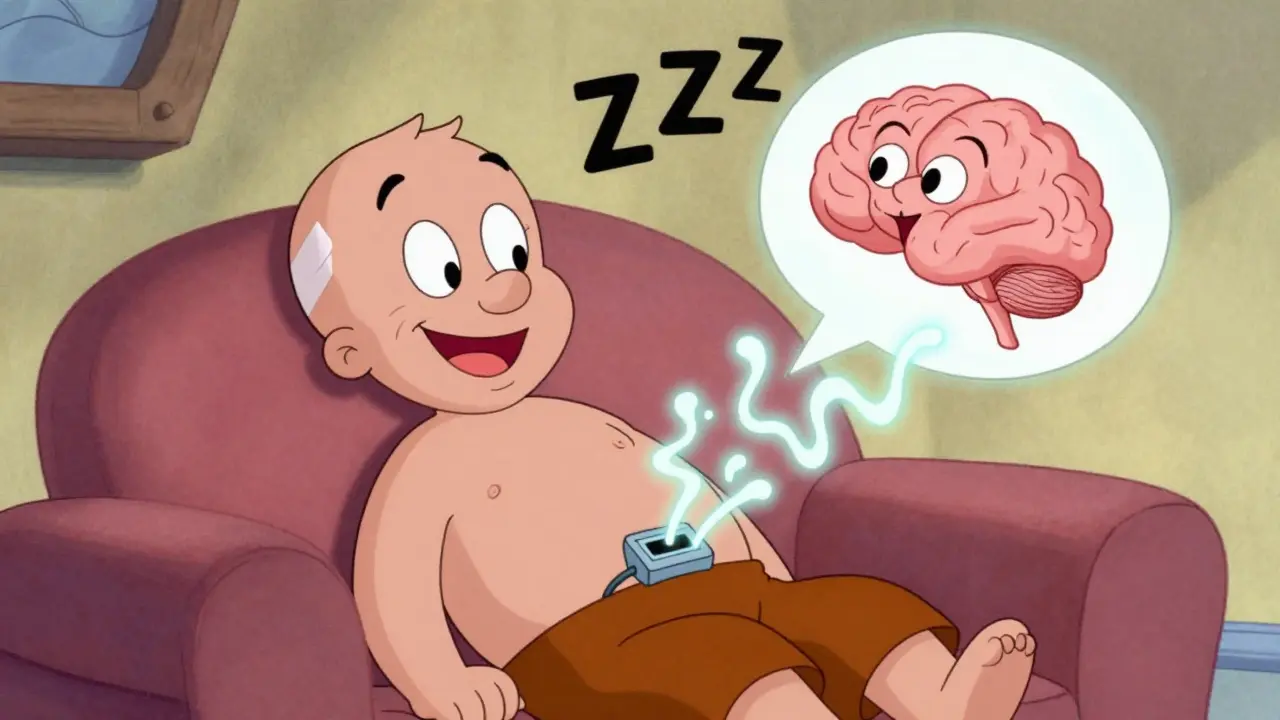
Chronic pain doesn’t just hurt-it steals your life. You can’t sleep, walk, work, or even hug your kids without flinching. Medications stop working. Injections give temporary relief. Surgery feels too risky. That’s where spinal cord stimulation comes in-not as a cure, but as a real, proven way to take back control when nothing else does.
What Spinal Cord Stimulation Actually Does
Spinal cord stimulation (SCS) isn’t magic. It’s science. Tiny wires are placed near your spinal cord, sending mild electrical pulses that interrupt pain signals before they reach your brain. Think of it like static on a radio-instead of hearing the scream of pain, you hear a quiet buzz or nothing at all. It’s been around since the late 1960s, but today’s systems are light-years ahead. Modern devices don’t just zap randomly. They use precise waveforms-like high-frequency pulses or burst patterns-that mimic how nerves naturally fire. Some systems, like Boston Scientific’s WaveWriter Alpha™ Prime, deliver pain relief without that tingling sensation (paresthesia) that older devices forced on patients. In clinical trials, 89% of users reported paresthesia-free relief. The technology works by adjusting three settings: frequency (how often pulses fire), amplitude (how strong they are), and pulse width (how long each pulse lasts). Most systems now use constant current delivery, which keeps the stimulation steady even if your body’s resistance changes. That’s why 68% of patients in a Mayo Clinic study preferred it over voltage-based systems-they felt more consistent, more comfortable.Who Is a Good Candidate for SCS?
Not everyone with pain qualifies. SCS isn’t for backaches from lifting boxes or arthritis flare-ups. It’s for chronic, nerve-related pain that’s lasted over a year and hasn’t responded to other treatments. The best candidates typically have:- Failed back surgery syndrome (FBSS)-pain that stayed or came back after spine surgery
- Complex Regional Pain Syndrome (CRPS), types I or II
- Chronic leg or lower back pain from nerve damage, not just disc issues
- At least 12 to 24 months of trying other options: physical therapy, nerve blocks, opioids, anti-inflammatories
The Trial: Before You Commit
No one gets a permanent implant on day one. First, you go through a trial-usually 5 to 7 days. Temporary leads are placed through a needle (no major surgery), connected to an external box you carry on your belt. You go about your day, test different settings, and see if your pain drops by at least 50%. This isn’t a formality. It’s the most important step. If you don’t get real relief during the trial, you won’t get it with the permanent device. About 40% of people don’t qualify after the trial, not because the device doesn’t work, but because they weren’t the right fit. Patients who do well often say things like: “I walked to the mailbox for the first time in years.” Or, “I stopped taking opioids.” One Reddit user, PainWarrior89, documented going from 8/10 pain to 2/10 with a Boston Scientific system-but needed two revision surgeries later for lead adjustments. That’s the trade-off: big gains, but possible complications.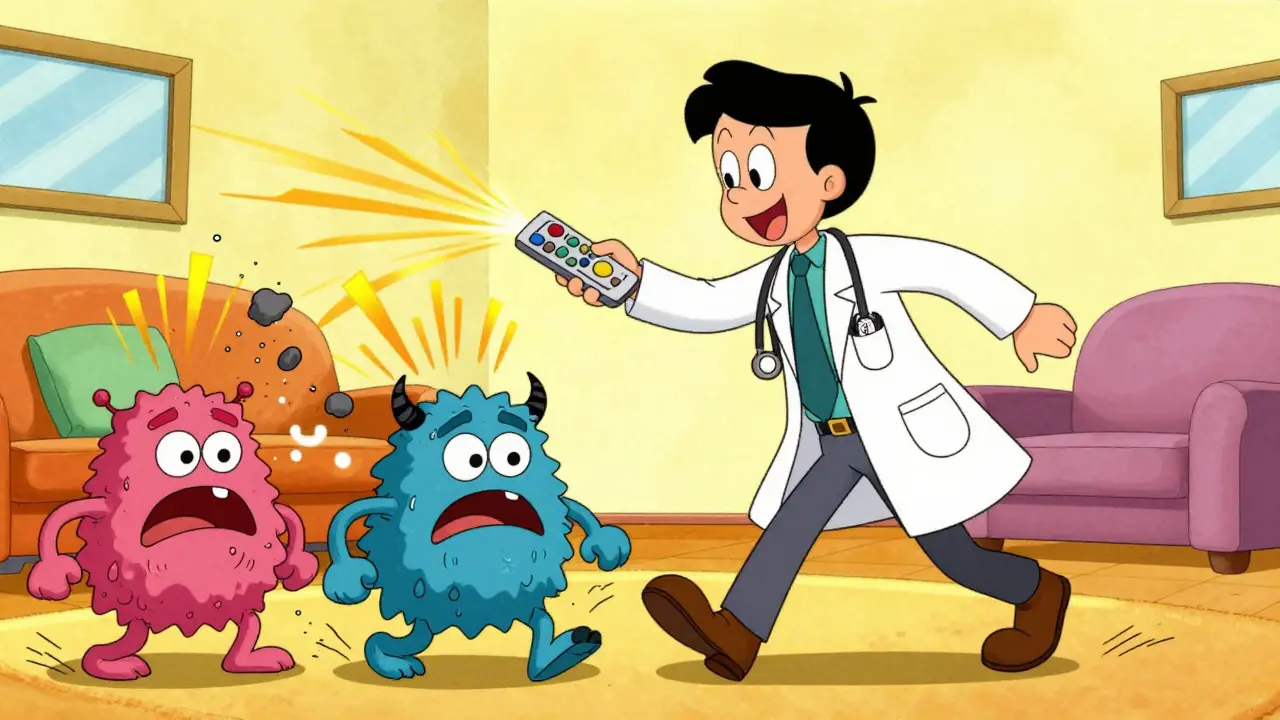
How It’s Implanted and What to Expect
If the trial works, you schedule the permanent implant. It’s a 60- to 90-minute outpatient procedure. You’re sedated, not fully asleep. The leads go into the epidural space near your spine. The battery (called an IPG) goes under your skin-usually in your buttock or abdomen. Afterward, you’ll need 2 to 4 weeks to adjust. Programming isn’t set-and-forget. Most people need at least one follow-up session with a specialist to fine-tune the settings. You’ll learn to use a remote to turn it on/off, adjust intensity, and switch between programs. About 22% of failures happen because patients don’t use the device properly-either forgetting to charge it, not adjusting settings as pain changes, or avoiding movement because they’re scared of breaking the leads.Real Risks and Real Costs
SCS isn’t risk-free. About 15% of patients experience lead migration-where the wires shift, causing pain to return or move. Infection happens in 4-7% of cases, sometimes requiring removal. Battery life varies: older models last 2-5 years; newer ones like the WaveWriter Alpha™ Prime last up to 24 months before needing replacement surgery. Cost is another hurdle. In the U.S., the full system-including surgery-runs $25,000 to $45,000. Medicare covers it for approved conditions like FBSS and CRPS, but your out-of-pocket could still be $5,000 to $10,000. Private insurance varies widely. Some deny coverage unless you’ve tried every other option first. And here’s the hard truth: long-term results fade. A 2022 meta-analysis found only 52% of patients kept significant pain relief after five years. That doesn’t mean it’s useless-it means it’s not a permanent fix. It’s a tool to improve quality of life for years, not forever.How SCS Compares to Other Options
Let’s be clear: SCS isn’t better than everything. It’s better than some things.- Opioids: A 2021 JAMA study showed SCS patients cut opioid use by 57% at one year and 63% at two years. That’s huge when you consider addiction risks.
- TENS units: These $50-$200 skin patches give mild relief for some, but they’re nowhere near as effective for deep, chronic nerve pain.
- Peripheral nerve stimulation: Better for localized pain like knee or shoulder pain. SCS wins for lower back and leg pain-78% success rate vs. 62% for peripheral options.
- Surgery: Spinal fusion or decompression carries higher risks and longer recovery. SCS is less invasive and reversible.
What’s New in 2025
The field is moving fast. Boston Scientific’s Evoke® system-still in trials-uses closed-loop tech. It reads your nervous system’s signals and adjusts stimulation automatically. No more fiddling with remotes. Early results show 83% of users got meaningful pain relief at 12 months. Medtronic’s Intellis™ 2, released in early 2023, adjusts stimulation based on your posture. Stand up? The device knows. Lie down? It adapts. That’s a game-changer for people whose pain shifts with movement. Battery life is improving. Older systems needed replacement every 3-5 years. Newer ones last longer, and some are even rechargeable with weekly 30-minute sessions.What Patients Really Say
Look at the reviews. On Healthgrades, SCS has a 3.9/5 rating. On RealSelf, it’s 4.2/5. People praise the ability to walk again, reduce meds, and sleep through the night. But the complaints? Consistent. - “Lead moved. Pain came back. Had to get it fixed.” (41% of negative reviews on Reddit) - “Battery died after 6 years. Another surgery.” (67% mentioned replacement) - “Insurance denied it until I appealed for 9 months.” The most successful patients aren’t the ones with the most advanced devices. They’re the ones who understood the process, stayed engaged with their care team, and didn’t expect perfection.Final Thoughts: Is It Worth It?
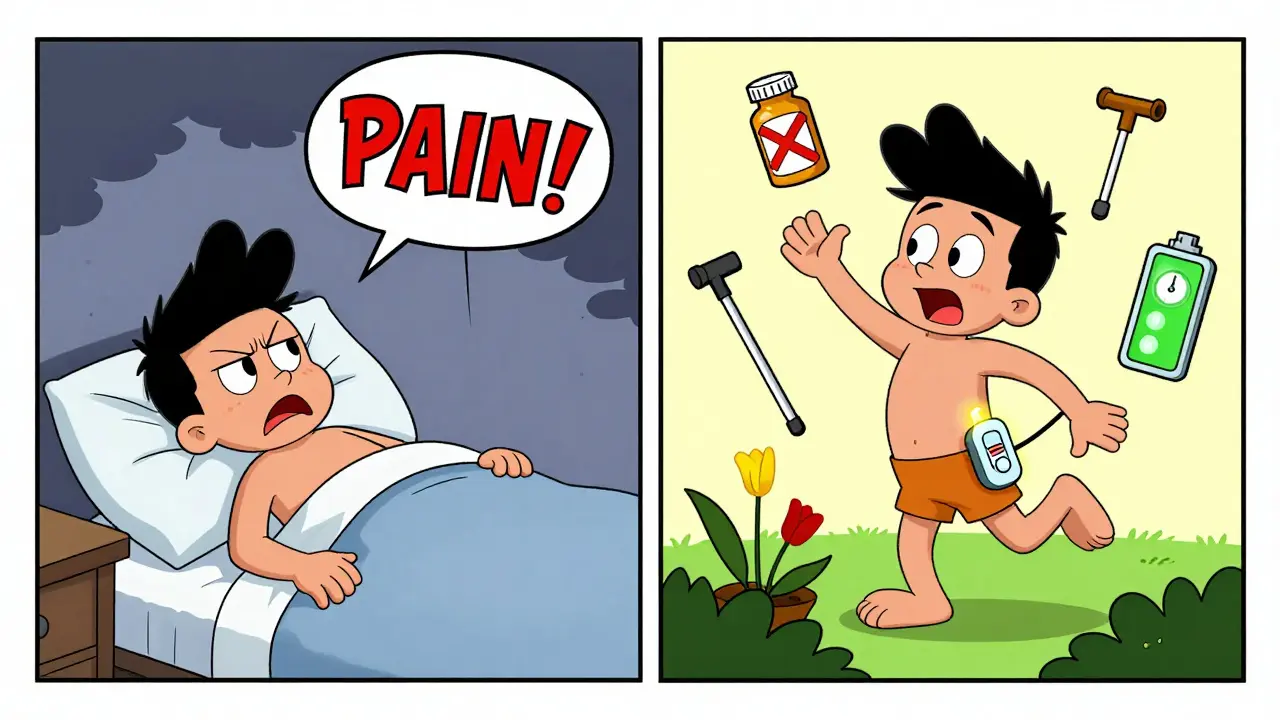
Spinal cord stimulation won’t erase your pain. But for the right person, it can turn a life of constant suffering into one of manageable discomfort. You’ll still have bad days. You’ll still need to care for the device. But you might finally be able to sit in the backyard with your grandkids, take a shower without pain, or drive to the store alone. It’s not a first-line solution. It’s not a miracle. But for those who’ve tried everything else and still hurt-it’s one of the most powerful tools we have today.Is spinal cord stimulation covered by Medicare?
Yes, Medicare covers spinal cord stimulation for specific conditions: failed back surgery syndrome, Complex Regional Pain Syndrome (CRPS) types I and II, and chronic intractable low back and leg pain. You must have tried and failed conservative treatments like physical therapy, medications, and injections for at least 6 to 12 months. A successful trial stimulation is also required before approval.
How long does a spinal cord stimulator last?
Battery life depends on the device. Older models last 2 to 5 years and need replacement surgery. Newer rechargeable systems, like Boston Scientific’s WaveWriter Alpha™ Prime, last up to 24 months on a single charge but require weekly 30-minute recharges. Non-rechargeable batteries typically last 3 to 7 years before needing replacement.
Can you have an MRI with a spinal cord stimulator?
Some newer systems are MRI-conditional, meaning you can have an MRI under specific conditions. For example, Boston Scientific’s Precision Montage™ MRI system allows full-body scans at 1.5T and 3.0T. Older models may only allow limited scans or none at all. Always check your device’s manual and inform your radiologist before any imaging.
What are the most common complications of SCS?
The most common complications are lead migration (15-20% of cases), infection (4-7%), and device malfunction. Lead migration can cause pain to return or shift locations. Infection may require removal of the entire system. Other issues include battery failure, skin irritation, and uncomfortable stimulation if settings aren’t properly adjusted.
Do you still need pain medication after getting SCS?
Many patients reduce or stop opioid use after SCS. One 2021 JAMA study showed a 57% drop in opioid use at one year and 63% at two years. But SCS doesn’t eliminate all pain, so some people still use non-opioid medications like gabapentin or antidepressants for nerve pain. The goal is to reduce reliance on drugs, not necessarily eliminate them entirely.
How successful is spinal cord stimulation long-term?
Success rates drop over time. About 76% of patients report ≥50% pain relief at 6 months, but only 52% maintain that level after five years. This doesn’t mean it fails-it means pain changes, nerves adapt, or lifestyle factors shift. Regular follow-ups, proper programming, and patient engagement help sustain results. Newer technologies like closed-loop systems may improve long-term outcomes.
Can you get SCS if you have a pacemaker?
It’s complicated. Having a pacemaker doesn’t automatically disqualify you, but it requires careful evaluation. The two devices can interfere with each other’s signals. Your cardiologist and pain specialist must work together to determine if it’s safe. Some newer SCS systems are designed to minimize electromagnetic interference, but each case is reviewed individually.
What’s the difference between tonic, burst, and high-frequency SCS?
Tonic stimulation uses steady pulses at 30-120 Hz and causes tingling (paresthesia). Burst stimulation delivers short bursts of pulses (five high-frequency spikes at 500 Hz, 40 times per second) that mimic natural nerve firing and often provide relief without tingling. High-frequency stimulation (1,000-10,000 Hz) also avoids paresthesia and is effective for deep back pain. Each waveform suits different pain patterns-your specialist will help choose the best one for you.



Kunal Karakoti
December 30, 2025 AT 19:08It's fascinating how the brain interprets electrical noise as relief. Pain isn't just a signal-it's a story your nervous system keeps telling itself. SCS doesn't erase the story, it just changes the narrator. Kinda makes you wonder if all chronic pain is just a glitch in the system's firmware.
Kelly Gerrard
January 1, 2026 AT 19:04People treat this like a miracle cure but the data says otherwise. 52% success after five years? That's not a solution-it's a temporary Band-Aid with surgery attached. And don't get me started on the cost. You're paying $40K to maybe not be in agony for a few years. Meanwhile, insurance fights you like you're stealing from them.
Glendon Cone
January 2, 2026 AT 19:39Just had my 3rd lead adjustment last month 😅 Been using the WaveWriter for 18 months now. No tingles, can sleep on my side again, and I finally took my dog to the park without wincing. Still gotta charge it weekly but honestly? Worth it. The tech is wild-my device knows when I'm standing vs sitting. Like my spine has a smartwatch now 🤖❤️
Nadia Spira
January 2, 2026 AT 21:30Let’s deconstruct the marketing rhetoric. 'Paresthesia-free relief'? That’s just corporate euphemism for 'we turned down the tingles so you won’t notice it’s barely working'. And 89%? That’s selection bias. They screen out the depressed, the anxious, the real patients-the ones who need it most-and then pat themselves on the back with cherry-picked outcomes. This isn’t medicine. It’s a wellness product with electrodes.
henry mateo
January 4, 2026 AT 10:22i had scs 3 yrs ago and it helped for like a year then the leads started moving and i got this weird burning feeling in my thigh idk if its the device or my nerves just giving up but now im back on gabapentin and its kinda sad bc i thought this was gonna be my fix
Aayush Khandelwal
January 6, 2026 AT 00:12The real innovation isn't the hardware-it's the neurofeedback loop. Modern SCS isn't just blasting signals; it's listening to the nervous system's feedback and adapting in real-time. That’s not therapy. That’s co-evolution with your own biology. We're moving from brute-force stimulation to symbiotic modulation. This is the future of neuromodulation-not a device you implant, but a dialogue you cultivate.
Joseph Corry
January 7, 2026 AT 20:19Let’s be honest: this is just the pharmaceutical-industrial complex’s next revenue stream. Replace opioids with $40K implants that require recurring surgeries? Brilliant business model. Meanwhile, people in developing countries die from untreated pain because they can’t afford ibuprofen. This isn’t progress-it’s capitalism with a spinal cord.
Colin L
January 8, 2026 AT 05:56I’ve been living with CRPS for 11 years. I tried everything. Physical therapy broke my spirit. Opioids turned me into a zombie. I lost my job. My wife left. I was suicidal. Then I got the trial. Day three, I walked to the kitchen without crying. I cried. Not because it was perfect. But because for the first time in a decade, I felt like I might still have a life. The lead migrated. The battery died. I had two revisions. I still wake up some mornings wondering if it’s worth it. But then I remember-I held my daughter’s hand last week. And I didn’t flinch. So yeah. It’s worth it. Every scar. Every charge. Every damn surgery.
Hayley Ash
January 8, 2026 AT 17:16So you pay $40K to get a device that might break, needs charging, and still leaves you in pain? And the only people who succeed are the ones who didn’t need it in the first place? Classic. Next they’ll sell us brain implants to feel less sad about how expensive everything is