
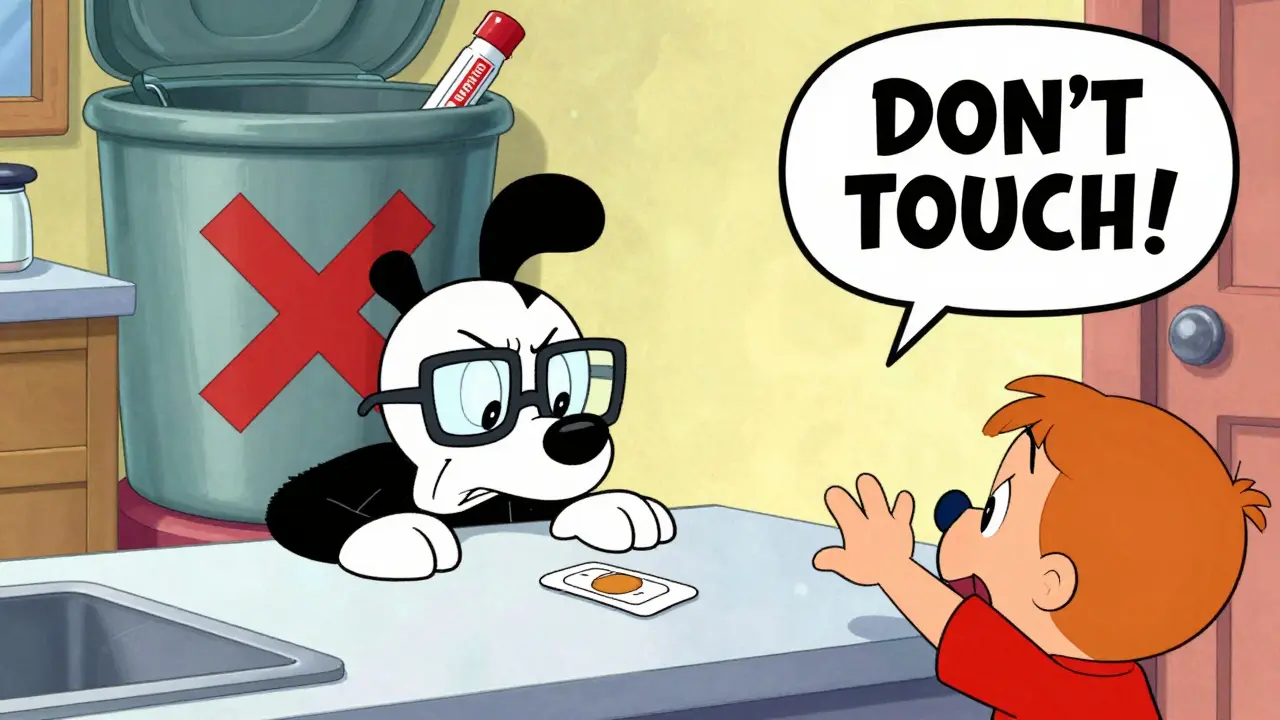
Expired EpiPens, inhalers, and medicated patches aren’t just old medicine-they’re potential hazards. A discarded EpiPen with a needle still inside can poke a child or a sanitation worker. An inhaler tossed in the trash can explode in a compactor. A fentanyl patch left on the counter might kill a pet. Proper disposal isn’t optional. It’s a safety must.
Why You Can’t Just Throw Them in the Trash
Most people assume old meds go in the regular bin. That’s dangerous. The FDA reports that 12% of accidental poisonings in kids come from improperly thrown-away medications. EpiPens contain a sharp needle and a powerful drug-epinephrine. Even empty ones are classified as medical sharps. Inhalers are pressurized cans filled with propellants like hydrofluoroalkanes. If crushed or burned, they release greenhouse gases and can explode. Medicated patches, especially those with opioids like fentanyl, still hold up to 80% of their drug after use. One patch can be lethal to a child or pet if licked or touched.How to Dispose of Expired EpiPens
The safest way to get rid of an expired or used EpiPen is to return it to your doctor’s office or pharmacy when you pick up your new one. Most allergists and clinics have sharps disposal bins just for this. If that’s not possible, find a DEA-authorized drug take-back location. Use the DEA’s National Take Back Initiative locator to find one near you. If you can’t get to a take-back site, here’s what to do at home:- Keep the EpiPen in its original case.
- Place it inside a rigid, puncture-proof container-like a plastic laundry detergent bottle with a tight lid.
- Label the container clearly: "SHARPS," "BIOHAZARD," and "DO NOT RECYCLE."
- Store it out of reach of children and pets until you can drop it off.
How to Dispose of Inhalers
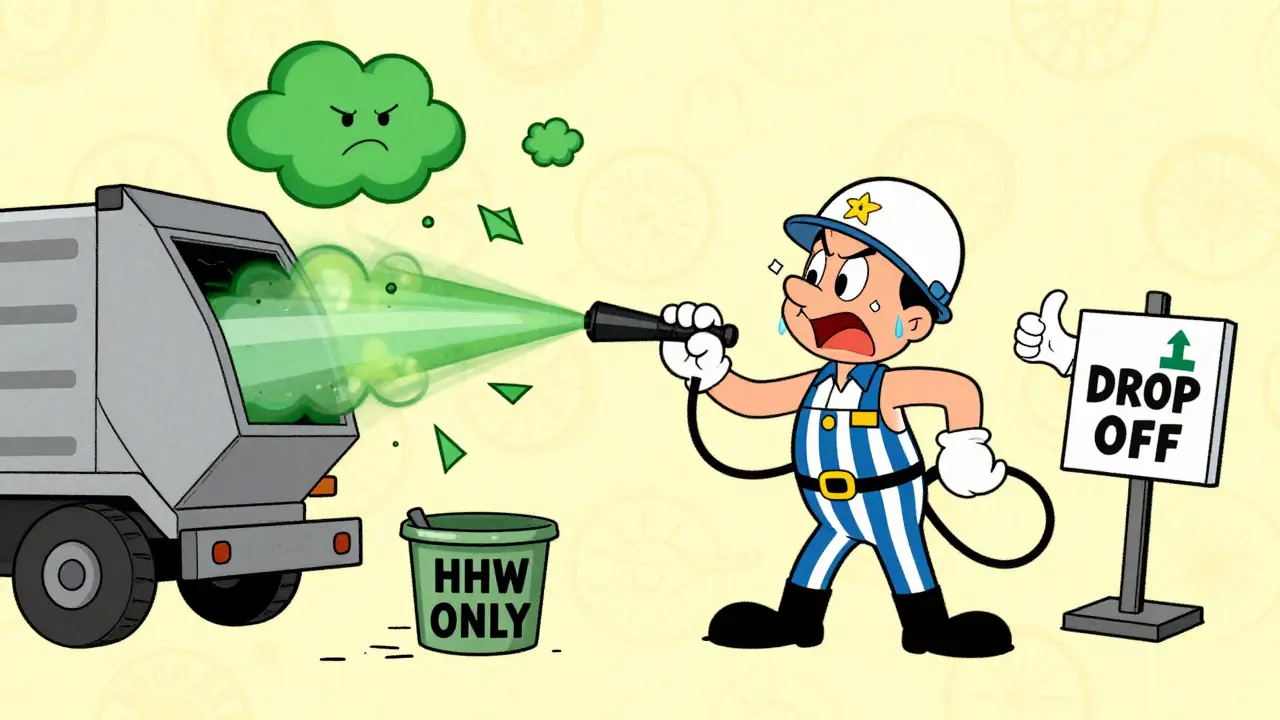
Inhalers are tricky because they’re both medication and pressurized containers. Never puncture them. Never put them in recycling bins. Never throw them in the fire. First, check the label. Some inhalers say "Do not dispose of in household trash." If it does, follow those instructions. Here’s what to do:- Call your local waste management agency. Ask if they accept aerosols or have a Household Hazardous Waste (HHW) drop-off.
- Some pharmacies like Walgreens and CVS offer inhaler recycling at select locations-but only about half of them do. Call ahead.
- Check if your city runs a special collection day. New York City, for example, accepts aerosols at designated drop-off sites.
- If no options exist, remove the metal canister from the plastic mouthpiece. The plastic part can go in the trash. The metal canister? Put it in a sealed plastic bag and label it "INHALER - DO NOT COMPRESS." Then put it in the trash. This is a last resort.
How to Dispose of Medicated Patches
Patches are the most dangerous to dispose of improperly. Even after use, they still contain a lot of medicine. Fentanyl patches, for example, can kill someone just by touching the sticky side. The FDA has a flush list of medications that should be flushed down the toilet immediately if unused. Fentanyl patches are on that list. If you have one that’s expired or unopened, flush it right away. For patches that have been used:- Fold the patch in half so the sticky sides stick together.
- Place it in a sealed plastic bag or container.
- Throw it in the trash. Do not flush unless it’s on the FDA flush list.
Take-Back Programs Are Your Best Bet
The DEA runs two National Prescription Drug Take Back Days each year-usually in April and October. In October 2022, over 985,000 pounds of medication were collected at 5,800 locations. That’s more than half a million EpiPens, inhalers, and patches kept out of landfills and waterways. You don’t need to wait for those days. Many police stations, hospitals, and pharmacies have permanent drop boxes. The DEA’s website lists over 14,000 permanent collection sites nationwide. Rural areas are still behind-only 37% of rural counties have permanent options, compared to 89% in cities. If you live in a rural area, ask your pharmacist or doctor to hold onto your expired items until you can get to a nearby town.
What Not to Do
Don’t flush patches unless they’re on the FDA flush list. Flushing the wrong one can pollute water systems. The USGS found pharmaceuticals in 80% of U.S. waterways, and endocrine disruptors from meds are harming fish and frogs. Don’t throw EpiPens in recycling. They’re not plastic bottles. They’re medical devices with needles and chemicals. Don’t leave them on the counter. Kids and pets don’t know the difference between a patch and a sticker. Don’t assume your pharmacy will take them. Many only accept pills. One Reddit user wrote, "My CVS said they only take pills, not auto-injectors." Always call first.How to Stay Prepared
Check expiration dates every month. Set a phone reminder. Most EpiPens last 12-18 months. Inhalers last 1-2 years. Patches last 1-3 years. Keep a dedicated sharps container at home. They cost $5-$15 at pharmacies. Use a sturdy plastic bottle if you don’t want to buy one. Talk to your doctor or pharmacist when you get a new prescription. Ask: "Where do I take the old one?" Most will give you a free take-back bag or direct you to a location. The market for safe medication disposal is growing fast-projected to hit $1.2 billion by 2027. California passed a law in 2024 requiring drug makers to pay for disposal programs. That means better access soon.Frequently Asked Questions
Can I recycle the plastic part of an inhaler?
Only if you remove the metal canister first. The plastic mouthpiece can go in the recycling bin if it’s clean and empty. But the metal canister-containing pressurized gas-must be treated as hazardous waste. Never recycle the whole inhaler as-is.
What if I can’t find a take-back location nearby?
If you’re in a rural area with no drop-off sites, store expired items safely in a labeled, sealed container until you can travel to a nearby town. Call your local hospital or health department-they may have a mail-back program or temporary collection point. Never leave them unsecured.
Is it safe to flush fentanyl patches?
Yes, if they’re unused or expired. Fentanyl is on the FDA’s flush list because it’s extremely potent-even small amounts can be deadly. Flushing prevents accidental exposure. For used patches, fold them sticky-side together and trash them.
Can I reuse an expired EpiPen in an emergency?
No. Expired EpiPens may not deliver the full dose. Studies show epinephrine loses potency over time. In a life-threatening reaction, you need the full strength. Always carry a current one. If you’re out of options and have no choice, use the expired one-but call 911 immediately after.
Why can’t I just throw patches in the trash without folding them?
Unfolded patches still have active medicine on the sticky side. A child, pet, or sanitation worker could touch it and absorb the drug through their skin. Folding it traps the medication inside and reduces exposure risk. Always fold sticky-side to sticky-side before tossing.


Jenci Spradlin
January 10, 2026 AT 00:46just threw an old inhaler in the trash last week. didn’t think twice. now i’m kinda freaked out. thanks for the wake-up call. gonna grab one of those take-back bags next time i refill.
Diana Stoyanova
January 10, 2026 AT 10:32ok but let’s be real-why is it on US to fix this? drug companies make billions off these things, then dump the responsibility on grandma who doesn’t know where the nearest take-back site is. california’s law forcing manufacturers to pay? that’s the only real solution. stop making consumers the garbage men of the pharmaceutical industry.
Micheal Murdoch
January 11, 2026 AT 18:25there’s something deeply ironic about how we treat medicine in this country. we’re told to save every pill, never waste a dose, then suddenly-when it’s expired-we’re left to figure out how to dispose of a tiny bomb in our bathroom cabinet. it’s not just about safety. it’s about dignity. these aren’t trash. they’re tools that kept people alive. we owe them more than a plastic bottle in the garage. we owe them intention. take-back programs should be as easy as buying the meds. if you can get a 3 a.m. delivery of opioids, you damn well should be able to drop off an expired EpiPen at a 7-11. it’s not complicated. it’s just neglected.
Patty Walters
January 11, 2026 AT 21:41my mom used to fold her nicotine patches and tuck ‘em in a pill bottle. i always thought that was weird. now i get it. just folded mine after my last patch and put it in a sealed ziplock. feels better than just tossing it. also-yes, call your pharmacy. mine said they take patches but not pens. so i asked if they’d hold it till i brought in my next refill. they said yes. small win.
tali murah
January 12, 2026 AT 04:29oh my god. you people are so naive. you think folding a patch is enough? have you seen what happens in landfills? rats chew through plastic bags. toddlers find them. pets lick them. and you’re proud of yourself for putting it in a detergent bottle? please. the only safe disposal is a sealed, labeled, biohazard container in a locked cabinet-until you drive 45 minutes to a DEA site. if you’re not doing that, you’re not disposing. you’re just delaying a tragedy.
Jeffrey Hu
January 13, 2026 AT 22:29you missed something. inhalers with albuterol? they’re not on the flush list. but the propellant? HFA-134a? it’s a greenhouse gas 1400x worse than CO2. and you’re just tossing it? the EPA says aerosols should be punctured by certified recyclers-no one’s telling you that. if your city doesn’t have HHW, email your rep. it’s not your job to fix it, but if you care about the planet, you’ll make them fix it.
Gregory Clayton
January 14, 2026 AT 20:07why the hell are we even talking about this? america’s a mess. you can’t even throw out a pill without a PhD in environmental policy. just burn ‘em. if you’re worried about the environment, move to canada. they’ve got it figured out. we’re drowning in rules and nobody’s even fixing the root problem: why do we need so many damn pills in the first place?
Ashley Kronenwetter
January 15, 2026 AT 18:10Thank you for outlining these guidelines with such clarity. I have shared this with my elderly neighbors who often struggle with medication disposal. It is both a public health and ethical responsibility, and your post has made it easier to communicate.
Phil Kemling
January 16, 2026 AT 22:06the real question isn’t how to dispose of them-it’s why we’re allowed to have them at all. if a patch can kill a child with one touch, why is it sold over the counter? if an inhaler can explode in a truck, why isn’t it designed to self-neutralize? we don’t treat car batteries this way. we don’t treat pesticides this way. but we treat life-saving drugs like disposable trinkets. that’s not negligence. that’s systemic. and until we fix that, all the folding and labeling in the world won’t matter.