
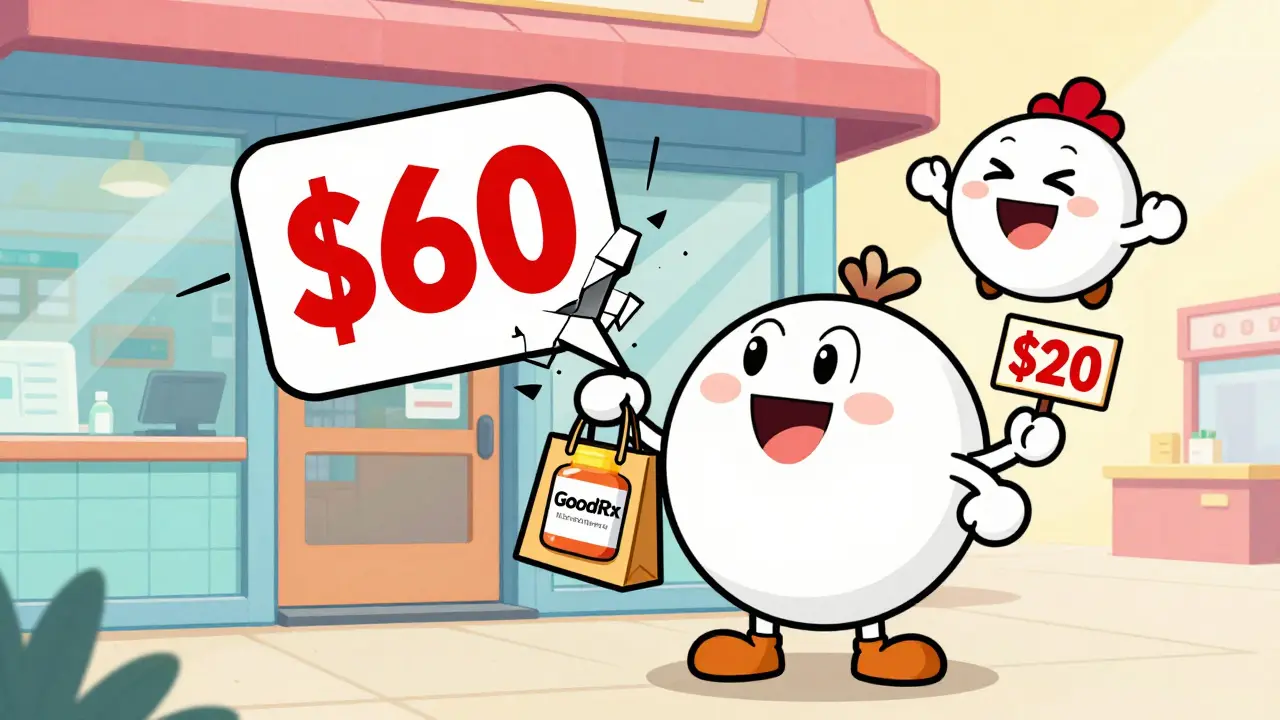
Buying generic medications online can save you hundreds of dollars a year - if you know where to look. Walk into a local pharmacy like CVS or Walmart with a prescription for metformin, amoxicillin, or atorvastatin, and you might pay $60, $30, or $250. But order the same pills through Beem, GoodRx, or Cost Plus Drug Company, and those prices drop to $20, $10, or $50. The difference isn’t a sale. It’s a broken system.
Why Your Local Pharmacy Charges More
Traditional retail pharmacies don’t set prices based on what the drug costs to make. They use a formula called AWP + markup + dispensing fee. AWP stands for Average Wholesale Price - a number that’s often inflated and outdated. Add 20% on top of that, then tack on a $5 fee for handing you the bottle, and suddenly a $10 pill becomes $60. This system was designed for insurance billing, not cash customers. And if you’re uninsured, or your plan has a high deductible, you’re stuck paying full retail. Independent pharmacies and big chains like Walgreens and CVS all use this same pricing model. Even Walmart, known for low prices, applies it. The only difference? Some stores have better negotiated rates with distributors. But none of them are required to show you what they actually paid for the pills. You just see the final number on the receipt.How Online Pharmacies Cut the Middlemen
E-pharmacies like Beem, GoodRx, and SingleCare don’t sell drugs themselves. They act as price matchmakers. They negotiate fixed, transparent discounts directly with pharmacies across the country. No AWP. No hidden markups. Just a single price you see upfront - and it’s often lower than what insurance pays. For example, a 30-day supply of Lipitor (atorvastatin 20mg) costs $250 at CVS. On Beem? $50. Metformin 500mg? $60 retail. $20 online. Amoxicillin? $30 at the counter. $10 online. These aren’t outliers. Trybeem’s 2023 analysis of over 1,200 common generics found consistent savings of 50-80% compared to retail cash prices. These platforms work by connecting you to local pharmacies that have agreed to honor the discount. You pay online, get a voucher, and pick up your meds at a nearby pharmacy. No insurance needed. No copay forms. No confusing pharmacy benefit manager (PBM) jargon.Who Saves the Most?
If you’re uninsured, the savings are dramatic. A 2023 study from Ohio State University found that for most generic medications, direct-to-consumer online prices were 431% cheaper than what insured patients paid at retail pharmacies. Yes, you read that right. Even people with insurance were paying more than cash buyers using e-pharmacies. The reason? Insurance plans involve PBMs that negotiate rebates with drug manufacturers - but those savings rarely make it to the patient. Instead, they inflate list prices, and you end up paying the difference out of pocket. Online platforms skip all that. They cut straight to the pharmacy’s cost. But it’s not just the uninsured. People with high-deductible plans, Medicare Part D gaps, or those taking multiple generics benefit too. For routine medications like blood pressure pills, thyroid meds, or antibiotics, switching to an e-pharmacy can save $300-$800 a year.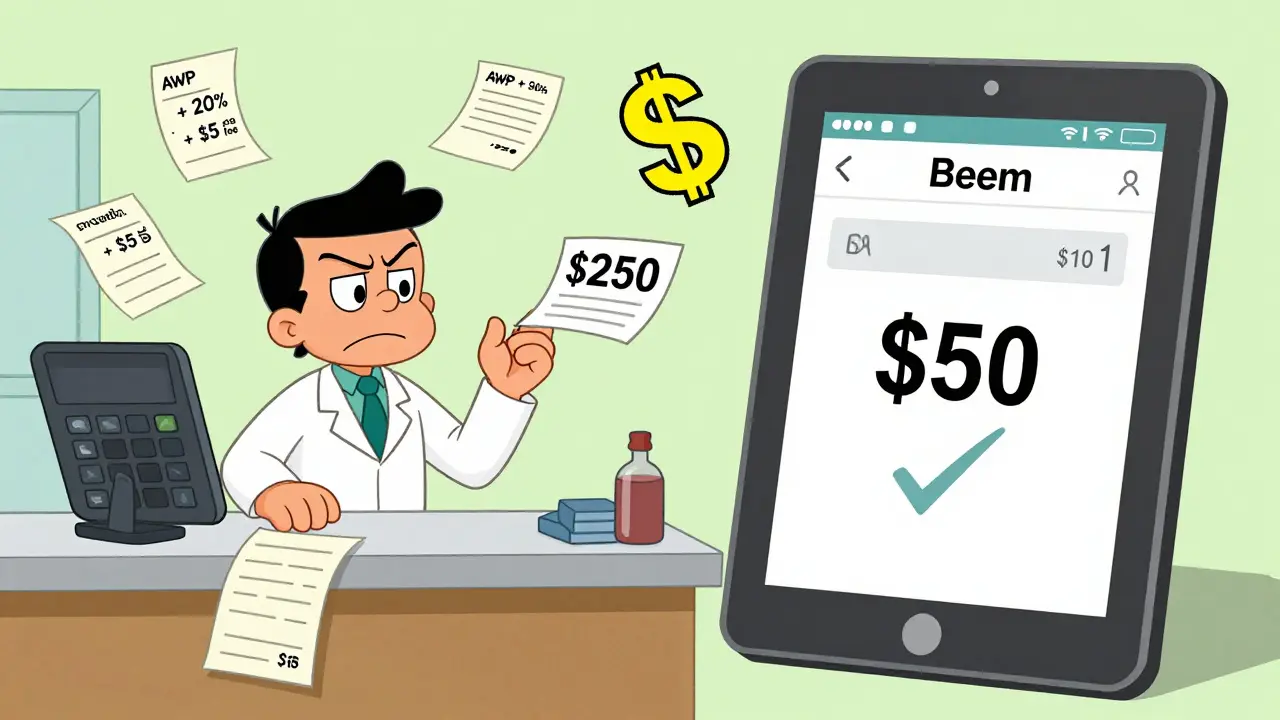
Where Online Pharmacies Fall Short
This isn’t magic. There are limits. Online platforms focus on high-volume, commonly prescribed generics. They don’t cover specialty drugs - things like injectable biologics for multiple sclerosis or rare autoimmune conditions. Glatiramer acetate? It still costs over $24,000 a year, even online. But that’s because it’s complex to make, not because of pricing tricks. Also, you can’t walk out with your meds the same day. Most e-pharmacies require 1-3 business days for processing and shipping. If you need a refill urgently - say, you ran out of antibiotics and feel worse - a local pharmacy is your only option. And while many online services offer refill reminders and mobile apps, you lose the face-to-face pharmacist. That matters if you’re on five medications and need help sorting out interactions. Or if you’re elderly and unsure how to take your pills. Retail pharmacies still win here.Real Savings, Real Examples
Here’s what real people are paying in 2025 for common generics:| Medication | Dosage & Quantity | Retail Cash Price | Online Price (Beem/GoodRx) | Savings |
|---|---|---|---|---|
| Metformin | 500mg x 30 tablets | $60 | $20 | 67% |
| Amoxicillin | 500mg x 30 capsules | $30 | $10 | 67% |
| Lipitor | 20mg x 30 tablets | $250 | $50 | 80% |
| Levothyroxine | 50mcg x 30 tablets | $45 | $12 | 73% |
| Atorvastatin | 10mg x 30 tablets | $180 | $35 | 81% |
| Omeprazole | 20mg x 30 capsules | $40 | $15 | 63% |
These numbers aren’t theoretical. They’re pulled from actual price checks across U.S. pharmacies in late 2025 using Beem, GoodRx, and Cost Plus Drug Company. The same drugs, same dosages, same pharmacies - just different purchasing paths.
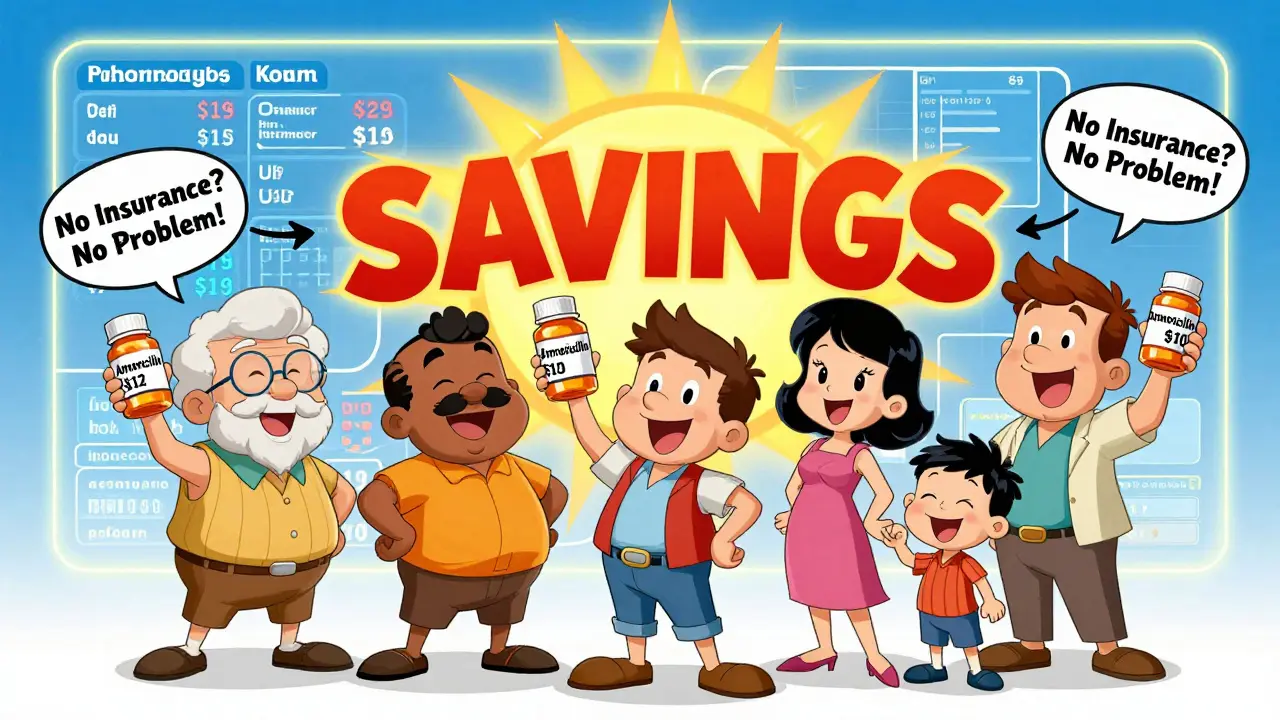
What About Insurance?
Some people assume insurance always beats cash. Not anymore. For many generics, the cash price through an e-pharmacy is lower than your insurance copay. Why? Because your plan’s negotiated rate might be $50, but your copay is $40 - and the pharmacy still has to pay the full retail cost to get the drug. So they charge you more to cover the gap. Always compare. Before you swipe your card, check the online price. If it’s lower, pay cash. You’re not breaking any rules. The pharmacy won’t penalize you. And you’ll save money.How to Start Saving Today
You don’t need to be tech-savvy. Here’s how to do it in five minutes:- Get your prescription from your doctor - same as always.
- Open the Beem, GoodRx, or SingleCare app (free to download).
- Enter your medication name and dosage.
- See the lowest price near you - displayed with the pharmacy name and address.
- Pay online. Print or show the voucher at the pharmacy counter.
Some platforms even let you refill automatically and send reminders when it’s time. No more running out because you forgot to call in a refill.
The Bigger Picture
This isn’t just about saving a few bucks. It’s about fixing a system that’s rigged against everyday people. The U.S. spends more on prescription drugs than any other country - and generic prices are the most broken part. Retail pharmacies, PBMs, and manufacturers all profit from opacity. E-pharmacies force transparency. The market is shifting fast. In 2017, mail-order and online pharmacies made up 37% of retail prescription sales. By 2029, that number is projected to hit $249 billion - growing at 18.2% per year. J.D. Power’s 2025 U.S. Pharmacy Study found patient satisfaction with mail-order services rising steadily. People are tired of overpaying. The future of pharmacy isn’t just online. It’s affordable. And it’s already here.Can I use e-pharmacies if I have Medicare?
Yes. Medicare Part D doesn’t prevent you from paying cash at a pharmacy. If the cash price through GoodRx or Beem is lower than your Medicare copay, you can choose to pay cash instead. Just ask the pharmacist to process it as a cash transaction. This works especially well for generics that aren’t covered well by your plan.
Are online pharmacies safe?
Yes - if you use reputable platforms like Beem, GoodRx, SingleCare, or Mark Cuban’s Cost Plus Drug Company. These services partner with licensed U.S. pharmacies that are regulated by state boards. Never buy from websites that don’t require a prescription or ship from overseas. Stick to services that show you the actual pharmacy location and license number.
Do I need to sign up for a subscription to use these apps?
No. Beem, GoodRx, and SingleCare are completely free to use. You only pay for the medication itself. There are no membership fees, no hidden charges. The apps make money by partnering with pharmacies - not by charging you.
Can I use these services for pet medications?
Sometimes. A few platforms like GoodRx list common pet meds like amoxicillin or metronidazole. But not all pharmacies will fill veterinary prescriptions. Always confirm with the pharmacy before paying. Your vet’s office might also have a preferred online partner for pet meds.
What if the pharmacy says the coupon doesn’t work?
Call the platform’s customer service immediately. Most have live support. It’s usually a system error or the pharmacy didn’t update their pricing. You can also ask to speak to the pharmacist directly - many are familiar with these discount programs. If they still refuse, try another nearby pharmacy listed on the app.



amanda s
December 15, 2025 AT 12:47This is why America is falling apart - pharmacies are gouging people while CEOs take vacations in the Caymans. I paid $87 for amoxicillin last month. EIGHTY-SEVEN. My cat gets better healthcare than I do. Someone needs to burn down the PBM towers.
Peter Ronai
December 16, 2025 AT 00:08Oh please. You think online pharmacies are some kind of miracle? They’re just middlemen repackaging the same supply chain. The real problem? Pharma companies jacking up prices at the source. And don’t even get me started on how these apps push you toward generic versions of drugs that shouldn’t be generic - like thyroid meds. You think levothyroxine is the same across brands? Wake up.
CAROL MUTISO
December 17, 2025 AT 09:05It’s wild how we’ve normalized being robbed by our own healthcare system. You know what’s even funnier? The fact that the same people who scream about government waste will pay $250 for Lipitor without blinking - then complain about taxes. The system doesn’t just favor the rich - it rewards ignorance. These e-pharmacies are the quiet rebellion of the financially literate. I’ve saved over $700 this year just by checking GoodRx before I walk in. No drama. No insurance maze. Just cash and common sense. And yes, I know levothyroxine isn’t interchangeable between brands - but the generic from a licensed U.S. pharmacy? Still safer than buying from some shady Instagram pharmacy. Please don’t be the person who dies because they refused to save $40 on metformin.
Jessica Salgado
December 18, 2025 AT 07:22Wait - so if I have Medicare Part D, I can still use GoodRx if the cash price is lower? I thought the system forced me to use my plan. Is that really legal? And what if the pharmacy says no? Do they have to accept it? I’ve been overpaying for years because I assumed insurance was always better. This changes everything.
Michael Whitaker
December 18, 2025 AT 10:09One must acknowledge that the structural inefficiencies inherent in the American pharmaceutical distribution model are not merely economic anomalies, but symptomatic of a deeper epistemological failure in consumer education. The average patient remains blissfully unaware that the Average Wholesale Price is a fictional construct, and that transparency, once achieved, reveals a grotesque disparity between cost and markup. One might even argue that the proliferation of e-pharmacies constitutes a form of decentralized market correction - a spontaneous order emerging from the ruins of institutionalized opacity.
Joe Bartlett
December 20, 2025 AT 03:59Used GoodRx for my dad’s blood pressure pills. Saved £30 a month. Simple. Done. No fuss. Why isn’t everyone doing this?
Naomi Lopez
December 20, 2025 AT 21:24Can we talk about how the entire PBM system is a pyramid scheme disguised as healthcare? They’re not saving you money - they’re just moving the money around so that the pharmacy gets less, the manufacturer gets more, and you get stuck with the bill. And yet we still act like insurance is the hero. Newsflash: it’s not. It’s the middleman who profits from your confusion.
Salome Perez
December 22, 2025 AT 02:51As someone who grew up in a country where essential medicines are priced at cost plus a 5% administrative fee, I can say with certainty: the U.S. system is not just broken - it’s morally indefensible. The fact that a 72-year-old diabetic has to choose between insulin and groceries isn’t a market failure. It’s a failure of collective conscience. These e-pharmacies aren’t a band-aid - they’re a protest. And I’m grateful for every person who dares to opt out of the exploitation. Keep fighting the good fight.
Evelyn Vélez Mejía
December 22, 2025 AT 03:11There’s a philosophical paradox here: the more transparent the system becomes, the more it exposes the violence of its original design. We are told that innovation and competition lower prices - yet for decades, the pharmaceutical industry operated under a veil of artificial scarcity, protected by regulatory capture and opaque pricing. The rise of e-pharmacies doesn’t just undercut retail - it dismantles the myth that price = value. When a $250 drug can be had for $50, the only thing that justifies the original price is power. And power, when unchallenged, always inflates. This isn’t shopping. It’s a revolution in small, pill-sized increments.