
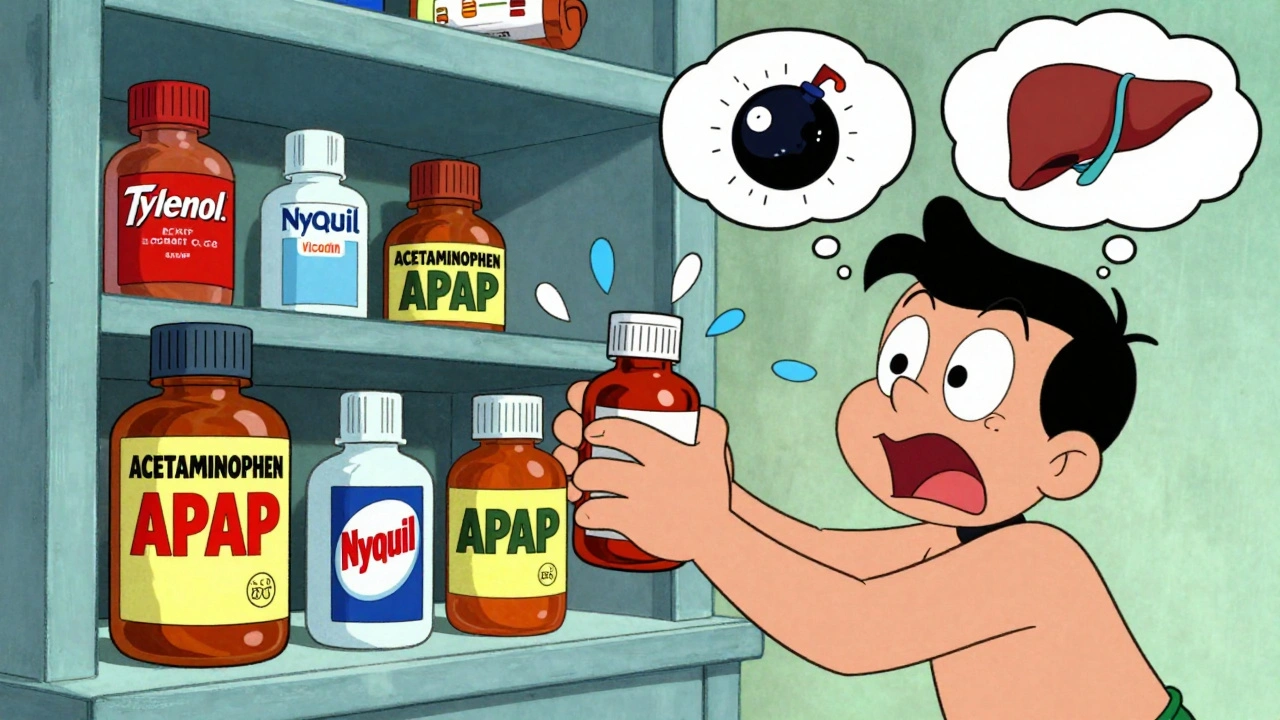
Acetaminophen is in almost every medicine cabinet. You’ve probably taken it for a headache, fever, or sore back. It’s in Tylenol, Excedrin, NyQuil, Vicodin, Percocet - even some cold and flu mixes you didn’t realize contained it. And that’s the problem. Acetaminophen is safe when you use it right. But take just a little too much - or mix it with other meds - and you could be on the path to liver failure without even knowing it.
How Much Is Too Much?
The maximum safe daily dose for adults is 4,000 milligrams. That’s eight 500mg tablets. Sounds like a lot, right? But it’s easy to hit that limit without meaning to. Let’s say you take two extra-strength Tylenol (1,000mg) for your headache. Then you grab a bottle of cold medicine because you’re feeling run down. Many of those contain another 650mg of acetaminophen. Now you’re at 1,650mg - and it’s only 10 a.m. By bedtime, you could easily hit 5,000mg without ever thinking you’re in danger. The real danger isn’t one big mistake. It’s the slow build-up. People don’t realize they’re doubling up. One study found that nearly 25% of accidental overdoses happen because someone took two different medicines, both with acetaminophen, and didn’t know it. The label says "acetaminophen" - but it’s tiny. Sometimes it’s listed as "APAP" - which stands for N-acetyl-para-aminophenol. If you don’t know what that means, you’re not alone. A survey showed only 38% of adults could correctly identify acetaminophen on a medicine label.What Happens When You Overdose?
Your liver breaks down acetaminophen. Normally, it handles it fine. But when you take too much, the liver gets overwhelmed. It starts producing a toxic byproduct called NAPQI. Your liver uses glutathione to neutralize it. But when you flood the system, glutathione runs out. NAPQI starts killing liver cells. Here’s the scary part: you might feel fine for hours - even a full day. No vomiting. No pain. Nothing. Then, suddenly, you feel awful. Nausea. Vomiting. Pain under your right ribs. That’s your liver screaming. By then, damage is already done. In severe cases, liver enzymes can spike to over 10,000 IU/L. Normal is under 40. Jaundice sets in. Your skin and eyes turn yellow. Confusion, bleeding, kidney failure can follow. In the U.S., acetaminophen overdose causes over 56,000 emergency room visits every year. It’s the top reason for acute liver failure - more than alcohol, more than hepatitis. And it’s the leading cause of liver transplants due to drug toxicity. About 500 people die each year from it. Most of those deaths are preventable.Why It’s Worse Than You Think
Unlike ibuprofen or aspirin, acetaminophen doesn’t hurt your stomach. That’s why doctors recommend it for people with ulcers or kidney problems. But that safety edge makes people careless. They think, "It’s just Tylenol. It’s harmless." But the margin between safe and toxic is razor-thin. For most people, 7.5 grams in one day is toxic. That’s just 15 regular tablets. For someone with liver disease, alcohol use, or who’s underweight, the safe limit drops to 2,000mg a day. Alcohol makes it worse. Even three drinks a day can lower your liver’s ability to handle acetaminophen. If you drink regularly and take Tylenol for aches, you’re playing Russian roulette with your liver. And it’s not just alcohol. Certain antibiotics, anti-seizure meds, and even some herbal supplements can increase your risk.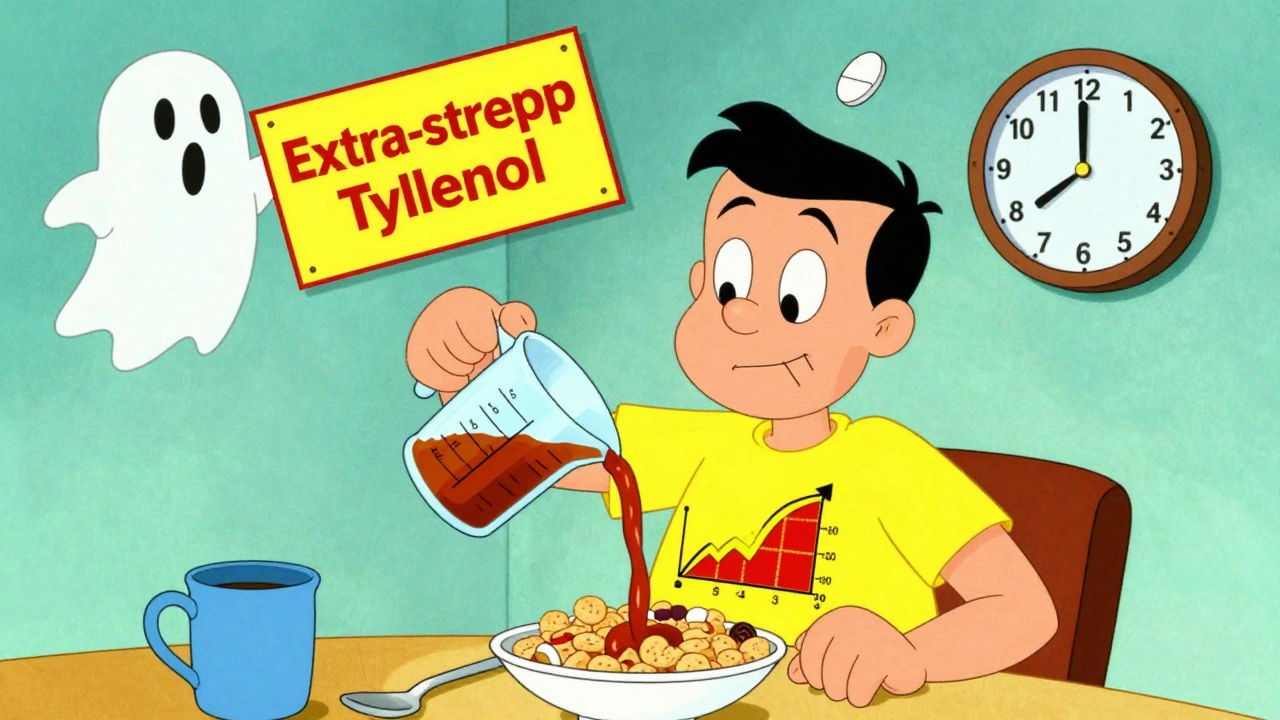
How to Stay Safe - Simple Rules
- Never go over 4,000 mg in 24 hours. For many people, 3,000 mg is a safer max - especially if you’re older, have liver issues, or drink alcohol.
- Read every label. Look for "acetaminophen" or "APAP." Check every pill, syrup, capsule, and nasal spray. If it’s there, count it.
- Don’t mix cold meds with Tylenol. If you’re taking a multi-symptom cold product, don’t take extra Tylenol on top. You’re doubling your dose.
- Avoid alcohol entirely while taking acetaminophen. Even one drink can raise your risk. If you drink regularly, talk to your doctor about safer pain options.
- Use the measuring tool that comes with liquid meds. A kitchen teaspoon isn’t accurate. A tablespoon is three times bigger than a teaspoon. Kids are especially at risk from measurement errors.
- Know your prescription meds. Vicodin, Percocet, and other opioid painkillers often contain acetaminophen. If you’re on these, your daily limit drops. Your doctor should tell you - but don’t assume they did. Check the label.
What to Do If You Think You’ve Taken Too Much
If you suspect an overdose - even if you feel fine - call Poison Control immediately. In the U.S., it’s 1-800-222-1222. In Australia, call 13 11 26. Don’t wait for symptoms. The antidote, N-acetylcysteine (NAC), works best if given within 8 hours. After 16 hours, the chance of liver damage jumps dramatically. One woman in Ohio took six extra-strength Tylenol over 12 hours for back pain. She felt fine. No nausea. No pain. But her liver enzymes were 12 times higher than normal. She ended up in the hospital. She recovered fully because she called Poison Control right away. Another man waited 24 hours. He needed a liver transplant.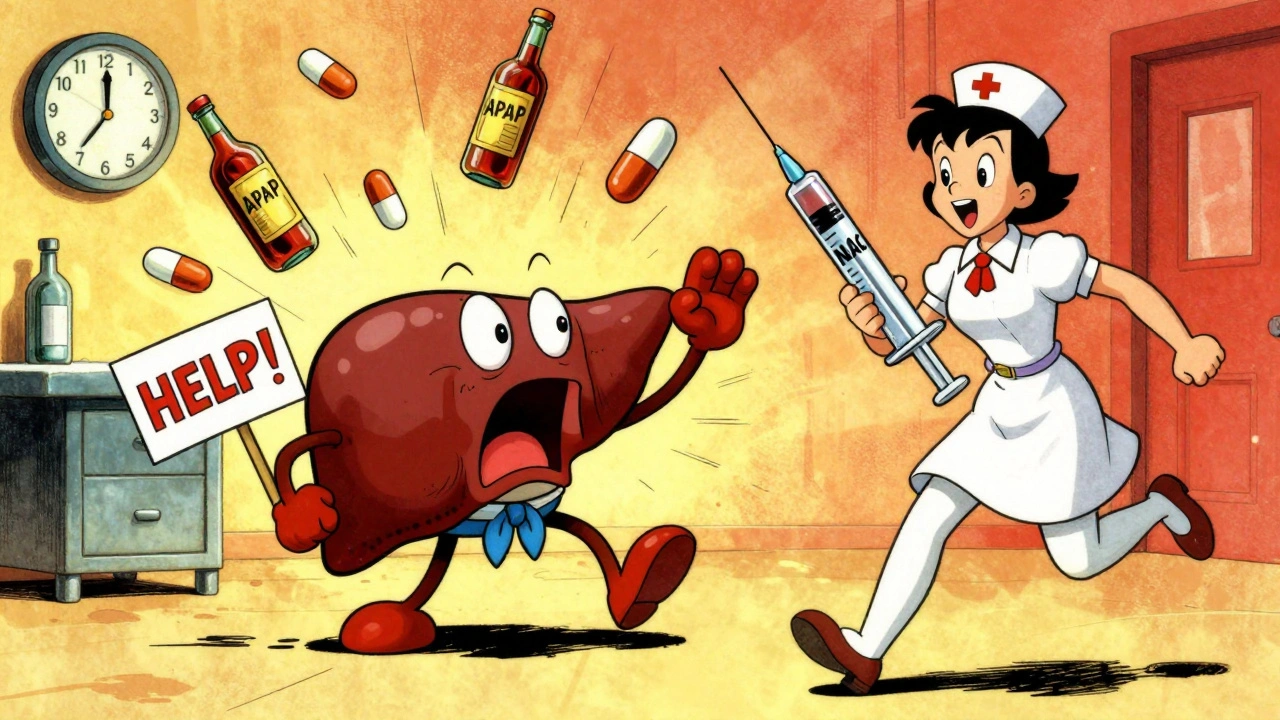
Special Cases: Kids and Seniors
For children, dosing is based on weight - not age. Always use the dosing chart on the bottle. Never give adult Tylenol to a child. The concentration is different. A single adult tablet can be deadly for a toddler. For seniors, metabolism slows. The liver doesn’t process drugs as fast. Many older adults take multiple meds - and don’t realize acetaminophen is in several of them. A daily 3,000mg limit is safer than 4,000mg. Talk to your pharmacist. They can run a full med review and flag hidden acetaminophen.What’s Changing?
The FDA is pushing for bigger, bolder labels that say "ACETAMINOPHEN" in large print. Right now, it’s often buried in fine print. Some apps are being developed to scan barcodes and tell you your total daily acetaminophen intake. That’s helpful - but not yet widely available. The real fix? Education. Most people don’t know acetaminophen is in their cold medicine. They don’t know "APAP" means the same thing. They don’t know their liver can fail silently. Until labels, packaging, and public awareness catch up, you have to be your own watchdog.Final Thought: It’s Not the Drug. It’s the Habit.
Acetaminophen isn’t evil. It’s one of the most useful pain relievers we have. It’s gentle on the stomach. It works. But because it’s so common, people treat it like candy. Don’t. Treat it like a powerful medicine - because it is. Know your limits. Read every label. When in doubt, don’t take it. Call your doctor. Or call Poison Control. Your liver doesn’t have a voice. You have to speak for it.Can I take acetaminophen if I drink alcohol?
It’s not recommended. Even moderate drinking - three drinks a day - can make your liver more vulnerable to acetaminophen damage. If you drink regularly, your safe daily limit drops to 2,000 mg or less. If you’re unsure, talk to your doctor. Safer alternatives like ibuprofen (if you don’t have kidney or stomach issues) may be better for you.
Is Tylenol safer than ibuprofen?
It depends. Tylenol (acetaminophen) is gentler on your stomach and kidneys than ibuprofen, which can cause ulcers or worsen high blood pressure. But Tylenol is far more dangerous to your liver if you take too much. Ibuprofen overdose rarely causes permanent organ damage. Tylenol overdose can kill your liver in days. Neither is "safer" - both need careful use.
What are the signs of acetaminophen overdose?
Early signs (0-24 hours): nausea, vomiting, loss of appetite, sweating, and feeling generally unwell. These can be mild and easily ignored. Later signs (24-72 hours): pain under the right ribs, dark urine, yellow skin or eyes (jaundice), confusion, and extreme fatigue. By this point, liver damage is already severe. If you took too much - even if you feel fine - get help immediately.
Can I recover from acetaminophen liver damage?
Yes - if you get treated fast. If you take N-acetylcysteine (NAC) within 8 hours of overdose, your chances of full recovery are over 90%. After 16 hours, that drops to 60%. If damage is severe and treatment is delayed, you may need a liver transplant. Many people do recover completely if caught early. But some suffer permanent liver damage or die.
How do I know if a medicine has acetaminophen?
Look for "acetaminophen" or "APAP" on the Drug Facts label. It’s often listed right under "Active Ingredients." Common products that contain it: Tylenol, Excedrin, NyQuil, DayQuil, Vicodin, Percocet, Darvocet, and many cold and flu remedies. If you’re unsure, check the label or ask your pharmacist. Never assume a medicine is safe just because it’s "over-the-counter."
What’s the safest way to take acetaminophen for chronic pain?
For ongoing pain, stick to the lowest effective dose - often 3,000 mg or less per day. Don’t take it every day unless your doctor says so. Try non-medication options like heat, stretching, or physical therapy. If you’re on opioids or other meds, your doctor should adjust your acetaminophen limit. Never use it as a long-term solution without medical supervision.


James Kerr
December 2, 2025 AT 01:09Yikes, I had no idea so many cold meds had acetaminophen 😅 I just grabbed a bottle of NyQuil last week for my cold and took two Tylenol on top... thanks for the wake-up call!
Jim Schultz
December 3, 2025 AT 08:00Let’s be clear: this isn’t ‘safety advice’-it’s basic cognitive hygiene. If you can’t read a drug label, you shouldn’t be allowed to self-medicate. APAP isn’t a secret code-it’s on every bottle in bold. The fact that 62% of adults can’t identify it? That’s not ignorance. It’s negligence. And yes, I’m talking to you, the person who ‘just took one extra’-you’re not special, you’re a statistic waiting to happen.
Kidar Saleh
December 5, 2025 AT 01:19In the UK, we’re taught from a young age that ‘over-the-counter’ doesn’t mean ‘harmless.’ I remember my grandmother reading every label like it was a legal contract. It’s tragic that in the U.S., where healthcare is so fragmented, people treat medicine like candy. This post should be mandatory reading in every pharmacy, every school, every doctor’s office. The liver doesn’t scream until it’s too late-and we’re all too busy to listen.
Chloe Madison
December 5, 2025 AT 01:24Thank you for this incredibly detailed and vital breakdown. I work in a clinic, and I see this every week-patients who took ‘just a little extra’ because they ‘didn’t think it counted.’ Please, if you’re reading this: write down your daily acetaminophen intake on your phone. Set a reminder. Ask your pharmacist to flag it in your profile. Your liver is your most underrated organ-it works 24/7, and it deserves better than guesswork.
Makenzie Keely
December 5, 2025 AT 10:14Correction: The FDA is not merely ‘pushing’ for bigger labels-they’ve mandated them. Effective January 2025, all OTC products containing acetaminophen must display ‘ACETAMINOPHEN’ in 14-point bold type, with ‘APAP’ in parentheses immediately after. This is not optional. Also, the 4,000mg limit is outdated for many populations; the American Liver Foundation now recommends 3,000mg as the upper limit for all adults unless otherwise directed by a physician with full medication review. Don’t rely on packaging alone-consult your pharmacist. They’re paid to know this stuff.
Francine Phillips
December 7, 2025 AT 00:57yeah i get it. dont mix stuff. i know. but honestly, how many people actually read labels? i mean, i just take what feels right. its not like i'm trying to kill myself. just a headache.
Katherine Gianelli
December 8, 2025 AT 23:49My mom took Tylenol every night for her arthritis-she didn’t even know her nighttime cold medicine had it too. She ended up in the hospital last year. We didn’t realize until the doctor said, ‘You’re lucky she’s still here.’ I started making a little chart for my whole family now-what’s in each bottle, what time we take it, how much total. It’s a tiny habit, but it saved her life. If you’re reading this and you take more than one med a day? Do this. Your future self will thank you.
Joykrishna Banerjee
December 9, 2025 AT 00:28Acetaminophen is a capitalist tool designed to make you complacent. The pharmaceutical industry profits from your ignorance-why else would APAP be hidden in 8-point font? Meanwhile, ibuprofen is demonized for gastric risks, while acetaminophen-far more lethal-is marketed as ‘gentle.’ This is systemic gaslighting. And don’t get me started on NAC-it’s a Band-Aid on a hemorrhage. The real solution? Ban OTC acetaminophen entirely. Let doctors prescribe it. Then maybe people will stop treating their liver like a disposable sponge.