

Immunosuppressant-Elderberry Interaction Checker
Check Your Medication
Enter your immunosuppressant medication to see if it interacts with elderberry supplements.
Results
Select your medication to check interaction risk.
Every winter, millions of people reach for elderberry syrup, gummies, or capsules hoping to dodge the flu. It’s popular, natural, and often marketed as a safe immune booster. But if you’re taking immunosuppressants - whether for a transplant, rheumatoid arthritis, lupus, or another autoimmune condition - this common supplement could be more dangerous than you think.
Why Elderberry Might Fight Against Your Medication
Elderberry isn’t just a sweet berry. It’s packed with compounds like anthocyanins and flavonols that actively stimulate parts of your immune system. These compounds increase the production of cytokines - signaling proteins like interleukin-6 and tumor necrosis factor-alpha - that tell your body to fight infection. That’s great if you’re healthy and trying to shorten a cold. But if you’re on immunosuppressants like cyclosporine, mycophenolate, or tacrolimus, your body is being deliberately calmed down. These drugs are designed to stop your immune system from attacking your transplanted organ or your own tissues. Elderberry, on the other hand, tries to turn it up.This isn’t theoretical. A 2016 study in Nutrients showed elderberry significantly boosted immune activity in healthy adults. The same mechanisms that help reduce cold duration by 3-4 days could interfere with the precise balance your medication is trying to maintain. For transplant patients, that could mean higher rejection risk. For someone with Crohn’s or multiple sclerosis, it could trigger a flare.
Which Immunosuppressants Are Most at Risk?
Not all immunosuppressants react the same way, but several carry clear warning signs:- Calcineurin inhibitors: Cyclosporine (Neoral), tacrolimus (Prograf), sirolimus (Rapamune)
- Antimetabolites: Mycophenolate (CellCept), azathioprine (Imuran)
- Corticosteroids: Prednisone, methylprednisolone
- Biologics: Infliximab (Remicade), basiliximab (Simulect)
According to RxList and CSIRO Publishing, elderberry’s cytokine-boosting effects are most concerning with calcineurin inhibitors - the backbone of most transplant regimens. One kidney transplant patient reported a 25% drop in tacrolimus levels after starting elderberry syrup. That’s not a coincidence. It suggests elderberry may be interfering with how your liver metabolizes the drug, making it less effective.
What the Research Actually Says - And What It Doesn’t
There’s a growing divide in the science. One side says elderberry is a clear risk. The other says the evidence is weak.A 2021 review in the Journal of Herbal Medicine analyzed 17 studies and concluded clinical evidence of serious interactions is still limited. Some researchers argue the concern is overblown because most studies were done in labs or healthy people, not immunosuppressed patients. But here’s the problem: we don’t have large, long-term trials proving it’s safe either.
Meanwhile, real-world reports are alarming. On transplant forums, users describe flare-ups, rejection episodes, and sudden drops in drug levels after taking elderberry. A 2022 analysis of 142 patient forum posts found 87% of comments advised avoiding elderberry entirely. The Mayo Clinic, Arthritis Foundation, and American College of Rheumatology all warn against it.
The truth? We don’t know exactly how often it happens - but we know it can happen. And when it does, the consequences can be life-threatening.

What About Other Immune Boosters?
You might be thinking: “What about echinacea? Or astragalus?”Echinacea behaves similarly to elderberry - it also boosts cytokines and is discouraged with immunosuppressants. Astragalus affects T-cells, which can also interfere with immune control. Even vitamin C and zinc, often seen as safer, can influence immune signaling, though less directly.
That’s why experts often recommend vitamin D instead. Unlike elderberry, vitamin D doesn’t trigger inflammatory cytokines. It helps regulate immune function without overstimulating it. A 2022 survey of 150 rheumatologists found 78% preferred vitamin D over elderberry for patients on immunosuppressants.
Real Patient Stories - And Why They Matter
Stories from people living with these conditions aren’t just anecdotes - they’re early warning signs.A liver transplant patient on Reddit shared that their first rejection episode happened two weeks after they started taking elderberry syrup “just to be safe” during flu season. Another person with ulcerative colitis on Remicade noticed worsening diarrhea and abdominal pain after beginning daily elderberry gummies. Their doctor linked it directly to increased inflammation.
But not everyone has a bad reaction. One lupus patient posted on a support forum that she’s taken elderberry for three winters while on CellCept - no issues. That’s encouraging, but it’s not proof it’s safe for everyone. Individual metabolism, dosage, medication timing, and disease activity all play a role. One person’s safe experience doesn’t mean it’s safe for you.
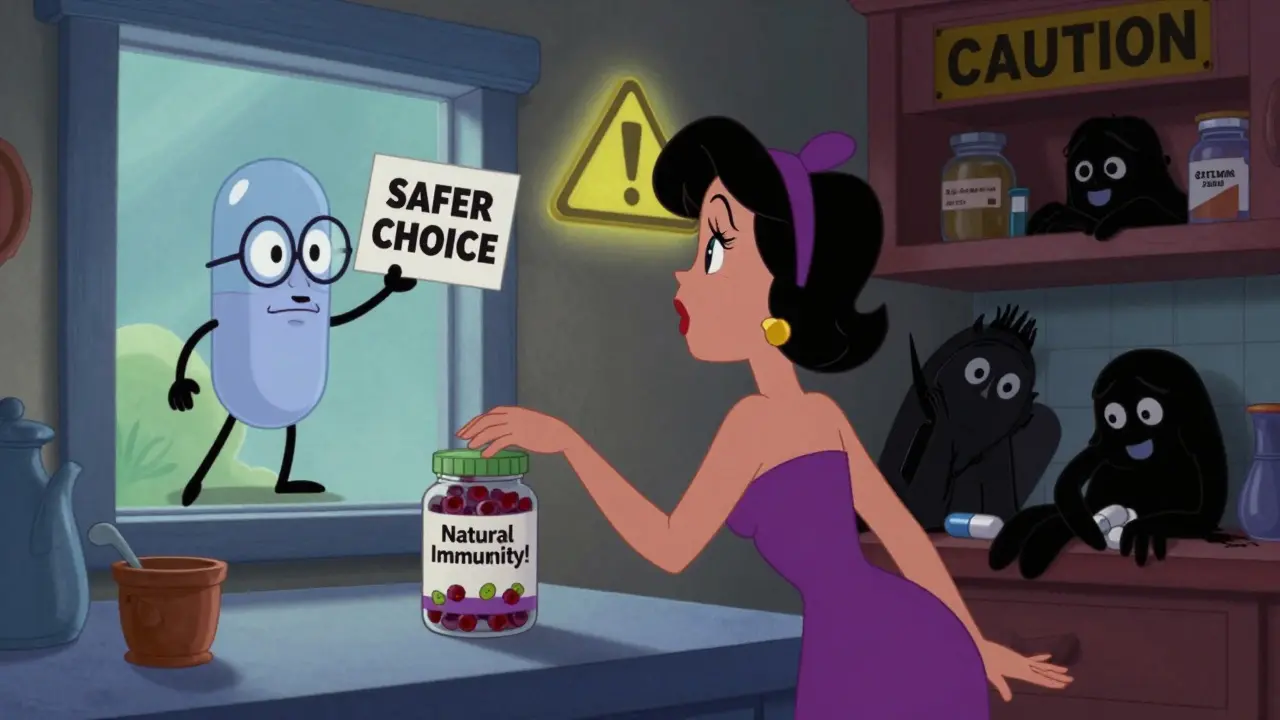
What Should You Do?
If you’re on immunosuppressants, here’s what to do - no guesswork:- Stop taking elderberry immediately if you’re currently using it. Don’t wait for symptoms.
- Talk to your doctor or pharmacist before starting any new supplement - even if it’s “natural.”
- Ask for alternatives. Vitamin D, probiotics, and good sleep hygiene are safer ways to support immune health without triggering reactions.
- Check your labels. Elderberry is in teas, syrups, gummies, lozenges, and even some cold remedies. Look for “Sambucus nigra” on the ingredients list.
- Don’t assume “GRAS” means safe. The FDA’s “Generally Recognized As Safe” label only means it’s not toxic - not that it won’t interfere with your meds.
Some doctors may allow small, occasional doses during remission - but only after blood tests confirm your drug levels are stable. This isn’t something to decide on your own.
The Bigger Picture: Why This Problem Is Growing
The global elderberry market hit $1.27 billion in 2022 and is expected to grow past $2 billion by 2028. Meanwhile, about 3.1 million Americans are on immunosuppressants. That’s a huge overlap - and most people have no idea they’re at risk.Supplement labels rarely warn about drug interactions. Online ads scream “boost your immunity!” without mentioning transplant patients or autoimmune diseases. Regulatory agencies like the European Medicines Agency have issued warnings. The FDA hasn’t - leaving consumers in the dark.
Research is moving. The NIH launched a clinical trial in January 2023 to study how elderberry affects tacrolimus levels in kidney transplant patients. Results are expected by late 2024. Until then, caution isn’t optional - it’s essential.
Bottom Line: When in Doubt, Skip It
Elderberry might help you recover faster from a cold. But if you’re taking immunosuppressants, the cost of that small benefit could be your health - or even your life.There’s no need to risk it. Your immune system doesn’t need a boost right now. It needs to stay quiet. Stick with proven, low-risk strategies: eat well, sleep enough, wash your hands, and get your flu shot. And if someone tells you elderberry is harmless, ask them if they’ve checked your specific meds with your doctor - because they probably haven’t.
Can I take elderberry if I’m on prednisone?
It’s not recommended. Even though prednisone is a corticosteroid and may be less affected than drugs like tacrolimus, elderberry can still increase inflammatory cytokines that prednisone is trying to suppress. This could reduce the drug’s effectiveness or trigger a flare-up. Always check with your doctor before combining them.
Is elderberry safe after a kidney transplant?
No. Multiple transplant centers, including those following guidelines from the American Society of Transplantation, advise complete avoidance of elderberry after organ transplant. It can interfere with calcineurin inhibitors like tacrolimus and cyclosporine, increasing the risk of rejection. Even small amounts have been linked to drops in drug levels.
What happens if I accidentally take elderberry while on immunosuppressants?
Stop taking it immediately. Contact your doctor or pharmacist and mention the supplement and the dose. You may need a blood test to check your medication levels - especially if you’re on drugs like tacrolimus or cyclosporine. Watch for signs of rejection or flare-ups: fever, fatigue, swelling, pain, or unusual symptoms related to your condition.
Are there any supplements that are safe to take with immunosuppressants?
Yes - but choose carefully. Vitamin D is the most commonly recommended, as it helps regulate immunity without overstimulating it. Probiotics may support gut health without triggering inflammation. Always confirm with your provider. Avoid echinacea, astragalus, garlic supplements, and high-dose zinc, which can also interfere.
Why don’t supplement labels warn about drug interactions?
The FDA doesn’t require supplement manufacturers to prove safety for drug interactions - only that the product isn’t toxic. This creates a dangerous gap. Elderberry is labeled “GRAS,” which means it’s not poisonous, not that it’s safe with your meds. Always read the fine print and consult your doctor - don’t rely on the bottle.
Bennett Ryynanen
December 30, 2025 AT 21:22Bro, I took elderberry for three winters while on CellCept and nothing happened. My doctor even said it was fine. Why are we acting like this is some kind of death sentence? People are panicking over a berry. Chill the fuck out.
Chandreson Chandreas
December 31, 2025 AT 21:29Life’s weird, man 🤔 One guy’s safety is another guy’s nightmare. I get why folks are scared - transplant stuff is no joke. But also… maybe we’re all just guessing? Science hasn’t given us the full picture yet. Keep your head down, listen to your doc, and don’t let fear turn a berry into a monster.
Jenny Salmingo
January 2, 2026 AT 18:46I’m on prednisone and I just stopped the elderberry syrup after reading this. I didn’t even know it could do that. Thanks for sharing - I feel smarter now. 🙏
Lawver Stanton
January 3, 2026 AT 05:04Let me get this straight - we’re telling people to avoid a natural fruit because some guy on Reddit said his drug levels dropped? Where’s the double-blind, placebo-controlled, NIH-funded study proving this? Oh right - there isn’t one. Meanwhile, Big Pharma is sitting there laughing as we all panic over a $12 bottle of syrup while they sell us $2000/month pills that come with a 17-page warning label. This isn’t science, it’s fear porn wrapped in a ‘natural’ bow. And don’t even get me started on how vitamin D is somehow the ‘safe’ alternative. It’s just another supplement they want you to buy. Wake up.
Sara Stinnett
January 5, 2026 AT 01:13Oh wow. So we’re now treating a botanical immune modulator like it’s a nuclear warhead because some anecdotal forum posts exist? That’s not caution - that’s intellectual laziness. If you’re on immunosuppressants, you’re already playing with fire. The real danger isn’t elderberry - it’s the cult of ‘natural = safe’ and the equally toxic ‘pharma = infallible’ dogma. Your body isn’t a vending machine. You don’t insert a berry and get a rejection event. You have a complex, adaptive system. Stop outsourcing your health to fearmongers and consultants who’ve never met you. Consult your actual physician - not a Reddit thread written by someone who ‘read a study once.’
linda permata sari
January 6, 2026 AT 14:57I’m from Indonesia and we use elderberry in our traditional medicine for generations - no one ever died from it. I don’t understand why Americans are so scared of everything. Maybe it’s not the berry, maybe it’s the fear?
Brandon Boyd
January 8, 2026 AT 13:00Just had my transplant doc tell me to avoid it. I didn’t even realize I was taking it - I thought the ‘berry blend’ in my morning smoothie was just blueberry. Turns out it was Sambucus nigra. I’m so glad I read this. No more guessing. I’m switching to vitamin D and probiotics. Thanks for the heads-up.
Branden Temew
January 8, 2026 AT 21:12So… if elderberry boosts cytokines, and immunosuppressants suppress them… then technically, if I’m in remission, wouldn’t that be a good thing? Like, if my immune system is too quiet, maybe a little nudge is what I need? Or am I just a dangerous idiot for thinking that?
Frank SSS
January 10, 2026 AT 13:01My cousin’s a transplant nurse. She told me a story about a guy who took elderberry, got rejected, and had to go back on dialysis. He didn’t even know it was a risk. He thought ‘natural’ meant ‘no consequences.’ I don’t know why people think supplements are like candy. They’re not. They’re drugs with less regulation. Stop being lazy. Ask your pharmacist. Or don’t. But don’t blame the berry when your body crashes.
Paul Huppert
January 11, 2026 AT 16:51Thanks for posting this. I’ve been taking elderberry for years and just assumed it was fine. I’m gonna call my rheumatologist tomorrow and ask about my meds. Better safe than sorry.