

Metformin has been the go-to medication for type 2 diabetes for over 25 years. It’s cheap, effective, and backed by decades of research. But if you’ve been on it, you’ve probably heard the same old stories: "It gives you terrible stomach issues," "It drains your B12," "You can’t take it forever." So what’s real? And what’s just noise? Let’s cut through the myths and look at what actually happens when you take metformin long-term.
Myth: Metformin Always Causes Bad Stomach Problems
It’s true - many people get nausea, diarrhea, or bloating when they start metformin. About 28% of people in early trials reported these symptoms, compared to just 16% on placebo. But here’s what no one tells you: most of these side effects go away.
The Diabetes Prevention Program Outcomes Study followed people for 15 years. In the first few months, GI issues were common. By year three, the difference between people on metformin and those not on it disappeared. By year five? You couldn’t tell who was taking it just by how they felt.
Why does this happen? Your gut adjusts. It’s like starting a new exercise routine - your body gets used to it. And if you’re still struggling after a few weeks, there are two proven fixes: switch to the extended-release version (XR), or start low and go slow.
One study showed that when people switched from regular metformin to XR, diarrhea dropped from 18% to just 8%. Another found that starting at 500mg once a day and slowly increasing by 500mg each week cut discontinuation rates from 15% down to under 5%. People who jumped straight to 1,000mg twice daily? Half of them quit within six months.
Real-world stories back this up. On Reddit, users like "Type2Warrior87" say: "Started on IR, had terrible diarrhea for two weeks. Switched to XR once daily with dinner - zero issues after six months." That’s not luck. That’s smart dosing.
Myth: You Can’t Take Metformin for Life
Some people think if you’re on metformin for more than five years, you’re doing something wrong. That’s not true. The longest-running study on metformin - the Diabetes Prevention Program - tracked people for 15 years. No new safety issues popped up. No hidden damage. No sudden spikes in liver or kidney problems.
The only real risk? Lactic acidosis. But here’s the catch: it’s incredibly rare. Only 3 to 10 cases per 100,000 people per year. And almost all of those happened in people with kidney failure, severe liver disease, or who were seriously ill. If your kidneys are working fine (eGFR above 30), metformin is safe to keep taking.
Even better - you don’t just survive on metformin. You do better. People on metformin lost 2-3% of their body weight over 10-15 years. Most other diabetes drugs make you gain weight. Metformin doesn’t. It helps your body use insulin better, without adding pounds.
And it’s not just about blood sugar. Studies show people on metformin have lower rates of heart disease, stroke, and even some cancers compared to those on other medications. That’s why the American Diabetes Association, the European Association for the Study of Diabetes, and the American College of Physicians all still call it the first-line drug - even after newer, pricier options came out.
Myth: Metformin Ruins Your Vitamin B12 Levels
This one’s real - but it’s fixable.
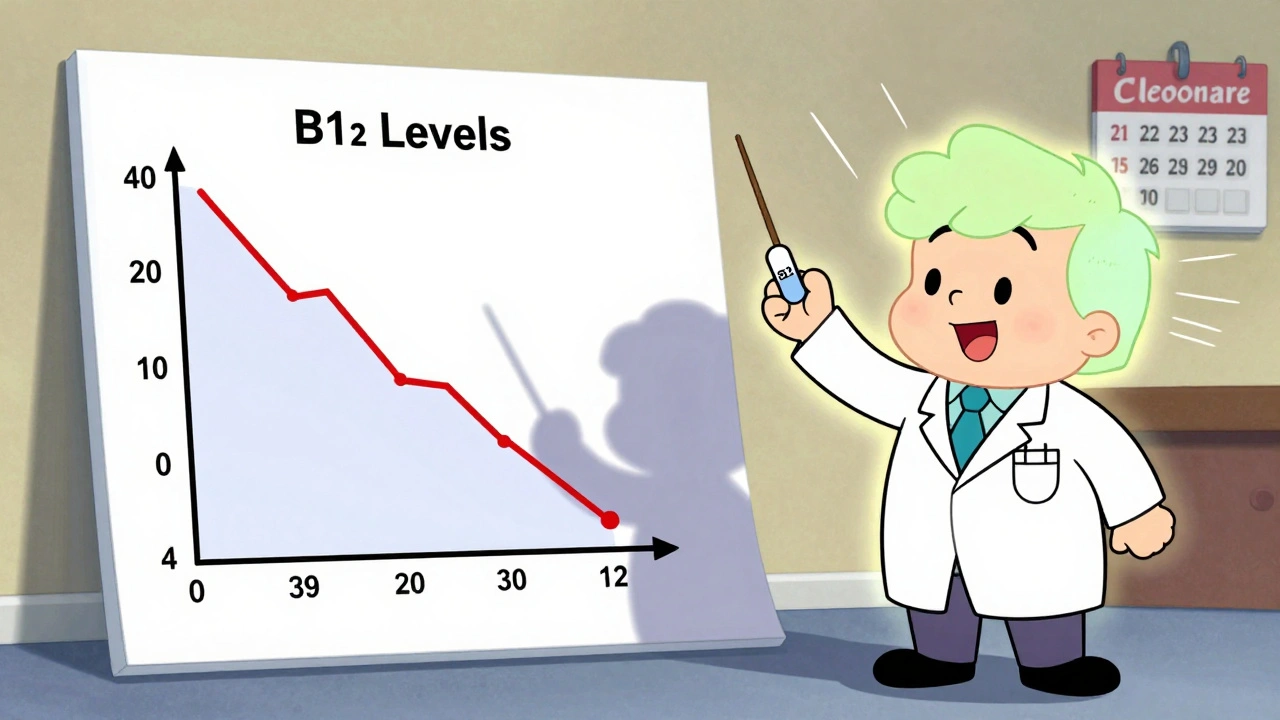
Long-term metformin use (usually over 4 years) can lower your vitamin B12 levels. A 2020 review found users had, on average, a 19% drop in B12 compared to non-users. That’s not a tiny blip - it’s enough to cause fatigue, nerve tingling, or even anemia if left unchecked.
But here’s the thing: B12 deficiency from metformin isn’t permanent. It’s not like kidney damage. It’s not irreversible. You just need to get tested.
The American Diabetes Association recommends checking B12 levels every 2-3 years if you’ve been on metformin for more than four years. If you’re tired all the time, have numb hands or feet, or feel off - get it checked. Simple blood test. If your levels are low, you take a B12 supplement. Oral tablets work fine for most people. Injections? Only if your body can’t absorb it well.
And don’t panic. The risk is real, but it’s manageable. Most people never even know they’re low until they get screened. And once you fix it? You feel better. No need to stop metformin. Just add a cheap, safe supplement.
Myth: Metformin Is Outdated - Newer Drugs Are Better
It’s true: drugs like GLP-1 agonists (Ozempic, Mounjaro) and SGLT2 inhibitors (Jardiance, Farxiga) are getting a lot of attention. They help with weight loss, heart protection, and kidney health. But they’re expensive. And they’re not always better for everyone.
Metformin still works. It’s been studied in over 100,000 people over decades. It’s been tested in real-world clinics, not just fancy trials. It’s been used by millions of people with type 2 diabetes - and it’s kept them healthy.
Plus, it’s dirt cheap. In the U.S., a 30-day supply of generic metformin costs $4-$10. Compare that to $900 a month for Ozempic. Even with insurance, many people pay hundreds for the new drugs. Metformin doesn’t need a copay waiver.
And here’s the kicker: the newest diabetes meds often include metformin in their combo pills. Why? Because it still works. The manufacturers know it. That’s why seven FDA-approved combo drugs now pair metformin with newer agents. It’s not being replaced. It’s being partnered.
What Actually Works: Real Strategies for Taking Metformin
If you’re struggling with metformin, it’s not you. It’s the way you’re taking it.
- Start low. Begin with 500mg once a day, with your evening meal. Wait a week. Then add another 500mg if you feel okay.
- Go slow. Don’t rush to the full dose. It takes time for your gut to adapt.
- Switch to XR. If you’re on immediate-release and still having issues, ask your doctor about switching to extended-release. Once-daily dosing with dinner cuts GI side effects by over 30%.
- Take it with food. Never take it on an empty stomach. Food slows absorption and reduces nausea.
- Check B12. Get tested every 2-3 years after four years on metformin. If low, take a daily 1,000 mcg B12 supplement.
- Don’t quit without a plan. If side effects stick around after three months, talk to your doctor. Don’t just stop. There are solutions.
One user on Diabetes Daily said: "I thought I had to live with the diarrhea. Then my doctor said, ‘Try XR.’ I did. It changed my life." That’s not an outlier. That’s the norm.

What to Do If Metformin Still Doesn’t Work for You
Some people - about 4% - just can’t tolerate it, even with XR or slow titration. If you’re one of them, it’s not failure. It’s biology.
There are other options. SGLT2 inhibitors, GLP-1 agonists, DPP-4 inhibitors - all are effective. But none have the same long-term safety record or price tag. And none are as well-studied for preventing heart disease and cancer.
Before you quit metformin, make sure you’ve tried all the fixes. If you still can’t take it, work with your doctor to find the next best thing. But don’t assume the new drugs are automatically better. For most people, metformin still wins.
Final Take: Metformin Isn’t Perfect - But It’s Still the Best Starting Point
It’s not magic. It doesn’t cure diabetes. It doesn’t make you lose 20 pounds overnight. But it does what it’s supposed to: lowers blood sugar safely, helps you keep weight off, and doesn’t break the bank.
The myths about metformin? Most of them are outdated, exaggerated, or misunderstood. The side effects? Manageable. The B12 risk? Screenable. The long-term use? Proven safe.
If you’re on metformin and feeling okay - keep going. If you’re struggling - don’t give up. Try XR. Slow down. Get your B12 checked. Talk to your doctor.
Metformin has been helping people with type 2 diabetes for over 60 years. It’s not going anywhere. And for most people, it’s still the best place to start - and stay.
Does metformin cause weight gain?
No. Unlike many other diabetes medications, metformin is associated with modest weight loss - typically 2-3% of body weight over 10-15 years. It helps reduce appetite slightly and improves how your body uses insulin, which can lead to less fat storage.
How long does it take for metformin side effects to go away?
Most people notice improvement within 2-4 weeks. By 3 months, side effects like diarrhea and nausea are significantly reduced for the majority. If they persist beyond 3 months, switching to the extended-release version or adjusting the dose often helps.
Can metformin damage your kidneys?
Metformin doesn’t damage healthy kidneys. In fact, it’s safe as long as your kidney function (eGFR) is above 30 mL/min/1.73m². The risk comes if you already have severe kidney disease - then your body can’t clear the drug properly, which could raise the risk of lactic acidosis. Regular kidney tests are recommended, but metformin itself isn’t the cause of damage.
Is metformin safe for long-term use?
Yes. The Diabetes Prevention Program Outcomes Study followed people for 15 years and found no new safety concerns. Metformin remains one of the most studied drugs in medicine, with decades of evidence supporting its long-term safety when used correctly and monitored appropriately.
Should I take a B12 supplement with metformin?
If you’ve been on metformin for more than 4 years, yes - get your B12 levels checked. If they’re low, a daily 1,000 mcg oral supplement is usually enough. You don’t need to take it preventively unless your doctor recommends it after testing. B12 deficiency is easily corrected and doesn’t require stopping metformin.
Can I take metformin with other diabetes medications?
Yes. Metformin is often combined with other drugs like SGLT2 inhibitors or GLP-1 agonists. In fact, many of the newer combination pills (like Jardiance Met or Janumet) include metformin because it works well with them. It’s a foundational drug that complements newer therapies.



Kyle Flores
December 6, 2025 AT 17:32I was terrified to start metformin after hearing all the horror stories, but I followed the slow-start advice and switched to XR. No more stomach nightmares. Honestly? Best decision I ever made for my diabetes. Still taking it 5 years later and feel better than ever.
Olivia Hand
December 8, 2025 AT 17:21Metformin’s not perfect, but calling it ‘outdated’ is like saying a hammer’s obsolete because we’ve got power drills. It’s still the backbone. The B12 thing? Real. But it’s a $5 supplement, not a reason to bail. People act like side effects are a dealbreaker-when 90% of ‘side effects’ vanish if you don’t turbocharge your dose on day one.
Desmond Khoo
December 10, 2025 AT 13:22Y’all need to chill. 😌 I started at 500mg, waited a week, then went to 1000mg. No drama. XR? Game. Changer. 🙌 B12? Took a gummy every morning. Now I’m stable, not bloated, and my HbA1c is 5.8. Metformin’s not magic, but it’s the closest thing we got. Don’t let myths scare you out of your life.
Louis Llaine
December 10, 2025 AT 15:59Wow. Another metformin ad. Next up: ‘Why breathing is underrated.’ I’ve been on it for 8 years. B12’s low, my stomach still hates me, and my doctor just shrugs. Yeah, it’s ‘safe’-but safe doesn’t mean good. Why is this still the gold standard? Because Big Pharma doesn’t make enough off it.
Sam Mathew Cheriyan
December 12, 2025 AT 01:37metformin is a government mind control drug. they put it in the water so we dont get too healthy. i heard it from a guy on youtube who knows about the cia. also b12 is fake, vitamins are a scam. my cousin took it and now he’s in a coma. or maybe it was the flu. hard to tell.
Nancy Carlsen
December 13, 2025 AT 09:18To anyone struggling: you’re not broken. Your body just needs time. I cried the first week. Then I switched to XR and started taking B12. Now I’m hiking, cooking, living. Don’t give up. You deserve to feel good. 💛
Ted Rosenwasser
December 15, 2025 AT 06:01Let’s be real-metformin is the pharmaceutical equivalent of a flip phone. Sure, it works. But why settle for 1998 tech when you’ve got Ozempic with built-in weight loss and cardiac protection? If you’re still on metformin because it’s cheap, you’re not being pragmatic-you’re being exploited by a broken system.
Ashley Farmer
December 15, 2025 AT 09:02I’ve been on metformin for 12 years. My B12 dropped slowly-I didn’t notice until I got dizzy. Got tested, started supplements, and boom-energy back. It’s not scary. It’s just something to monitor. Your doctor isn’t hiding it. They’re just assuming you’ll ask. So ask.
David Brooks
December 17, 2025 AT 02:14I thought I was doomed. Diarrhea every morning. Felt like my guts were staging a rebellion. Then I switched to XR. ONE pill. AT NIGHT. And now? I forget I’m even on it. Metformin didn’t fail me-I failed to listen to the instructions. Don’t be like me. Start slow. Be patient. Your gut will thank you.
Sadie Nastor
December 17, 2025 AT 04:41my doctor said try xr and i was like ‘sure’ and then i was like ‘wait… i feel normal??’ i thought this was just how life was now. turns out i just needed to chill on the dosage. also got my b12 checked-was low. took a tab. now i can walk up stairs without feeling like i’m in a horror movie. 🙏
Nicholas Heer
December 18, 2025 AT 17:30metformin is a tool of the globalist elite to keep us docile. the ‘side effects’ are just the body rejecting synthetic control. and b12? they suppress it on purpose so you keep taking the drug. the real cure? fasting. keto. raw garlic. not some pill from big pharma. i’ve been off it 3 years. my sugar’s better. my soul’s freer.
Sangram Lavte
December 19, 2025 AT 21:55I started metformin in 2015. First month was hell. Switched to XR. No issues since. B12 checked every 2 years. Always fine with a pill. My doctor says it’s the safest drug for type 2. And it’s cheap. Why fight it? Just take it right. Simple.
Kurt Russell
December 21, 2025 AT 19:38Metformin is the OG. The foundation. The unsung hero. GLP-1s get the spotlight? Cool. But they’re built ON metformin’s legacy. Seven combo pills? That’s not coincidence-that’s proof. If you’re still doubting it, you haven’t tried the right approach. Slow. XR. Food. B12. Done. You’re not failing. You’re just uneducated. Let’s fix that.
Stacy here
December 21, 2025 AT 21:32Let’s not romanticize metformin. It’s a Band-Aid on a bullet wound. We’re treating symptoms while ignoring the real disease: processed food, sedentary lives, corporate greed. The drug works? Fine. But we’re being sold a lie that you can drug your way out of a system designed to make you sick. Metformin keeps you alive long enough to pay for more drugs. That’s not health. That’s capitalism.
Jane Quitain
December 22, 2025 AT 14:57my doctor told me to start low and i did and now i dont even think about it anymore. also b12 is like a vitamin, not a big deal. just take it. you dont need to be a scientist to figure this out.