
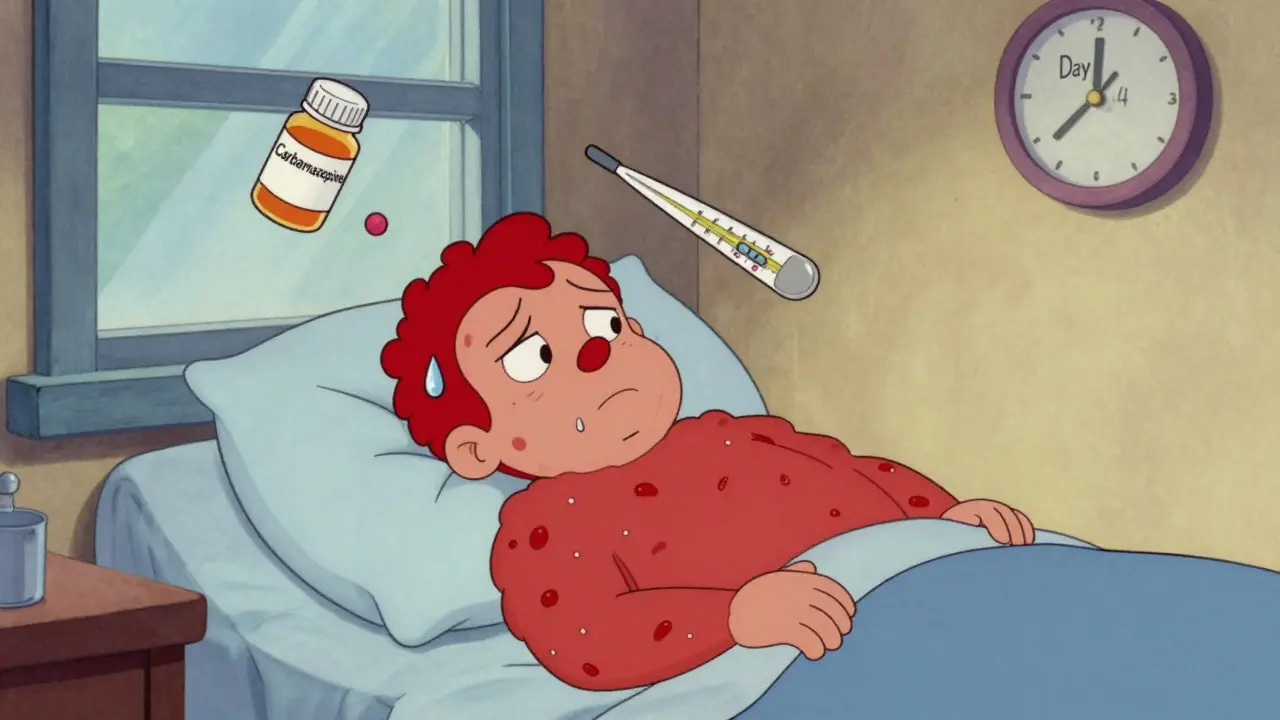
Most people know that a drug can cause a rash or stomach upset right after taking it. But what if the reaction doesn’t show up until days or even weeks later? That’s when things get dangerous-and often missed.
Delayed drug reactions aren’t just annoying rashes. They’re immune system overreactions that can turn life-threatening. Unlike immediate allergies (like anaphylaxis from penicillin), these reactions sneak up. You take the pill, feel fine for a week, then wake up with a fever, a spreading rash, or swollen lymph nodes. By then, the drug is long gone from your system, making it hard to connect the dots.
What Exactly Is a Delayed Drug Reaction?
A delayed drug reaction is an immune response triggered by a medication, but it doesn’t show up until at least five days after you took it-and often much later. These are called Type IV hypersensitivity reactions, meaning your T-cells, not antibodies, are the culprits. Think of it like a slow-burning fuse: the drug enters your body, your immune system learns to recognize it as a threat, and then, days or weeks later, it attacks.
These reactions aren’t rare. Around 80% of all drug hypersensitivity events are delayed, according to the American Academy of Allergy, Asthma & Immunology. They account for 1 to 5 cases per 1,000 hospital admissions. And while many are mild, some can be deadly.
Common Types and Their Warning Signs
Not all delayed reactions look the same. Here are the main ones you need to recognize:
- Maculopapular exanthema (MPE): The most common type-about 80-90% of cases. It looks like a flat, red rash with small bumps. It usually shows up around day 8 after starting the drug. It’s often mistaken for a virus, but it doesn’t go away after the drug is stopped. It can last 1 to 3 weeks.
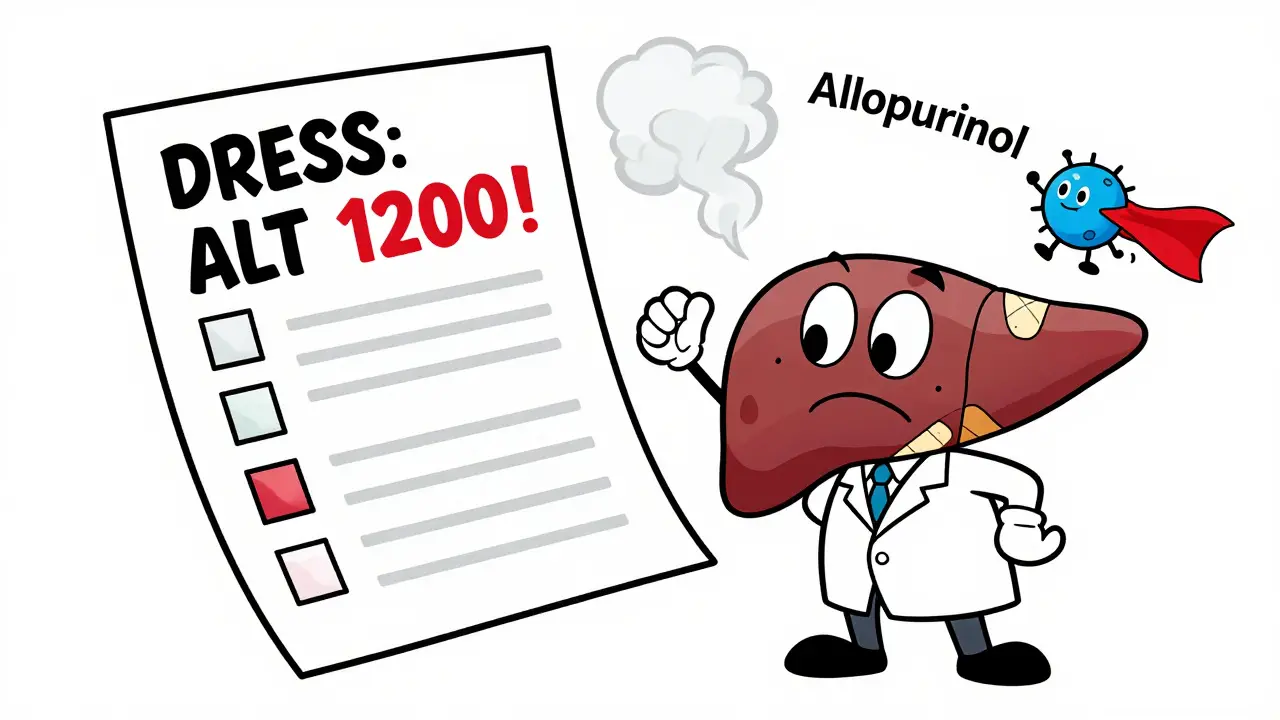
- Drug Reaction with Eosinophilia and Systemic Symptoms (DRESS): This one’s serious. You’ll get a fever over 38.5°C, swollen glands, high levels of eosinophils (a type of white blood cell), and atypical lymphocytes. Liver damage is common-ALT levels can spike above 1,000 U/L. Onset? Usually 2 to 8 weeks after taking the drug. It can relapse even after you feel better.
- Stevens-Johnson Syndrome (SJS) and Toxic Epidermal Necrolysis (TEN): These are medical emergencies. SJS means less than 10% of your skin peels off. TEN is worse-over 30% sloughs away. Blisters form, mucous membranes (mouth, eyes, genitals) burn, and you can develop sepsis. Onset is typically 1 to 2 weeks after starting the drug. Mortality for TEN can hit 30% if over half your skin is affected.
- Acute Generalized Exanthematous Pustulosis (AGEP): A sudden outbreak of small, sterile pustules all over the body. It looks like an infection, but it’s not. It usually resolves within 15 days after stopping the drug, but it can leave dark spots that last months.
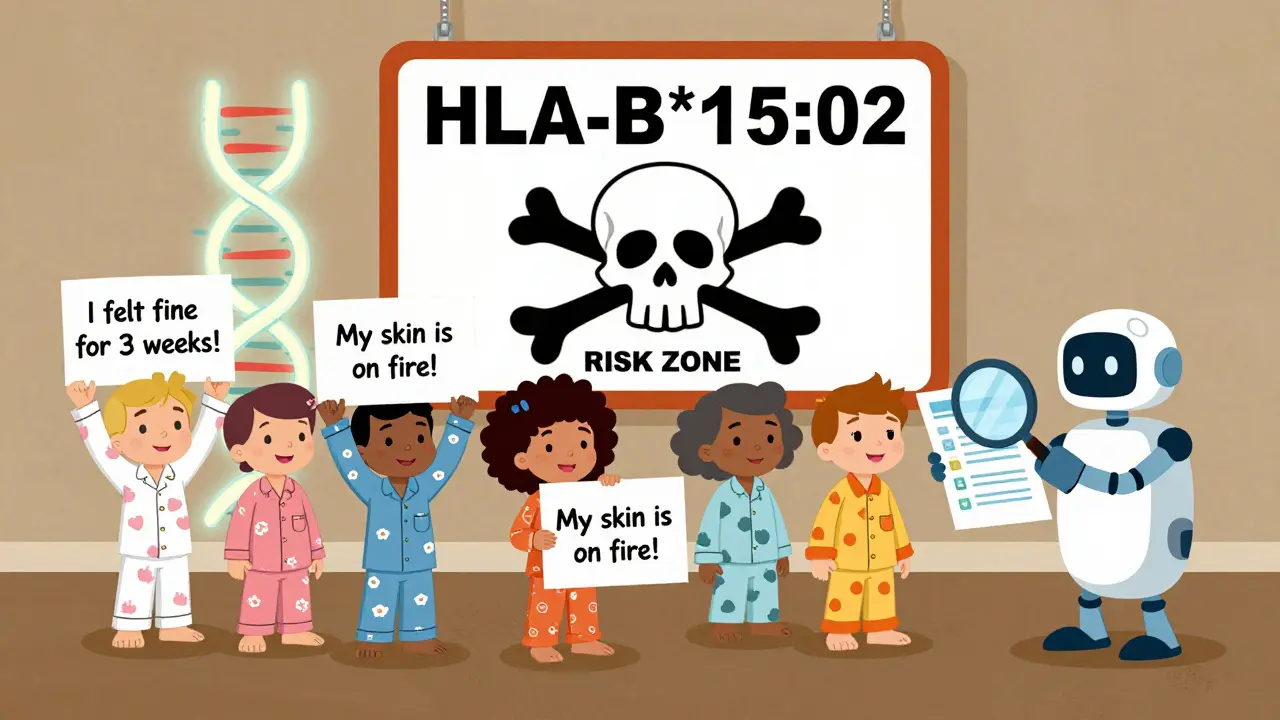
Some patients describe it like this: "I felt fine for three weeks after starting carbamazepine. Then I woke up with a fever, my skin felt like it was on fire, and my eyes were swollen shut. I thought it was the flu-until I couldn’t swallow."
Which Drugs Cause These Reactions?
Not all medications carry the same risk. Certain drugs are notorious for delayed reactions:
- Anticonvulsants: Carbamazepine, phenytoin, lamotrigine. These are the top offenders for DRESS and SJS/TEN. Reactions often appear after 2+ weeks.
- Antibiotics: Especially sulfonamides (like sulfamethoxazole) and beta-lactams (penicillin, amoxicillin). Reactions usually show up within 2 weeks.
- Allopurinol: Used for gout. Can trigger DRESS or SJS, especially in people with the HLA-B*58:01 gene variant.
- NSAIDs: Like ibuprofen or naproxen. Often cause milder rashes but can still lead to AGEP or DRESS in rare cases.
Genetics play a huge role. If you’re of Han Chinese, Thai, or Southeast Asian descent, you’re at much higher risk for certain reactions. For example:
- HLA-B*15:02 gene + carbamazepine = 1,057x higher risk of SJS.
- HLA-B*58:01 gene + allopurinol = nearly 100% chance of DRESS if you carry it.
That’s why countries like Taiwan and Hong Kong now require genetic testing before prescribing these drugs to high-risk populations. In the U.S., it’s still not routine-but it should be.
Why Are These Reactions So Hard to Diagnose?
Because they mimic other illnesses.
Doctors often mistake DRESS for mononucleosis or a viral infection. SJS gets misdiagnosed as a severe bacterial skin infection. AGEP looks like a staph outbreak. And because the drug was taken days or weeks ago, it’s easy to assume it’s unrelated.
One study found that 32% of early DRESS cases were wrongly treated as viral rashes. Another found that 28% of patients kept taking antibiotics even after their rash appeared-leading to 40% higher complication rates.
Diagnosis relies on three things:
- Timing: Did symptoms start 5-8 weeks after starting the drug?
- Symptoms: Do they match RegiSCAR criteria (fever, rash, organ involvement)?
- Exclusion: Ruling out infections, autoimmune diseases, or other causes.
There’s no single blood test. Lymphocyte transformation tests (LTT) can help-but they’re only 75-85% accurate and not widely available. Patch testing works for some drugs, but not others. Skin biopsies are often needed to confirm.
What Happens If You Don’t Stop the Drug?
Delaying discontinuation is one of the biggest mistakes.
Stopping the drug within 48 hours of the first sign of rash or fever can reduce mortality by 35%. Wait too long, and the immune system goes into overdrive. In DRESS, liver failure can develop. In SJS/TEN, the skin keeps peeling. In AGEP, secondary infections can take hold.
One Reddit user shared: "I ignored the rash for five days because I thought it was heat. By day 7, I was in the ICU with liver enzymes through the roof. It took five months to recover."
Drug rechallenge-taking the drug again to confirm the reaction-is the gold standard for diagnosis. But it’s never done for severe reactions like DRESS or SJS/TEN. The risk of recurrence is 25%, and the second reaction is often worse.
How Are These Reactions Treated?
There’s no magic pill. Treatment is about stopping the trigger and supporting the body.
- Stop the drug immediately. No exceptions.
- Corticosteroids. Prednisone at 0.5-1 mg per kg per day is standard for DRESS and SJS. Taper slowly over weeks to prevent relapse.
- Cyclosporine. Used for DRESS with kidney or liver damage. One study showed it cleared symptoms 50% faster than steroids alone.
- Supportive care. IV fluids, wound care for skin loss, eye drops for corneal damage, monitoring organ function.
For SJS/TEN, patients often need to be treated like burn victims-in specialized burn units. Nutrition, infection control, and pain management are critical.
And recovery? It’s not quick. Skin re-epithelialization in SJS/TEN takes 7-21 days. DRESS can relapse at 3-4 weeks. Some patients develop chronic liver disease, kidney damage, or autoimmune disorders years later.
Long-Term Effects and Hidden Costs
People think once the rash is gone, they’re fine. They’re not.
A European study found that 35% of SJS/TEN survivors had lasting eye problems-dryness, scarring, vision loss-requiring lifelong care. 22% developed new autoimmune diseases like lupus or thyroiditis within two years.
Financially, it’s devastating. Mild reactions cost about $8,200. Severe cases like DRESS or SJS can hit $112,500 in medical bills. And that doesn’t include lost wages. One study showed DRESS patients lost 23% of their work productivity for six months.
And emotionally? The fear of future medications is real. Over 40% of survivors report anxiety about taking any new drug-even common ones like ibuprofen or acetaminophen.
What Can You Do to Protect Yourself?
Knowledge is your best defense.
- If you’re prescribed carbamazepine, phenytoin, or allopurinol-ask if you’ve been tested for HLA-B*15:02 or HLA-B*58:01, especially if you’re of Asian descent.
- Keep a list of all medications you’ve taken and any reactions you’ve had-even mild ones.
- Don’t ignore a rash that appears after starting a new drug. If it’s accompanied by fever, swollen glands, or fatigue, seek medical help immediately.
- Don’t assume a reaction was "just a virus." If you’ve had a rash after a drug before, assume it’s a reaction until proven otherwise.
- Ask your doctor: "Could this be a delayed drug reaction?"
There’s hope on the horizon. Researchers are developing blood tests that detect specific immune markers like CXCL10 to predict DRESS severity. AI systems are being trained to flag high-risk drug-gene combinations in electronic health records. By 2030, experts predict a 35-50% drop in severe reactions thanks to genetic screening.
But right now, the most powerful tool you have is awareness. If you take a new medication, pay attention-not just to how you feel the next day, but to how you feel in two weeks. Your body might be screaming before you realize what it’s saying.
Can a delayed drug reaction happen even if I’ve taken the drug before without issues?
Yes. Delayed reactions often occur after multiple doses-even if you’ve taken the drug safely for months or years. Your immune system can suddenly start recognizing the drug as a threat. This is why you can’t assume past tolerance means future safety.
How long should I wait before taking a drug again after a delayed reaction?
Never take the same drug again if you had a severe reaction like DRESS, SJS, or TEN. Even for mild rashes, avoid the drug unless a specialist confirms it’s safe through testing. Re-exposure carries a high risk of a much worse reaction.
Are delayed drug reactions more common in older adults?
Yes. Adults aged 60-79 have more than four times the rate of delayed reactions compared to children under 10. This is likely due to changes in immune function, polypharmacy (taking multiple drugs), and slower drug metabolism.
Can I be tested to see if I’m at risk for a delayed drug reaction before taking a medication?
Only for a few specific drug-gene pairs. Testing for HLA-B*15:02 before carbamazepine and HLA-B*58:01 before allopurinol is recommended in high-risk populations. For other drugs, no reliable pre-testing exists yet. But if you’ve had a prior reaction, genetic testing may help identify your risk for similar drugs.
What should I do if I suspect a delayed drug reaction?
Stop the medication immediately. Contact your doctor or go to an emergency department if you have fever, blistering, peeling skin, or swelling of the face or throat. Bring a list of all recent medications. Don’t wait to see if it gets better-it might get worse fast.


Amanda Eichstaedt
January 12, 2026 AT 11:34It’s wild how our bodies can turn on us like this. I took lamotrigine for years without issue, then one day woke up with a rash that looked like I’d been burned. No fever, no pain-just this ugly, spreading map of red on my chest. Took three weeks to fade. No one connected it until I mentioned the med. Now I carry a card in my wallet: 'Allergic to anticonvulsants.' Better safe than dead.
Alex Fortwengler
January 13, 2026 AT 00:20Of course the government doesn’t test you before giving you poison. They want you sick so they can sell you more drugs. HLA testing? That’s just Big Pharma’s way of making you pay extra to not die. I’ve been taking carbamazepine for 12 years. I’m fine. They just want you scared.
jordan shiyangeni
January 14, 2026 AT 09:04Let me be perfectly clear: the medical establishment has failed catastrophically in its duty to inform patients of the latent dangers of pharmacological agents. The fact that a patient may ingest a compound for weeks before manifesting a life-threatening immune-mediated response is not merely an oversight-it is a systemic failure of clinical vigilance. Moreover, the absence of mandatory genetic screening in the United States constitutes a gross dereliction of ethical responsibility, particularly given the well-documented, statistically significant correlation between HLA alleles and adverse outcomes. This is not a matter of 'risk'-it is a matter of preventable mortality.
Abner San Diego
January 15, 2026 AT 01:58Why are we even talking about this? In America, we don’t get to choose our meds-insurance does. You think they care if you lose 30% of your skin? They care if it costs less than a MRI. I had DRESS after a generic antibiotic. Took me six months to get back to work. Insurance denied my claim because they said it was 'unrelated.' Unrelated? I took one pill and turned into a human volcano. Now I’m on disability. And the doctor? He just shrugged.
Eileen Reilly
January 16, 2026 AT 13:36ok so i took abilify for 2 months and then got this weird pimple rash and thought it was just stress. then i got a fever and my throat swelled shut. i went to the er and they were like 'oh you probably have mono' and sent me home. i came back 3 days later in a wheelchair. they finally realized it was the drug. now i have to see a specialist every 3 months. my anxiety is worse than the rash.
Cecelia Alta
January 17, 2026 AT 12:03Okay, so let me get this straight-you’re telling me that after taking a pill for weeks, your body suddenly decides it hates you and starts eating your skin? And doctors don’t even test you before handing you these things? This is why I don’t trust modern medicine. My cousin took allopurinol and ended up in a coma. They said it was 'rare.' Rare? It happened to HER. And now she can’t eat solid food because her esophagus scarred shut. We’re all just lab rats waiting for our turn to peel.
laura manning
January 19, 2026 AT 05:49It is imperative to underscore that the absence of standardized pre-prescription genetic screening protocols for HLA-B*15:02 and HLA-B*58:01 in the United States represents a profound and indefensible lacuna in public health policy. The data are unequivocal; the risk is quantifiable; the cost of inaction is measured in lives, not dollars. One must question the moral and legal culpability of institutions that permit such preventable morbidity and mortality to persist under the guise of 'clinical discretion.'
Lawrence Jung
January 19, 2026 AT 08:03Maybe the real problem is we think drugs are safe until they aren't. We live in a world of illusions. The body remembers. The immune system doesn't forget. You think you're fine because you didn't die the first time? That's not safety. That's luck. And luck runs out.
Alice Elanora Shepherd
January 21, 2026 AT 07:36Thank you for this incredibly thorough and vital summary. I work as a clinical pharmacist and see these reactions far more often than most realize. I always counsel patients: 'If you start a new medication, check in with your skin every few days for a week or two.' A rash isn't 'just a rash'-it's your immune system waving a flag. And if you're of Southeast Asian descent, please, please ask about HLA testing. It’s simple, cheap, and could save your life.
Christina Widodo
January 22, 2026 AT 21:06Wait-so if I took amoxicillin three times before with no problem, and now I get a rash on the fourth time, that’s still a delayed reaction? Not an allergy? I’m confused. Does that mean I can never take it again even if I didn’t react before? What if it was a virus that time?
Jennifer Phelps
January 24, 2026 AT 11:13my mom had a rash after sulfamethoxazole and they kept giving it to her because she had a UTI and they didn't connect it until her kidneys started failing. she's fine now but she's terrified of all meds. i just want to know if there's a way to test what you're allergic to without getting sick first
beth cordell
January 25, 2026 AT 17:05just got prescribed lamotrigine 😭 i’m gonna get the HLA test done tomorrow. if you’re reading this and you’re on any anticonvulsant-please, please ask your doctor. don’t wait until you’re crying in the ER. 🙏❤️
Lauren Warner
January 27, 2026 AT 03:20Wow. So you’re telling me the whole medical system is built on ignoring the most dangerous side effects because it’s inconvenient? And now you want us to just ‘ask our doctor’? Like they’re going to know anything beyond the pamphlet? This isn’t awareness-it’s a cover-up. They don’t want you to know how many people they’re killing quietly. And you’re all just sitting here like it’s normal.