
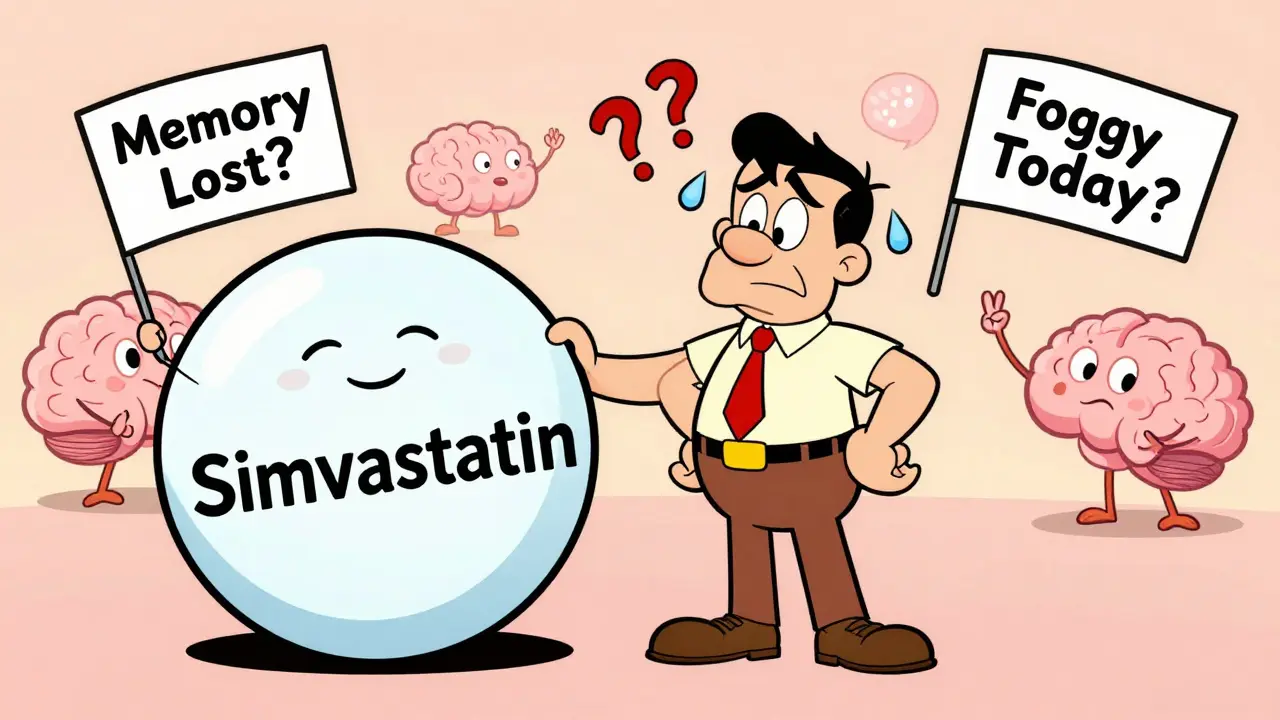
Many people take statins without a second thought. They’re one of the most prescribed drugs in the U.S., with nearly 40 million Americans using them to lower cholesterol and reduce heart attack risk. But if you’ve ever felt foggy-headed after starting a statin, you’re not alone. Stories about memory loss, confusion, and brain fog linked to statins have been swirling for years. So what’s really going on? Is your statin stealing your memories-or is something else at play?
Statins and the Brain: The Real Connection
Statins work by blocking an enzyme in your liver called HMG-CoA reductase. That’s how they cut LDL (bad) cholesterol by 30% to 60%. But because cholesterol is also needed in your brain-for building cell membranes and making neurotransmitters-some wondered if lowering cholesterol too much might hurt cognition.
The concern grew after the FDA added memory loss and confusion to statin labels in 2012. That wasn’t based on a single study. It came from over 60 case reports submitted to the FDA’s MedWatch system between 1997 and 2002. Most involved simvastatin or atorvastatin. People described forgetting names, losing track of conversations, or feeling mentally sluggish. And in about half of those cases, symptoms got better after stopping the drug.
But here’s the catch: those were individual reports. Not controlled trials. People don’t always report side effects accurately. And sometimes, the timing is misleading. If you start a new medication and then notice memory lapses a few weeks later, it’s easy to blame the pill-even if it’s not the real cause.
Lipophilic vs. Hydrophilic: Not All Statins Are the Same
There are seven statins on the market, and they behave differently in your body. Some are lipophilic (fat-soluble), meaning they can cross the blood-brain barrier more easily. These include simvastatin, atorvastatin, lovastatin, fluvastatin, and pitavastatin. Others are hydrophilic (water-soluble), like pravastatin and rosuvastatin, which stay mostly outside the brain.
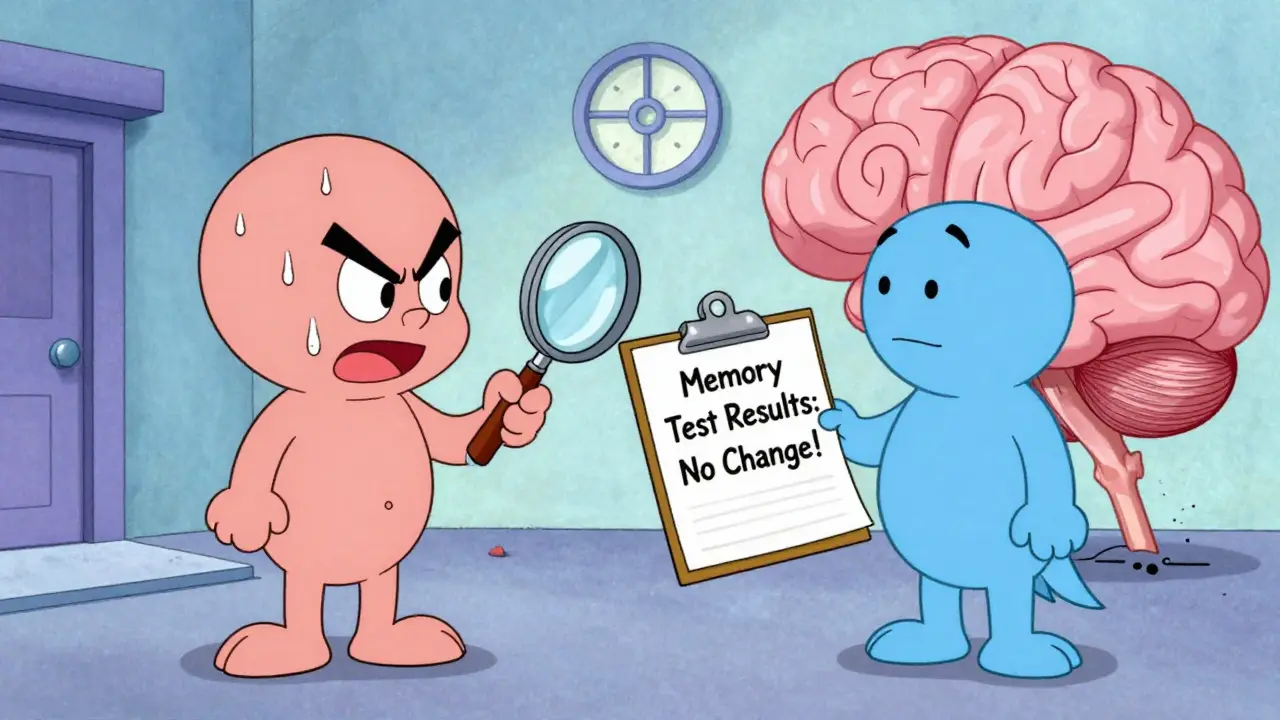
A 2023 analysis of 12 clinical trials involving nearly 50,000 people found that those taking lipophilic statins were 42% more likely to report memory complaints than those on hydrophilic ones. But when researchers ran actual memory tests-like recalling word lists or solving puzzles-there was no real difference. People on lipophilic statins said they felt foggy, but their brains didn’t perform worse on objective tests.
This suggests something important: what you feel and what your brain actually does aren’t always the same. The difference might be in perception, not performance.
Did Statins Really Cause Memory Loss-or Did We Just Notice It More?
In 2015, a study in JAMA Internal Medicine looked at over 1.2 million people. It found that statin users had a 3.78 times higher chance of being diagnosed with acute memory loss within 30 days of starting the drug. But here’s the twist: people taking other cholesterol-lowering drugs-like ezetimibe or bile acid sequestrants-had the same spike in memory loss reports. Statins weren’t special. Any new medication seemed to trigger the same reaction.
That’s called detection bias. When you start a new drug, you pay closer attention to your body. You notice every little thing. A missed word. A lost car keys. You think, “Is this the statin?” And you tell your doctor. Your doctor logs it. Suddenly, it looks like statins are causing memory loss. But it’s just heightened awareness.
Another clue? The effects are almost always temporary. In a Reddit community of over 1,200 statin users who reported cognitive side effects, 74% said their brain fog lifted within four weeks of stopping the drug. That’s fast. Too fast for permanent brain damage. It fits better with a temporary, reversible effect-or even a placebo effect in reverse (called the nocebo effect).
The Nocebo Effect: When Expectation Hurts
The nocebo effect is the dark twin of the placebo effect. If you believe a drug will make you feel bad, you’re more likely to feel bad-even if the drug is a sugar pill. In a 2020 study published in the Journal of General Internal Medicine, 28% of statin users said they had memory problems. But when researchers tested them with standard cognitive exams, only 8% showed any actual decline.
That gap? That’s the nocebo effect. Once people read about statins and memory loss online, or heard a friend’s story, their brains started looking for signs of trouble. And they found them-even when none existed.
Dr. Robert Knopp, a leading researcher in lipid metabolism, pointed this out back in 2000. He found that patients who were warned about possible side effects reported them more often than those who weren’t told. It’s not the drug. It’s the warning.
What About Dementia? Do Statins Protect Your Brain?
Here’s the surprising part: while some people worry statins cause memory loss, dozens of large studies suggest they might actually protect against dementia.
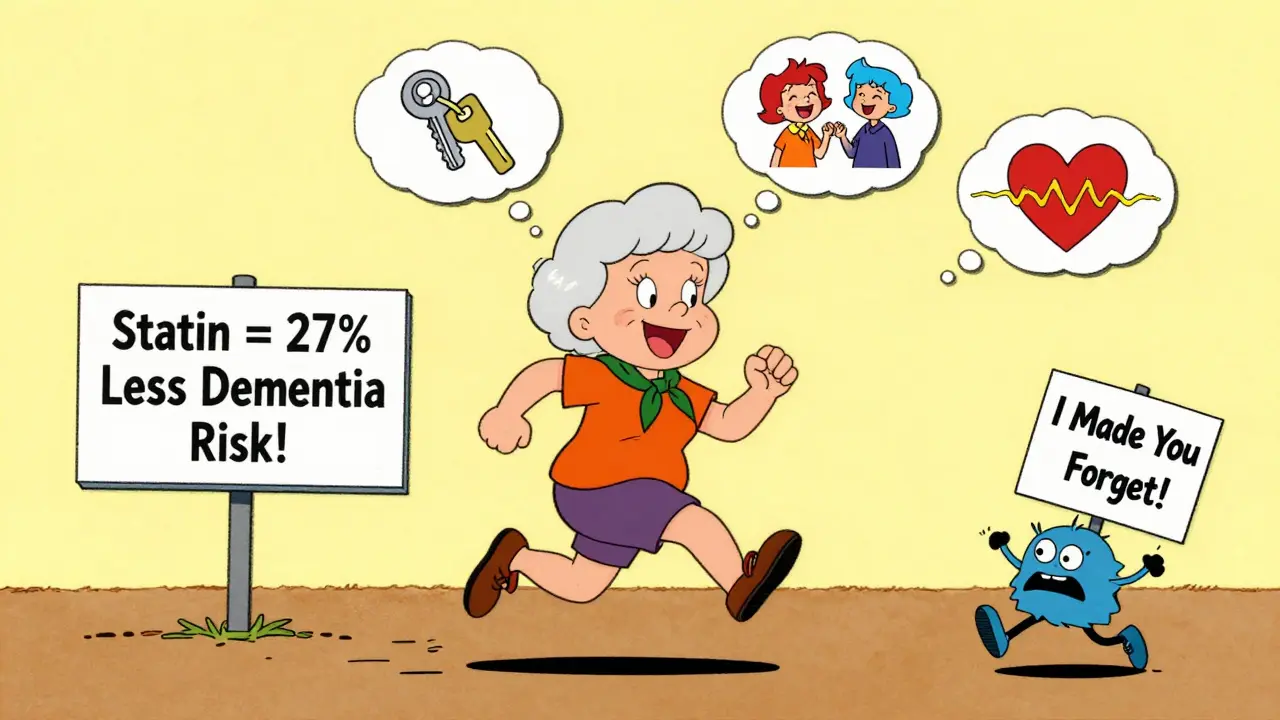
The Alzheimer’s Society analyzed 36 studies with over 1.2 million participants. They found statin users had a 21% lower risk of developing dementia overall. For vascular dementia-caused by poor blood flow to the brain-the risk dropped by 33%. Why? Because statins reduce plaque in arteries, including those feeding the brain. Better blood flow means better brain health.
The Rotterdam Study, which followed 12,567 people for 15 years, found statin users had a 27% lower chance of developing dementia. And a 2023 study in Nature Communications showed that the short-term memory complaints linked to statins might actually be tied to a temporary drop in LDL and a slight rise in blood sugar-not direct brain toxicity.
So you’ve got conflicting signals: some people feel foggy, but long-term data says statins help prevent brain decline.
What Should You Do If You Think Statins Are Affecting Your Memory?
If you’re noticing memory lapses after starting a statin, don’t panic. Don’t quit cold turkey. Talk to your doctor. Here’s what to do next:
- Track your symptoms. Write down when they started, how often they happen, and what triggers them. Are they worse in the morning? After meals? During stress?
- Consider switching statins. If you’re on simvastatin or atorvastatin, ask about switching to pravastatin or rosuvastatin. These don’t cross the blood-brain barrier as easily and are less likely to cause complaints.
- Try a short break. The American Academy of Neurology recommends a 4- to 6-week “statin holiday.” If your brain fog clears during that time and comes back when you restart, it’s likely connected.
- Rule out other causes. Thyroid problems, vitamin B12 deficiency, sleep apnea, and depression can all mimic memory loss. Get tested.
- Don’t stop without a plan. Stopping statins without replacing them increases your heart attack risk by up to 30% in the first year. That’s far more dangerous than temporary brain fog.
The Bottom Line: Benefits Still Outweigh Risks
The American Heart Association and the American College of Cardiology agree: for people at risk of heart disease, statins save lives. The cognitive side effects, if they happen at all, are rare, mild, and usually reversible.
Most people who report memory issues on statins aren’t losing their minds. They’re just noticing normal forgetfulness more because they’re worried. And for the small number who truly feel different-switching statins or lowering the dose often fixes it.
The real danger isn’t taking a statin. It’s avoiding one out of fear. Heart disease kills one in five Americans. Dementia affects one in three seniors. Statins help with both.
If you’re concerned, talk to your doctor. Get tested. Try a switch. But don’t stop without a better plan. Your heart-and your future self-will thank you.
Can statins cause permanent memory loss?
No, there’s no evidence that statins cause permanent memory loss. All documented cases of cognitive side effects have been reversible. Symptoms typically improve within days to weeks after stopping the medication or switching to a different statin. Long-term studies tracking patients for over a decade show no increased risk of dementia in statin users.
Which statin is least likely to affect memory?
Pravastatin and rosuvastatin are hydrophilic statins, meaning they don’t cross the blood-brain barrier as easily as lipophilic statins like simvastatin or atorvastatin. Studies show fewer cognitive complaints with these two. If you’re experiencing brain fog, switching to pravastatin or rosuvastatin is often the first step doctors recommend.
How long does it take for memory to improve after stopping statins?
Most people who experience statin-related brain fog notice improvement within 1 to 4 weeks after stopping or switching the medication. A 2023 analysis of Reddit users found 74% saw improvement within four weeks. In clinical studies, symptoms resolved in nearly all cases after discontinuation.
Do statins increase the risk of Alzheimer’s disease?
No, statins do not increase the risk of Alzheimer’s. In fact, multiple large studies show the opposite. A 2022 analysis by the Alzheimer’s Society found statin users had a 21% lower risk of developing any form of dementia, including Alzheimer’s. The protective effect is strongest for vascular dementia, which is linked to heart health and blood flow.
Should I stop taking statins if I’m worried about memory loss?
No-not without talking to your doctor first. Stopping statins increases your risk of heart attack and stroke, especially in the first year. For most people, the cardiovascular benefits far outweigh the very low risk of temporary, reversible cognitive side effects. If you’re concerned, ask about switching to a different statin or lowering your dose instead of quitting entirely.



Milla Masliy
January 13, 2026 AT 22:19My grandma’s been on rosuvastatin for 8 years and still remembers every detail of her 1972 trip to Goa. Meanwhile, my uncle quit his simvastatin after reading Reddit and now he’s got a heart stent. It’s wild how fear spreads faster than facts.
Avneet Singh
January 15, 2026 AT 12:06It’s not about the statin-it’s about the epistemological framework of biomedical reductionism. The nocebo effect isn’t just psychological; it’s a structural artifact of pharmaceutical commodification and neurocognitive surveillance capitalism. You’re not losing memory-you’re being algorithmically conditioned to perceive deficit where none objectively exists.
Damario Brown
January 16, 2026 AT 17:15bro i took atorvastatin for 3 weeks and forgot my own phone number. like literally. i called my mom and asked who i was. she said "my son". i cried. then i stopped it. brain fog gone in 4 days. case closed. stats dont lie.
sam abas
January 18, 2026 AT 05:26Wait-so you’re saying the FDA added memory loss as a side effect based on 60 anecdotal reports, but then big pharma studies with 50k people show no objective decline? That’s not science. That’s a PR campaign. And now you’re telling me to trust a 21% dementia risk reduction from a drug that’s literally in my brain? Give me a break. Where’s the double-blind placebo-controlled trial that proves statins don’t cause microvascular damage in the hippocampus? Oh right-there isn’t one. Because they don’t want to find out.
Clay .Haeber
January 18, 2026 AT 14:47So let me get this straight: you’re telling me my brain fog is just because I read too many articles? That’s like saying my hangover isn’t real because I knew I was gonna drink. Oh wow. Thanks, Dr. Google. Next you’ll tell me my PTSD is just a nocebo from watching too many war movies. 🤡
vishnu priyanka
January 18, 2026 AT 23:27in india, we call this "dil ka darr"-fear of the heart. people panic when their body changes. i’ve seen grandparents stop statins because their grandson said "it makes you dumb" on tiktok. meanwhile, their BP is 180/110. the real tragedy isn’t the statin-it’s the misinformation.
Alan Lin
January 19, 2026 AT 20:16While I appreciate the nuanced analysis presented in this post, I must emphasize that clinical decision-making must be individualized. The cognitive side effects of statins, though statistically rare, are subject to significant interindividual variability influenced by genetic polymorphisms in SLCO1B1, CYP3A4 metabolism, and baseline neurocognitive reserve. Discontinuation without medical supervision constitutes a significant cardiovascular risk, and I urge all patients to consult with their primary care provider or lipid specialist prior to any therapeutic modification.
Lethabo Phalafala
January 21, 2026 AT 16:29I was on simvastatin for 6 months and started forgetting where I put my keys... then my wedding ring... then my daughter’s name. I thought I was dying. I stopped. Within 10 days, I remembered who I was. My doctor said "it’s probably the nocebo"-but my brain didn’t forget my daughter because I read a blog. It forgot because the drug messed with my neurons. Don’t dismiss real suffering as "just in their head."
Lance Nickie
January 23, 2026 AT 05:55statins = brain rot. period. i stopped and my focus came back. dont care about your studies.
Nelly Oruko
January 23, 2026 AT 06:19It is imperative to distinguish between subjective perception and objective neurocognitive function. The data is unequivocal: no statistically significant impairment in memory or executive function has been demonstrated in controlled trials. The dissonance between lived experience and clinical evidence is not a flaw in the science-it is a testament to the power of expectation.
Angel Tiestos lopez
January 24, 2026 AT 17:42bro i switched from atorvastatin to pravastatin and my brain fog lifted like a foggy morning in Seattle 😌🙏 i still get confused sometimes but now it’s because i’m 42, not because of my pill. ps: my heart’s still happy. 🫀
Trevor Whipple
January 25, 2026 AT 08:10you people are so dumb. statins cause memory loss. i know because i read it on reddit. also my cousin’s dog got dementia after eating a pill. so there. you’re all just brainwashed by big pharma. also, i eat kale and i’m 300 lbs so i’m basically a health guru.
John Pope
January 27, 2026 AT 00:12Let’s not pretend this is about cholesterol. This is about control. The medical-industrial complex needs you dependent. You take your statin, you take your blood pressure med, you take your antidepressant-because if you stop, you’re a bad patient. But if you’re feeling foggy? That’s just your mind playing tricks. No, it’s not. It’s your liver screaming. It’s your brain whispering: "I’m not made for this." And you’re being told to shut up and swallow.
Adam Vella
January 28, 2026 AT 07:34The nocebo effect is a well-documented phenomenon, but it does not negate the possibility of idiosyncratic neurotoxicity. The fact that symptoms resolve upon discontinuation suggests a pharmacodynamic interaction-not mere suggestion. The FDA’s warning was not frivolous; it was precautionary. To dismiss patient-reported outcomes as mere perception is to regress to the days when women’s pain was labeled "hysteria." There is a difference between statistical insignificance and clinical irrelevance. One must not confuse the two.
Priyanka Kumari
January 29, 2026 AT 14:22My mom switched from simvastatin to rosuvastatin after 2 weeks of forgetting her own birthday. Within 10 days, she was back to teaching yoga and remembering everyone’s names. No drama. No panic. Just a smarter choice. If your doctor doesn’t listen-find one who does. Your brain matters as much as your heart.