
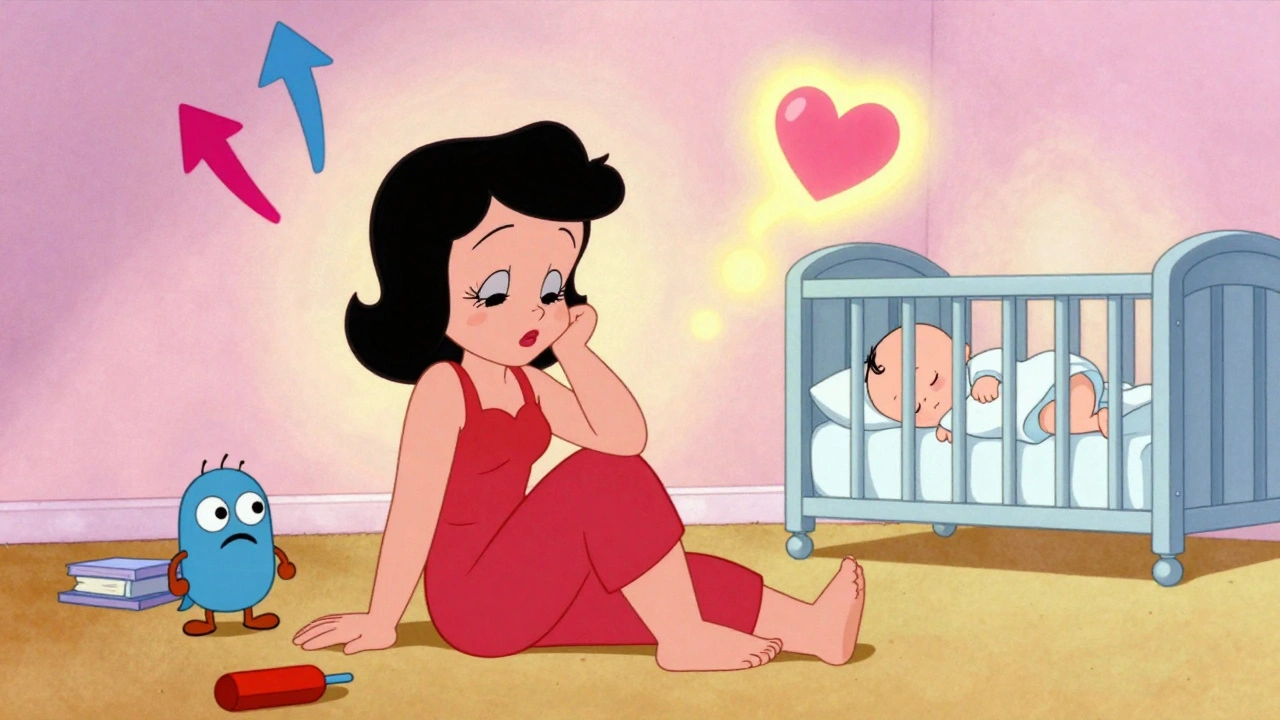
One in seven new mothers experiences postpartum depression - not just sadness, not just tiredness, but a deep, persistent feeling of hopelessness that makes it hard to bond with their baby, get out of bed, or even eat. And while many assume it’s just hormones, the truth is more complex. Hormonal shifts play a role, but they’re only one piece of a much bigger puzzle. If you’re feeling this way, you’re not broken. You’re not failing. You’re experiencing a real, treatable medical condition - and help is available.
What Happens to Your Hormones After Birth?
Right after delivery, your body goes through one of the most dramatic hormonal changes in human physiology. Estrogen and progesterone, which soared to ten times their normal levels during pregnancy, drop back to pre-pregnancy levels within just 48 to 72 hours. That’s not a slow fade - it’s a crash. Progesterone’s brain-friendly metabolite, allopregnanolone, which helps calm your nervous system, also plummets. This sudden loss can trigger anxiety, irritability, and emotional instability in vulnerable individuals.At the same time, oxytocin - the hormone linked to bonding and relaxation - doesn’t always rise as expected. Studies show that women with lower oxytocin levels in late pregnancy are more likely to develop depressive symptoms after birth. And while breastfeeding boosts oxytocin, not everyone can or chooses to breastfeed, and even then, the hormone’s effect isn’t strong enough to override deeper biological or emotional imbalances.
Then there’s cortisol, your stress hormone. In most new parents, cortisol levels normalize by 12 weeks postpartum. But in those with postpartum depression, cortisol stays elevated, and the body’s ability to shut it off - measured by dexamethasone suppression tests - is impaired. This pattern is identical to what’s seen in long-term depression unrelated to childbirth. So while hormones drop fast, your brain’s stress response may be stuck in overdrive.
Are Hormones the Real Cause?
It’s tempting to blame everything on hormones. After all, the timing lines up perfectly. But here’s the twist: multiple large studies have found no consistent difference in estrogen or progesterone levels between women who develop postpartum depression and those who don’t. A 2019 meta-analysis in JAMA Psychiatry concluded that hormone levels alone can’t predict who gets PPD.So what’s going on? The answer lies in vulnerability. Think of it like this: your brain has a threshold for stress. For some, that threshold is high - they can handle sleep deprivation, emotional overload, and hormonal chaos without breaking. For others, the threshold is lower. Add hormonal shifts on top of a history of depression, lack of support, financial stress, or trauma - and the system tips over.
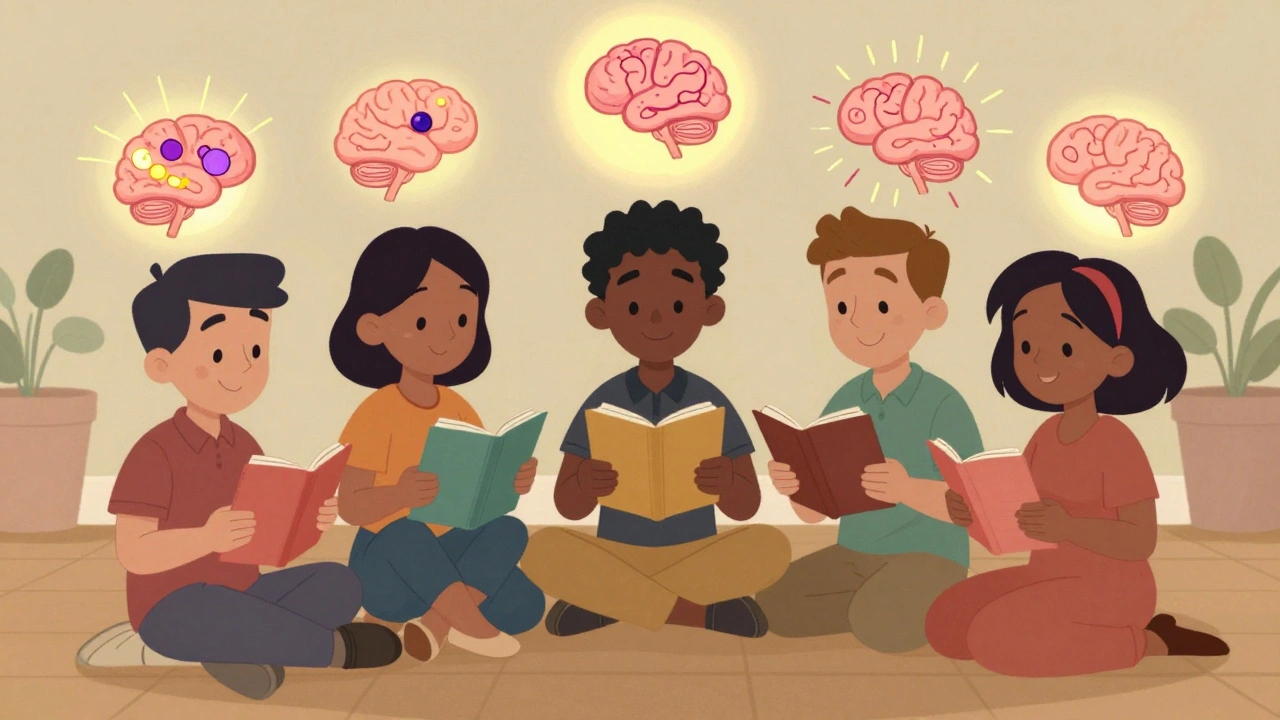
Researchers now talk about multiple PPD phenotypes - different subtypes triggered by different combinations of factors. For one person, it’s inflammation. A 2019 study identified five biomarkers - including HGF and IL-18 - linked to increased risk. For another, it’s thyroid dysfunction. For another, it’s a genetic sensitivity to hormonal fluctuations. And for some, it’s the gut. A 2021 study in Nature Mental Health found distinct differences in gut bacteria between women with and without PPD, suggesting the microbiome may influence mood through the gut-brain axis.
Treatment Options That Actually Work
The good news? Postpartum depression responds well to treatment - often quickly. You don’t have to wait months to feel better.Psychotherapy is the first-line recommendation for mild to moderate cases. Cognitive behavioral therapy (CBT) has been shown to help over half of women with PPD, according to a 2020 meta-analysis in JAMA Network Open. It teaches you to spot negative thought patterns, challenge them, and build coping skills - all while adjusting to a new identity as a parent. Group therapy and peer support, like those offered by Postpartum Support International, also reduce isolation and improve outcomes.
Antidepressants are often needed for moderate to severe cases. Sertraline is the most commonly prescribed because it’s considered safe during breastfeeding - rated L2 (safer) by Hale’s Medication and Mothers’ Milk. Other SSRIs like escitalopram and fluoxetine are also used. It can take 4-6 weeks to feel the full effect, but many notice improvements in energy and sleep within days. The Cleveland Clinic reports these medications are “very effective” when combined with therapy.
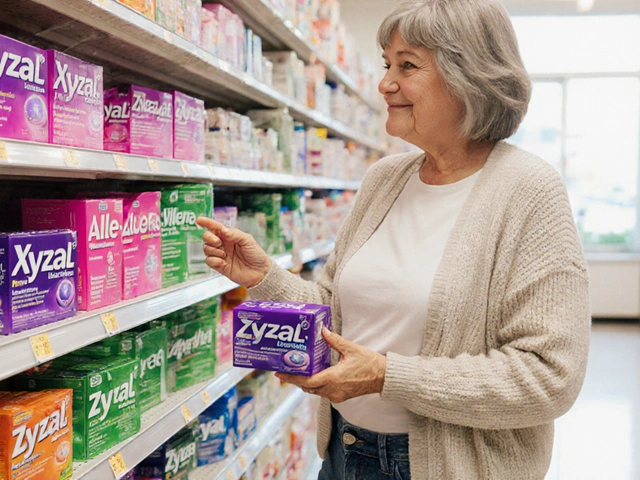
Neuroactive steroids represent a breakthrough. In 2019, the FDA approved brexanolone (Zulresso), an IV infusion of allopregnanolone, for moderate-to-severe PPD. It works by replacing the hormone your body lost after birth. But it requires a 60-hour hospital stay with constant monitoring due to sedation risks. In 2023, zuranolone (Zurzuvae) became the first oral version - a 14-day pill regimen that’s far more accessible. Clinical trials showed symptom improvement in as little as three days.
Transcranial magnetic stimulation (TMS) is another option for those who don’t respond to medication. A 2020 study in the Journal of Affective Disorders found that 68% of women with treatment-resistant PPD saw significant improvement after six weeks of daily TMS sessions. It’s non-invasive, doesn’t require anesthesia, and doesn’t enter breast milk.
Who Else Gets Postpartum Depression?
Postpartum depression isn’t just a cisgender woman’s issue. About 1 in 10 new fathers develop symptoms, often triggered by sleep loss, relationship strain, or feeling excluded from the parent-baby bond. Transgender and nonbinary parents experience similar rates to cisgender women, according to a 2019 study cited by PsychCentral. Adoptive parents aren’t immune either - studies show 6-8% develop PPD, likely due to hormonal shifts from induced lactation or the emotional weight of attachment.And it’s not evenly distributed. CDC data from 2021 shows American Indian and Alaska Native mothers have a PPD rate of 20.1%, more than double the rate among non-Hispanic white mothers. Poverty, lack of access to care, historical trauma, and systemic inequities all play a role. If you’re from a marginalized group and feel alone, know this: your experience is valid, and culturally competent care exists.
Screening and Support Are Critical
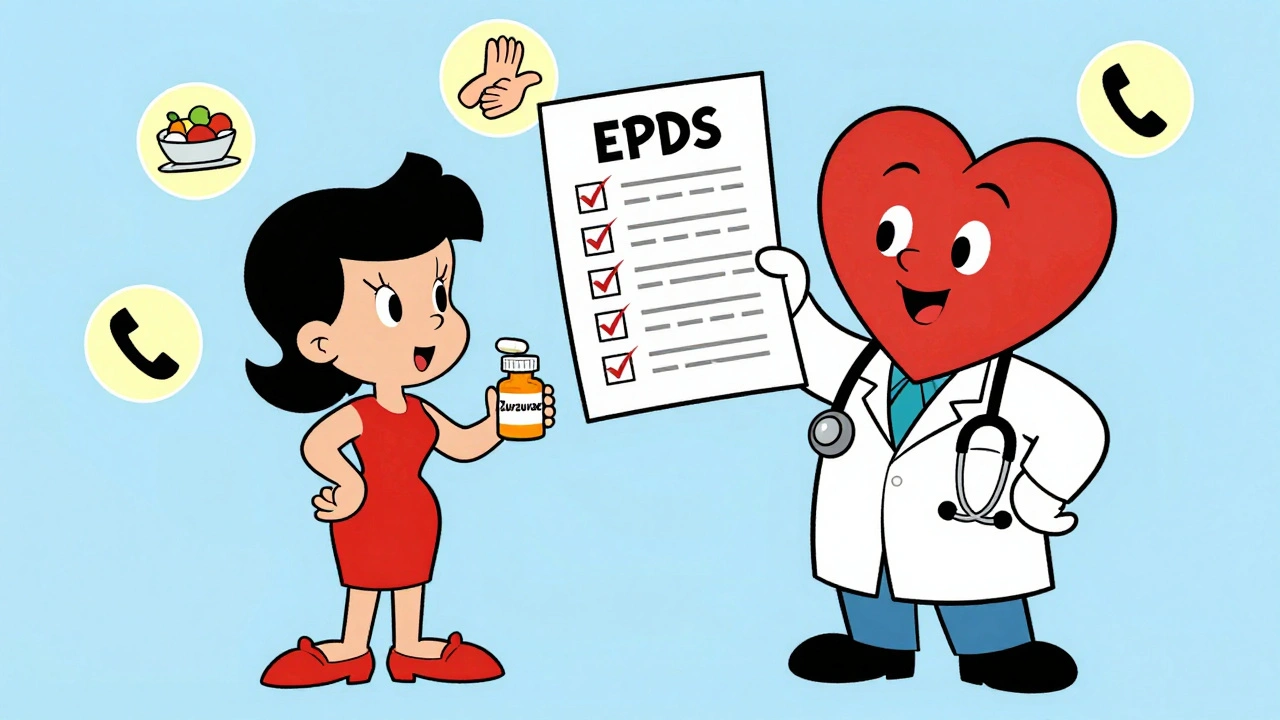
The Edinburgh Postnatal Depression Scale (EPDS) is the most widely used screening tool globally. It’s a simple 10-question quiz that takes less than five minutes. A score of 10 or higher suggests depression - and should trigger a conversation with your provider. Massachusetts was the first state to make PPD screening mandatory in 2012. Now, more states and clinics are following suit.Yet, 78% of OB-GYNs say they feel unprepared to manage PPD. That’s why you need to speak up. If your doctor doesn’t ask, ask them. Say: “I’ve been feeling really down since the baby came. Can we talk about postpartum depression?”
Support systems make a huge difference. Whether it’s a partner helping with night feeds, a friend bringing meals, or calling the Postpartum Support International warmline (1-800-944-4773), connection saves lives. One survey found 87% of callers said the support was “helpful” or “very helpful.” You don’t have to do this alone.
What You Can Do Today
If you’re struggling:- Don’t wait for it to get worse. Reach out to your doctor, midwife, or therapist now.
- Write down your symptoms: sleep issues, appetite changes, crying spells, guilt, numbness, intrusive thoughts.
- Ask about screening with the EPDS - it’s free and confidential.
- Explore therapy options. Many offer virtual sessions, and some accept insurance.
- If you’re breastfeeding, ask about medication safety. Sertraline and paroxetine are top choices.
- Connect with others. Online groups or local meetups can reduce isolation.
If you’re supporting someone with PPD:
- Don’t say “just snap out of it.”
- Don’t assume they’re fine because they’re smiling in photos.
- Do offer practical help: cook a meal, watch the baby for an hour, take out the trash.
- Do listen without judgment. Say: “I’m here. You’re not alone.”
Postpartum depression isn’t a sign of weakness. It’s a sign that your body and mind have been pushed beyond their limits. And like any injury, it needs care to heal. With the right treatment, most people recover fully - and go on to enjoy motherhood, fatherhood, or parenthood in ways they thought were lost.
Is postpartum depression the same as the baby blues?
No. The baby blues are common - up to 80% of new mothers feel tearful, overwhelmed, or moody in the first few days after birth. These feelings usually fade within two weeks. Postpartum depression is more severe, lasts longer (weeks to months), and interferes with daily life. It includes persistent sadness, loss of interest in the baby, extreme fatigue, feelings of worthlessness, and sometimes thoughts of harming yourself or your child. If symptoms last beyond two weeks or get worse, it’s not the baby blues.
Can I take antidepressants while breastfeeding?
Yes, many are safe. Sertraline and paroxetine are considered the safest options during breastfeeding, with very low levels passing into breast milk. Hale’s Medication and Mothers’ Milk rates sertraline as L2 (safer), meaning the risk to the baby is minimal. Always discuss options with your doctor - never stop or start medication without medical guidance. The benefits of treating depression often outweigh the risks of untreated illness.
How long does postpartum depression last?
Without treatment, PPD can last for months or even years. Studies show up to 50% of untreated cases persist beyond six months. But with proper care - therapy, medication, or both - most people start feeling better within 4-8 weeks. Full recovery often takes 3-6 months. Early intervention is key. The sooner you get help, the faster you’ll heal.
Can postpartum depression affect dads and adoptive parents?
Absolutely. About 1 in 10 new fathers develop postpartum depression, often triggered by sleep deprivation, relationship stress, or feeling disconnected from the baby. Adoptive parents experience PPD at rates of 6-8%, likely due to hormonal changes from induced lactation or the emotional intensity of bonding. Transgender and nonbinary parents have similar rates to cisgender women. PPD isn’t tied to biology - it’s tied to the stress of new parenthood and lack of support.
Is there a test for postpartum depression?
Yes. The Edinburgh Postnatal Depression Scale (EPDS) is the most widely used screening tool. It’s a 10-question self-report survey that takes less than five minutes. A score of 10 or higher suggests depression and should prompt further evaluation by a healthcare provider. Many hospitals and clinics now screen all new parents routinely - but if you’re not asked, ask for it. It’s simple, free, and life-changing.
What if I’m scared to tell anyone how I feel?
That fear is common - many worry they’ll be judged as a bad parent. But PPD is a medical condition, not a moral failure. Talking to someone doesn’t mean you’re weak - it means you’re strong enough to ask for help. Start small: text a friend, call a helpline like Postpartum Support International (1-800-944-4773), or write down your feelings. You don’t have to say it out loud to get help. The first step is reaching out - however you can.

Ollie Newland
December 4, 2025 AT 20:44Interesting breakdown of the neurobiology behind PPD. The gut-brain axis findings are especially compelling-recent studies suggest microbial metabolites like SCFAs may modulate serotonin production postpartum. This isn't just 'hormones gone wild'-it's systemic dysregulation.
Carolyn Ford
December 5, 2025 AT 04:59Oh, here we go again... 'hormones aren't the real cause'? Please. If you're crying over spilled formula at 3 a.m., it's not your microbiome-it's your estrogen crash. Stop overcomplicating it with jargon. I survived four kids on coffee and grit.
Heidi Thomas
December 6, 2025 AT 13:45You're all missing the point. The real issue is that society expects women to bounce back from childbirth like it's a weekend yoga retreat. No one talks about the loss of identity, the erasure of self, the way your body becomes a public utility. Hormones? That's the symptom. The disease is patriarchy.
Rudy Van den Boogaert
December 8, 2025 AT 03:18I've seen this in my practice. One patient had normal hormone levels but zero social support-her husband worked two jobs, her mom was in another state. She responded to CBT and weekly home visits from a doula. Treatment isn't just pills. It's presence.
Gareth Storer
December 8, 2025 AT 07:23So let me get this straight. You're telling me a woman can't handle being a mom, so we give her a 60-hour IV drip of a synthetic hormone? Brilliant. Next we'll inject oxytocin into toddlers so they stop throwing tantrums. Progress.
Pavan Kankala
December 8, 2025 AT 08:49Big Pharma loves this narrative. Hormones? Gut bacteria? All distractions. The real cause? You're being told you need to be perfect. The system doesn't care if you're broken-it just wants you to buy the solution. Zulresso costs $34k. Coincidence?
George Graham
December 10, 2025 AT 01:41I'm a dad who went through this after adopting. No hormonal crash, but the emotional weight was crushing. I didn't know where to turn. The fact that this post includes adoptive and trans parents? That matters. You're not alone. I'm here if anyone wants to talk.
John Filby
December 10, 2025 AT 16:23Just wanted to say thank you for writing this. I had PPD after my second and felt so alone. Took sertraline while breastfeeding-no issues with baby. Took 6 weeks to feel like myself again. You’re not broken. You’re healing. 💙
Elizabeth Crutchfield
December 11, 2025 AT 20:55i read this after my 3am feed and cried. not sad tears. relieved tears. i thought i was just a bad mom. turns out i just needed someone to say it’s not my fault. thank you.
Emmanuel Peter
December 13, 2025 AT 09:57Wait, so you’re saying PPD is real but not caused by hormones? Then why do women who never give birth but take estrogen blockers get depressed? Maybe it’s not about birth at all. Maybe it’s about being a woman in a world that expects you to be everything and feel nothing. Just sayin’.
Chad Handy
December 13, 2025 AT 22:59I’ve been through this. Twice. The first time, I was told to ‘sleep when the baby sleeps.’ I had a 3-week-old and a 2-year-old. I didn’t sleep for 17 days straight. The second time, I got zuranolone. Three days later, I cried while making pancakes because I remembered what joy felt like. That pill didn’t fix my life-but it gave me back the strength to fix it. If you’re reading this and you’re drowning? Don’t wait. Take the pill. Call the helpline. You’re worth it.
Rebecca Braatz
December 15, 2025 AT 04:47To anyone feeling like they’re failing: you’re not. You’re surviving. And survival is the most powerful form of motherhood. I’m a nurse who’s helped over 200 moms with PPD. Every single one of them thought they were broken. They weren’t. They were brave. Keep going. You’ve got this.
Michael Feldstein
December 16, 2025 AT 07:44For those wondering about therapy: if CBT feels too structured, try acceptance and commitment therapy (ACT). It helped me reframe guilt as love in disguise. Also-find a therapist who gets sleep deprivation. Not all therapists do.
jagdish kumar
December 18, 2025 AT 05:01Hormones are a myth. The real problem? You’re not meant to raise children alone.
michael booth
December 19, 2025 AT 20:28Thank you for sharing this comprehensive, evidence-based perspective. As a healthcare provider, I see too many patients dismissed as ‘just tired.’ This post validates what we know clinically: PPD is a neurobiological condition with multifactorial roots. I’ve started handing out printed EPDS sheets at postpartum visits. Small steps matter.