
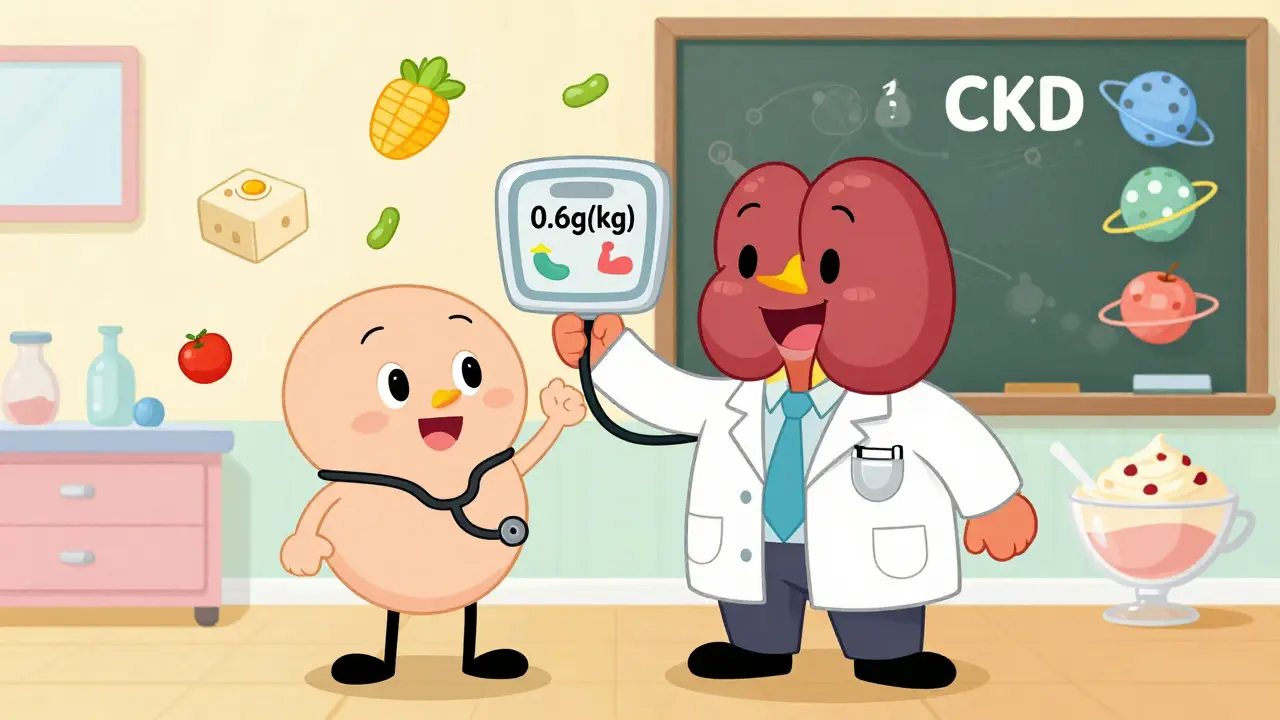
When your kidneys aren’t working right, what you eat matters more than you might think. For people with chronic kidney disease (CKD), protein isn’t just about building muscle or staying full-it’s a balancing act that can slow damage, delay dialysis, or even help you live longer. But here’s the twist: too little protein can make you weak, and too much can overload your kidneys. So how much is just right? It depends on which stage of CKD you’re in-and a lot of other things too.
What Protein Does (and Doesn’t Do) in Kidney Disease
Your kidneys filter waste from your blood. When you eat protein, your body breaks it down into nitrogen waste called urea. Healthy kidneys handle this easily. But when they’re damaged, urea builds up, making you feel tired, nauseous, or just plain unwell. Reducing protein intake helps lower that waste buildup. That’s why doctors have been recommending lower protein diets since the 1920s.
But here’s what most people don’t realize: protein restriction isn’t about starving yourself. It’s about being smarter about what you eat. The goal isn’t to cut protein to zero-it’s to keep it low enough to protect your kidneys, but high enough to keep your muscles strong and your body from breaking down.
Protein Targets by CKD Stage
There’s no one-size-fits-all number. Protein needs change as your kidney function drops. The most trusted guidelines-from the National Kidney Foundation and the Kidney Disease Outcomes Quality Initiative (KDOQI)-break it down like this:
- CKD Stage 1-2 (GFR 60+): Stick to 0.8 grams of protein per kilogram of ideal body weight. For a 150-pound person, that’s about 54 grams a day. This isn’t a strict limit-it’s a ceiling. If you’re active or older, you might need a little more.
- CKD Stage 3 (GFR 30-59): Drop to 0.55-0.60 grams per kilogram. That’s around 40-54 grams daily for the same 150-pound person. This is where most people start seeing real benefits in slowing kidney decline.
- CKD Stage 4 (GFR 15-29): Stay at 0.6 grams per kilogram. At this point, your kidneys are working at 15-30% capacity. Getting enough high-quality protein becomes critical to avoid muscle loss.
- CKD Stage 5 (GFR under 15, not on dialysis): Still 0.6 grams per kilogram. But if you’re on dialysis, your needs jump back up to 1.0-1.2 grams per kilogram. Dialysis removes protein, so you need to replace it.
And if you have diabetes along with CKD? The American Diabetes Association says 0.8-0.9 grams per kilogram is safer. Too little protein can mess with your blood sugar control, so you can’t just copy someone else’s plan.
Animal vs. Plant Protein: Which Is Better?
Not all protein is created equal-especially for your kidneys. Animal proteins (meat, eggs, dairy, fish) are called "high-quality" because they contain all the essential amino acids your body can’t make. But they also produce more urea and phosphate, which your kidneys struggle to clear.
Plant proteins (beans, lentils, tofu, nuts, whole grains) are gentler. They create 20-30% less waste per gram. A 2021 study in the Journal of the American Society of Nephrology found that swapping just 30% of your animal protein for plant protein cut the risk of kidney disease getting worse by 14%. That’s huge.
But here’s the catch: most plant proteins are missing one or two key amino acids. Soy is an exception-it’s complete. That’s why experts recommend getting at least half your protein from animal sources if you’re in stage 3 or beyond. Think eggs, chicken, fish, or lean beef. Then fill the rest with beans, quinoa, or tofu.
And don’t forget potassium. Many plant foods are high in it. If you’re in stage 4 or 5, too much potassium can be dangerous. So soaking beans, boiling potatoes, and choosing lower-potassium veggies like cabbage or cauliflower helps.
Why Some People Need More Protein
Not everyone should follow the same low-protein rule. A 2024 study in JAMA Network Open found that older adults with early-stage CKD who ate more protein-up to 0.8-1.0 grams per kilogram-had lower death rates. Why? Because many die from heart disease before their kidneys fail completely. If you’re over 65, losing weight, or feeling weak, your doctor might tell you to eat more protein-not less.
That’s why personalization is everything. A 72-year-old woman with stage 3 CKD and no muscle loss might do fine on 0.6 grams per kilogram. But a 68-year-old man with stage 4 CKD who’s lost 15 pounds in six months? He needs more. His body is already breaking down muscle to survive. For him, protein restriction could be deadly.
How to Actually Stick to Your Protein Target
Most people fail-not because they don’t care, but because it’s confusing. Tracking protein in mixed dishes like stir-fry, soup, or casseroles is a nightmare. One study found 87% of patients struggle with this.
Here’s what works:
- Use a kidney-friendly app. MyFitnessPal has a renal database. The National Kidney Foundation’s "Protein Target Calculator" app (downloaded over 47,000 times) lets you plug in your weight, stage, and goals.
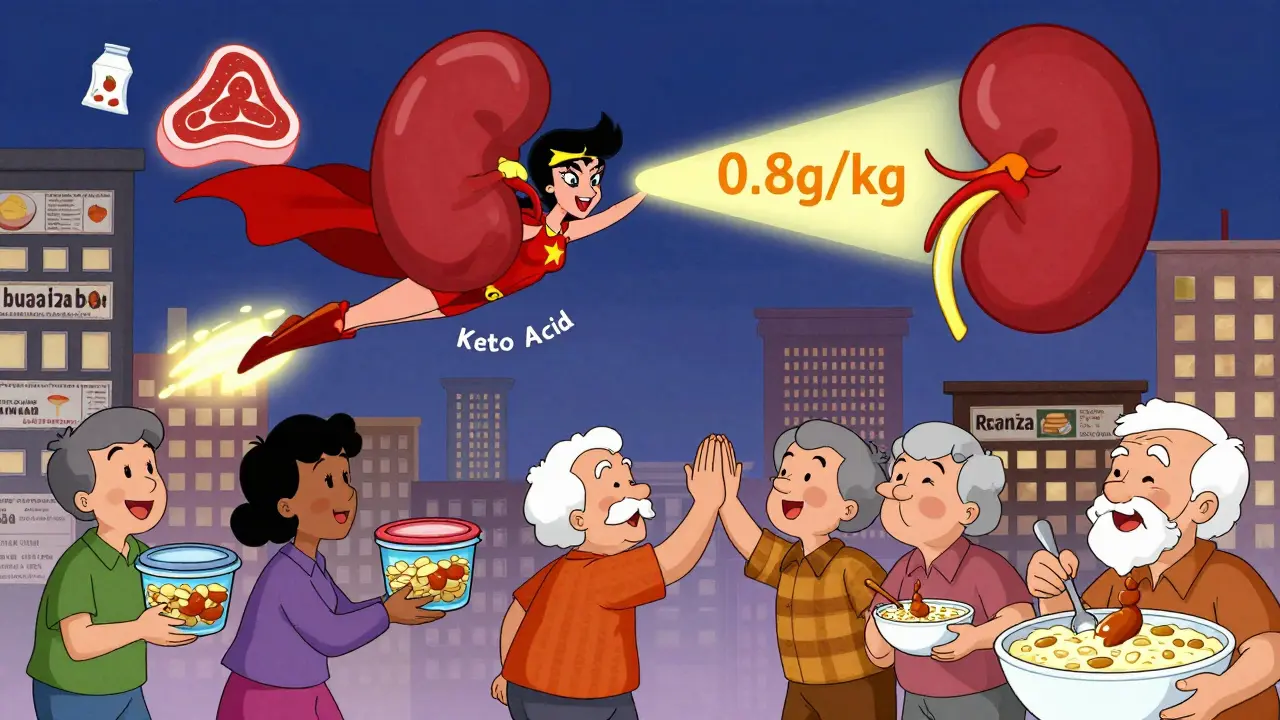
- Meal prep in batches. Cook chicken breast, hard-boiled eggs, and tofu ahead of time. Portion them into containers so you know exactly how much you’re eating.
- Work with a renal dietitian. Patients who see one regularly are 3.2 times more likely to stick to their plan. They’ll teach you how to read labels, substitute foods, and adjust for holidays or eating out.
- Try keto acid analogues. These are prescription supplements (like Ketosteril) that give your body the amino acids it needs without the waste. Used in 15% of stage 4-5 patients in Europe, they help you eat less protein without losing muscle.
And if you’re feeling hungry all the time? You’re probably not getting enough calories. Many people drop protein and then overeat carbs and fats just to feel full. That’s a trap. Fill your plate with low-potassium, low-phosphorus carbs like white rice, pasta, or applesauce. Add healthy fats like olive oil or butter. Calories keep you alive-protein keeps you strong.
What Happens When You Don’t Follow the Plan
Ignoring protein targets doesn’t just mean your kidneys get worse faster. It means you get weaker. In a 2024 survey of over 1,200 CKD patients, 62% said they felt constantly weak. 74% said they were hungry all the time. 58% avoided family dinners because they couldn’t eat what everyone else was having.
That’s not just inconvenient-it’s isolating. But it doesn’t have to be. With the right plan, you can still enjoy a grilled chicken salad, a tofu stir-fry, or a bowl of oatmeal with almond butter. It’s not about deprivation. It’s about smart choices.
The Big Picture: Protein Is Just One Piece
Renal nutrition isn’t just about protein. You also need to watch sodium, potassium, phosphorus, and fluids. But protein is the foundation. Get it right, and the rest becomes easier.
The global market for renal nutrition products hit $1.7 billion in 2023. Companies are now developing plant-based protein powders with reduced potassium. Researchers are testing AI tools that predict your ideal protein needs based on your blood tests, genetics, and even your sleep patterns.
But here’s the truth: no app or fancy supplement replaces a good plan made with your doctor and dietitian. And no matter how advanced the science gets, the core advice hasn’t changed: eat less protein than you think you need-but never so little that you’re weak.
Frequently Asked Questions
How much protein should I eat if I have stage 3 CKD?
For stage 3 CKD, aim for 0.55 to 0.60 grams of protein per kilogram of your ideal body weight. For example, if you weigh 150 pounds (68 kg), that’s about 40 to 54 grams per day. If you’re older, losing weight, or have diabetes, your doctor might adjust this upward. Always work with a renal dietitian to find your personal target.
Can I eat plant-based protein with kidney disease?
Yes-and it’s often better for your kidneys. Plant proteins create less waste and may slow disease progression. But they don’t have all the essential amino acids. To make up for that, get at least half your protein from animal sources like eggs, chicken, or fish. Soy is the only complete plant protein, so include tofu or edamame regularly. Watch potassium levels in beans and potatoes-soak or boil them first.
Why do I feel weak on a low-protein diet?
You’re likely not getting enough total calories or high-quality protein. Low-protein diets often lead to muscle loss if you’re not replacing the lost protein with enough energy from carbs and fats. Add olive oil, butter, white rice, or applesauce to meals. If weakness continues, talk to your doctor-you might need keto acid supplements or a higher protein target.
Do I need to avoid all red meat?
No, but limit it. Red meat produces more waste and harmful compounds called AGEs that increase inflammation. Choose lean cuts, smaller portions (3-4 ounces per meal), and pair them with low-potassium veggies. Better yet, replace one or two meat meals a week with fish, eggs, or tofu. It’s not about total elimination-it’s about balance.
Should I take protein supplements?
Only if prescribed. Regular protein powders can overload your kidneys. But keto acid analogues-like Ketosteril-are specially designed for CKD patients. They provide amino acids without the waste. These are prescription medical foods, not over-the-counter supplements. Ask your nephrologist or dietitian if they’re right for you.
How long does it take to adjust to a renal diet?
Most people need 3 to 6 months to feel comfortable. It’s a learning curve. Start by tracking your protein with an app. Learn to read food labels. Practice meal prepping. Don’t try to change everything at once. Focus on one change at a time-like swapping soda for water, or chicken for beans twice a week. Small steps add up.
What Comes Next
If you’re just starting out, book a session with a renal dietitian. Medicare now covers 3 hours of initial counseling and 2 hours of follow-up each year for people with CKD. If you’re not on Medicare, check with your insurance-many private plans cover it too.
Download the National Kidney Foundation’s Protein Target Calculator. Try one new kidney-friendly recipe a week. Join a support group. You’re not alone. Thousands of people are doing this right now-and many are living longer, stronger lives because of it.


Jeffrey Frye
December 24, 2025 AT 09:01so i read this whole thing and like... why does everyone act like protein is some magic bullet? my uncle had stage 4 ckd and ate steak every damn day. lived to 82. kidneys are tougher than you think. also, who the hell measures protein in grams per kilo? i use cups and hands. my hand = 20g. done.
Andrea Di Candia
December 25, 2025 AT 10:53i love how this post doesn’t just throw numbers at you but actually talks about *feeling*-weakness, hunger, isolation. that’s the real story. i’m not a med person, but i’ve watched my mom navigate this for 7 years. the biggest win wasn’t the grams-it was finding meals that didn’t make her feel like she was on a prison diet. tofu stir-fry with white rice and a drizzle of olive oil? that’s her joy. small things matter.
bharath vinay
December 27, 2025 AT 09:47the national kidney foundation is funded by pharmaceutical companies. they want you dependent on keto acid analogues and renal diets so you keep buying their products. real nutrition is whole foods. eat meat, vegetables, water. stop listening to bureaucrats who’ve never held a stethoscope. this whole protein restriction thing is a scam to sell supplements. you think your kidneys are weak? they’re just tired of your processed nonsense.
John Pearce CP
December 28, 2025 AT 05:20It is imperative to underscore that the empirical data presented herein, while superficially compelling, fails to account for the confounding variables of socioeconomic status, access to renal dietitians, and genetic polymorphisms in protein metabolism. The recommendation of 0.6 g/kg for Stage 4 is not only statistically arbitrary but potentially lethal in populations with low lean body mass. One must interrogate the source of these guidelines-not merely accept them as gospel.
Payson Mattes
December 28, 2025 AT 18:25hey i saw this video on tiktok where a guy said if you eat plant protein, your kidneys actually get stronger because plants have like... vibes? and he said kidney disease is just your body rejecting modern life. i tried eating only beans for a week and my creatinine dropped. maybe we’re all just too stressed and eating too much chicken? also, did you know your kidneys are controlled by your chakras? just saying.
Bhargav Patel
December 29, 2025 AT 22:25The proposition that plant-based proteins confer a 14% reduction in disease progression, while statistically significant, warrants scrutiny regarding the methodological rigor of the referenced JASN study. The sample size, dietary adherence metrics, and control for comorbidities such as hypertension and hyperlipidemia remain inadequately delineated. Furthermore, the assertion that soy constitutes a complete protein is accurate; however, its phytoestrogen content may exert unintended endocrine effects in elderly males. Caution is advised.
Steven Mayer
December 30, 2025 AT 11:42The metabolic burden of urea production is directly proportional to dietary protein intake, but the real issue is the catabolic state induced by caloric insufficiency. In patients with stage 3-4 CKD, the primary driver of muscle wasting is not protein restriction-it’s inadequate energy intake. The literature consistently shows that hypocaloric low-protein diets accelerate sarcopenia. You can’t fix protein with protein-you fix it with calories. And most patients don’t know that.
Charles Barry
December 31, 2025 AT 18:59They don’t want you to know this, but the whole protein thing is a cover-up. The real cause of CKD is glyphosate in your food and fluoride in your water. They’re pushing low-protein diets because they don’t want you fixing the real problem-detoxing your liver and drinking apple cider vinegar. I’ve seen people reverse stage 4 CKD with just lemon water and fasting. This article? It’s propaganda from Big Nephro. Wake up.
Rosemary O'Shea
January 1, 2026 AT 06:16How utterly pedestrian. You’ve reduced a complex metabolic condition to a spreadsheet of grams and kilos. Have you ever considered that the soul of nutrition lies not in quantification but in ritual? The quiet act of preparing a meal with intention, savoring each bite as a meditation-this is what truly heals. And yet, here we are, reducing human dignity to a MyFitnessPal entry. How tragic.
siddharth tiwari
January 1, 2026 AT 06:56u guys r overthinking this. just eat less meat, more rice, drink water. no need for apps or dietitians. my cousin had ckd and he just stopped eating chips and soda. his gfr went up. simple. also, protein is bad for kidneys, period. all this science stuff is just to sell stuff. trust your gut, not some website.