
When you pick up a prescription at the pharmacy, you might assume the pharmacist is just filling what the doctor ordered. But in many states today, that’s not the whole story. Pharmacists are no longer just dispensers-they’re becoming active players in managing your medications, sometimes even changing what’s on your prescription without needing to call the doctor first. This shift isn’t happening everywhere at once, and it’s not the same in every state. Understanding pharmacist substitution authority means knowing exactly what powers your pharmacist has-and where those powers stop.
Generic Substitution: The Baseline You Already Have
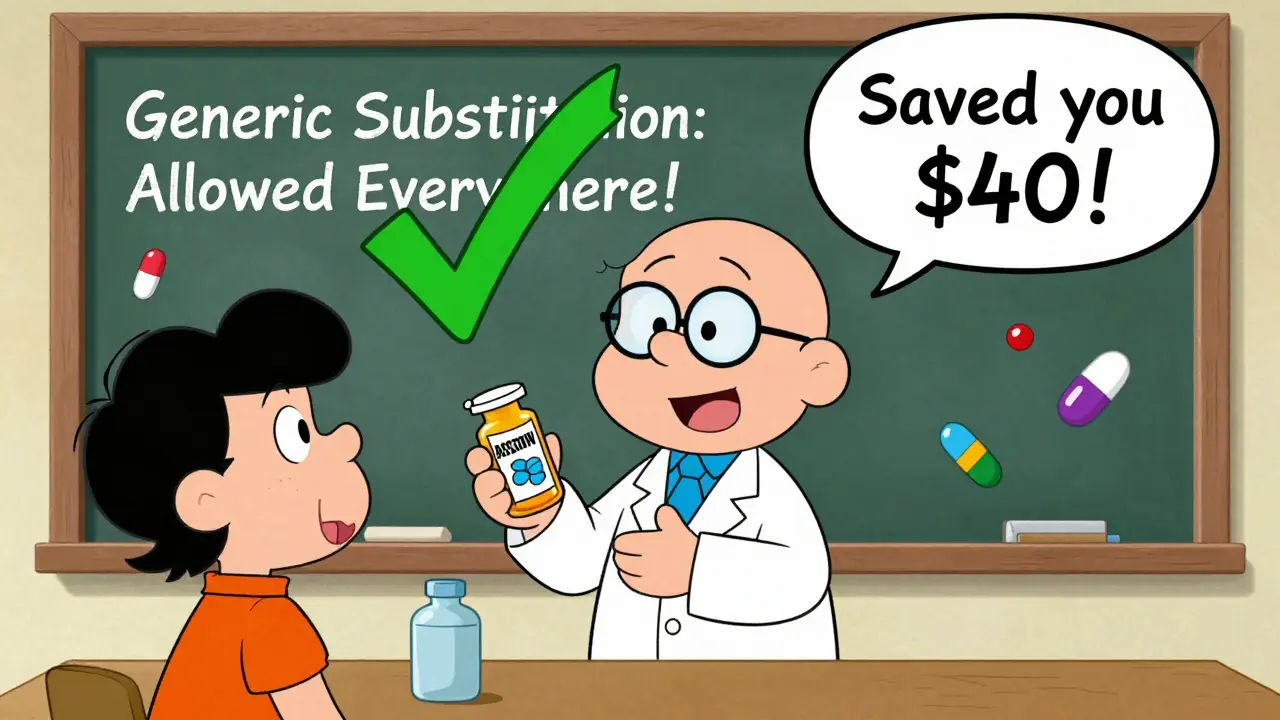
Every state in the U.S. allows pharmacists to swap a brand-name drug for a generic version, as long as the doctor didn’t write "dispensed as written" on the prescription. This isn’t new. It’s been standard practice for decades. Generic drugs have the same active ingredients, strength, and dosage form as the brand name, but cost far less. The FDA requires them to be bioequivalent, meaning they work the same way in your body. So if your doctor prescribes Lipitor and the pharmacy has generic atorvastatin, they can legally give you the cheaper version unless told otherwise. This saves patients billions each year and reduces strain on insurance systems. But this is the bare minimum. It doesn’t involve clinical judgment-it’s just a cost-saving swap.
Therapeutic Interchange: When Pharmacists Can Switch Drug Classes
Now we get into the more advanced level: therapeutic interchange. This lets pharmacists replace a prescribed drug with another drug in the same therapeutic class-not just a generic version, but a different brand altogether. For example, if your doctor prescribes a specific statin for cholesterol, and there’s another statin that’s more affordable or better suited to your health profile, a pharmacist in certain states can make that switch. But this isn’t allowed everywhere. As of 2025, only three states have clear laws permitting therapeutic interchange: Arkansas, Idaho, and Kentucky. Even there, it’s not automatic. In Kentucky, the prescriber must write "formulary compliance approval" on the prescription. In Arkansas and Idaho, they must check a box saying "therapeutic substitution allowed." If that box isn’t checked, the pharmacist must fill the original prescription exactly as written.
And it’s not just about the doctor’s note. In Idaho, pharmacists are legally required to clearly explain the change to the patient and get their consent. The patient can refuse. That’s a critical safeguard. These laws were designed to give pharmacists flexibility without removing control from the prescriber. If a doctor wants you on a specific drug for a reason-maybe it’s tied to your insurance formulary or you’ve had side effects with others-they can still block the swap by not marking the permission.
Prescription Adaptation: Adjusting Doses Without a New Visit
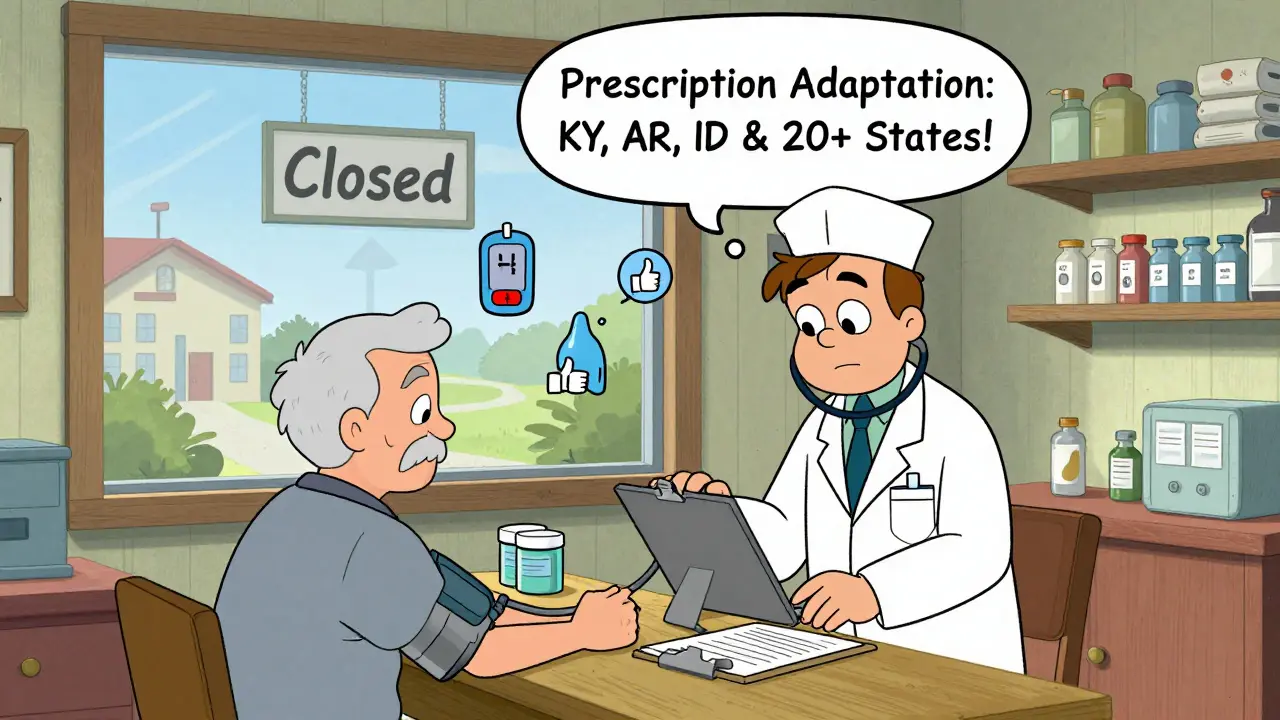
Imagine you’re in a rural town with no nearby clinic. Your blood pressure medication was working fine, but your last refill ran out and you can’t get an appointment for weeks. In most states, you’d have to wait. But in states with prescription adaptation authority, your pharmacist can adjust the dose, refill the medication, or even switch you to a different drug in the same class-all without a new doctor’s note. This is especially useful for chronic conditions like diabetes, hypertension, or asthma, where small tweaks are routine. The National Conference of State Legislatures reports that this model helps patients avoid unnecessary travel, reduces emergency room visits, and keeps treatment on track. But again, it’s not universal. Only about half the states allow this kind of adaptation, and even then, it’s often limited to specific conditions, patient age groups, or under a collaborative agreement with a physician.
Collaborative Practice Agreements: The Bridge Between Pharmacist and Doctor
Collaborative Practice Agreements (CPAs) are written protocols that let pharmacists work as part of a healthcare team. These agreements define exactly what the pharmacist can do: prescribe certain medications, order lab tests, adjust doses, or manage specific conditions like asthma, anticoagulation, or smoking cessation. All 50 states and Washington, D.C., allow CPAs, but how they’re used varies wildly. In some states, they’re common in hospitals and clinics. In others, they’re rare outside of pharmacy chains. The key difference is autonomy. In a strong CPA, the pharmacist can make decisions independently as long as they follow the agreed-upon guidelines. In weaker versions, they still need to call the doctor for every change. Recent trends show a shift toward more pharmacist-led protocols, meaning less oversight and more trust in their clinical judgment. This is where the real evolution is happening-pharmacists aren’t just following orders anymore; they’re making clinical decisions within a structured framework.
Independent Prescribing: The New Frontier
Some states have gone even further. In Maryland, pharmacists can prescribe birth control to anyone over 18. In Maine, they can provide nicotine replacement therapy. California lets pharmacists "furnish" emergency contraception and certain other drugs under statewide protocols. New Mexico and Colorado allow pharmacists to provide a range of services based on protocols developed by the state board of pharmacy-no individual doctor’s approval needed. These aren’t just exceptions; they’re models for the future. In 2025 alone, 16 new laws expanded pharmacist prescribing authority across 12 states. The driving force? Physician shortages. The Health Resources and Services Administration says 60 million Americans live in areas with too few primary care providers. Pharmacists, with their accessibility and medication expertise, are stepping into that gap. You can now walk into a pharmacy in parts of Colorado and get a flu shot, a strep test, and a prescription for antibiotics-all in one visit.
Why This Matters: Access, Equity, and Cost
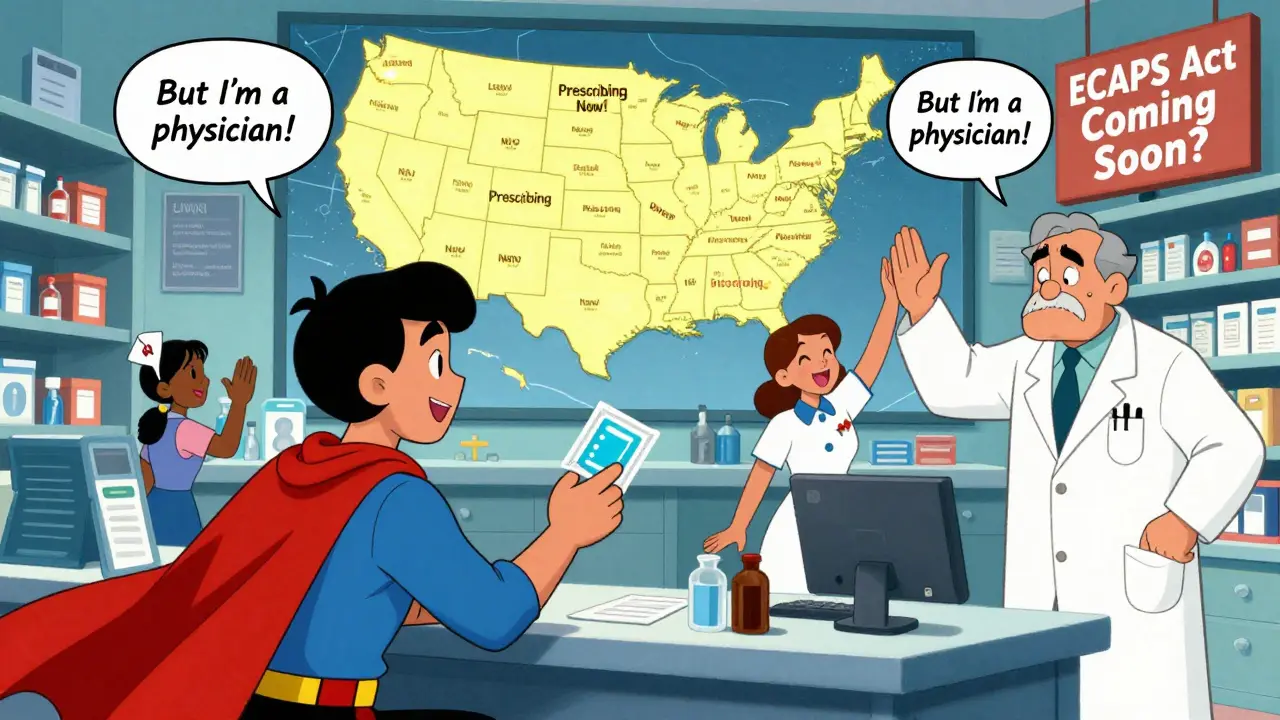
Expanding pharmacist substitution authority isn’t just about convenience-it’s about equity. Rural communities, low-income neighborhoods, and areas with limited transportation often have no nearby doctor. Pharmacies, however, are everywhere. A 2023 study from the American College of Clinical Pharmacy found that pharmacist-managed medication therapy improved outcomes for patients with chronic diseases, reducing hospitalizations by up to 28%. For people on fixed incomes, having a pharmacist adjust a dose to fit their budget can mean the difference between taking medication and skipping it. And with the federal ECAPS Act pending, which would require Medicare Part B to reimburse pharmacists for clinical services, the financial incentive for states to expand these roles is growing. If passed, it could trigger a domino effect: private insurers would follow, and more pharmacists would be able to offer these services without losing money.
Controversies and Concerns
Not everyone agrees. The American Medical Association still warns that pharmacists’ training isn’t equivalent to physicians’ and that corporate pharmacy chains are pushing this expansion for profit, not patient care. There’s also the issue of reimbursement. Even in states where pharmacists can prescribe, many insurance plans don’t recognize them as providers. That means they can’t bill for services, making it hard to sustain them. And while pharmacists are trained in drug interactions and dosing, they’re not trained to diagnose complex conditions. That’s why protocols require clear referral criteria-if a patient’s symptoms suggest something beyond medication management, the pharmacist must refer them to a doctor. The system isn’t perfect, but it’s designed to protect patients while expanding access.
What You Should Do
If you’re on long-term medication, ask your pharmacist: "Do I have the option for therapeutic interchange or dose adjustment here?" If you’re in a rural area or have trouble getting appointments, find out if your state allows prescription adaptation. Check your state board of pharmacy website-they usually list what pharmacists are legally allowed to do. And if you’re prescribed a new drug, ask if a generic or alternative exists that your pharmacist can switch to without a new prescription. You might save money, time, and even avoid a trip to the clinic.
Can a pharmacist change my prescription without telling my doctor?
No-not in most cases. Even in states with broad substitution authority, pharmacists are required to notify the original prescriber when they make changes like therapeutic interchange or dose adjustments. This keeps your medical record accurate and ensures continuity of care. In some states, like Idaho and Kentucky, this notification is legally required within 24 to 48 hours.
Can I refuse a substitution made by my pharmacist?
Yes, absolutely. In states that allow therapeutic interchange or prescription adaptation, pharmacists must explain the change to you and get your consent before making it. If you’re uncomfortable with the switch, you can say no. The pharmacist must then fill the original prescription as written by your doctor. Your right to refuse is protected by law.
Do all states let pharmacists prescribe birth control or emergency contraception?
No. As of 2026, only about 20 states have laws allowing pharmacists to prescribe birth control without a doctor’s prescription. California, Oregon, Washington, Maryland, and New Mexico are among the leaders. Most states still require a prescription, though many allow pharmacists to dispense emergency contraception without one. Always check your state’s rules-this varies widely.
Why can’t my pharmacist just prescribe antibiotics if I think I have a sinus infection?
Because antibiotics require diagnosis, not just symptom management. Most states don’t allow pharmacists to diagnose infections or prescribe antibiotics outside of very specific protocols-like in some states where they can treat strep throat or urinary tract infections after a rapid test. Even then, they must follow strict guidelines and refer patients with complex symptoms to a doctor. This prevents misuse and protects public health.
Will my insurance cover services provided by my pharmacist?
It depends. Many insurance plans still don’t recognize pharmacists as providers for clinical services, even if your state allows it. You might pay out-of-pocket for things like medication therapy management or chronic disease monitoring. But if the federal ECAPS Act passes, Medicare will start covering these services, and private insurers will likely follow. Until then, ask your pharmacist if the service is billable and whether your plan covers it.




Diane Croft
March 4, 2026 AT 04:03Let’s stop treating them like glorified cashiers.
Alex Brad
March 4, 2026 AT 16:08Zacharia Reda
March 6, 2026 AT 07:01Mike Dubes
March 6, 2026 AT 12:53Darren Torpey
March 6, 2026 AT 20:26Megan Nayak
March 7, 2026 AT 14:36Tildi Fletes
March 9, 2026 AT 09:46Ivan Viktor
March 10, 2026 AT 16:48Siri Elena
March 11, 2026 AT 13:38John Cyrus
March 11, 2026 AT 16:01Pankaj Gupta
March 12, 2026 AT 12:55Betsy Silverman
March 13, 2026 AT 17:36Renee Jackson
March 14, 2026 AT 03:36Stephen Vassilev
March 15, 2026 AT 14:40Ethan Zeeb
March 17, 2026 AT 10:03