
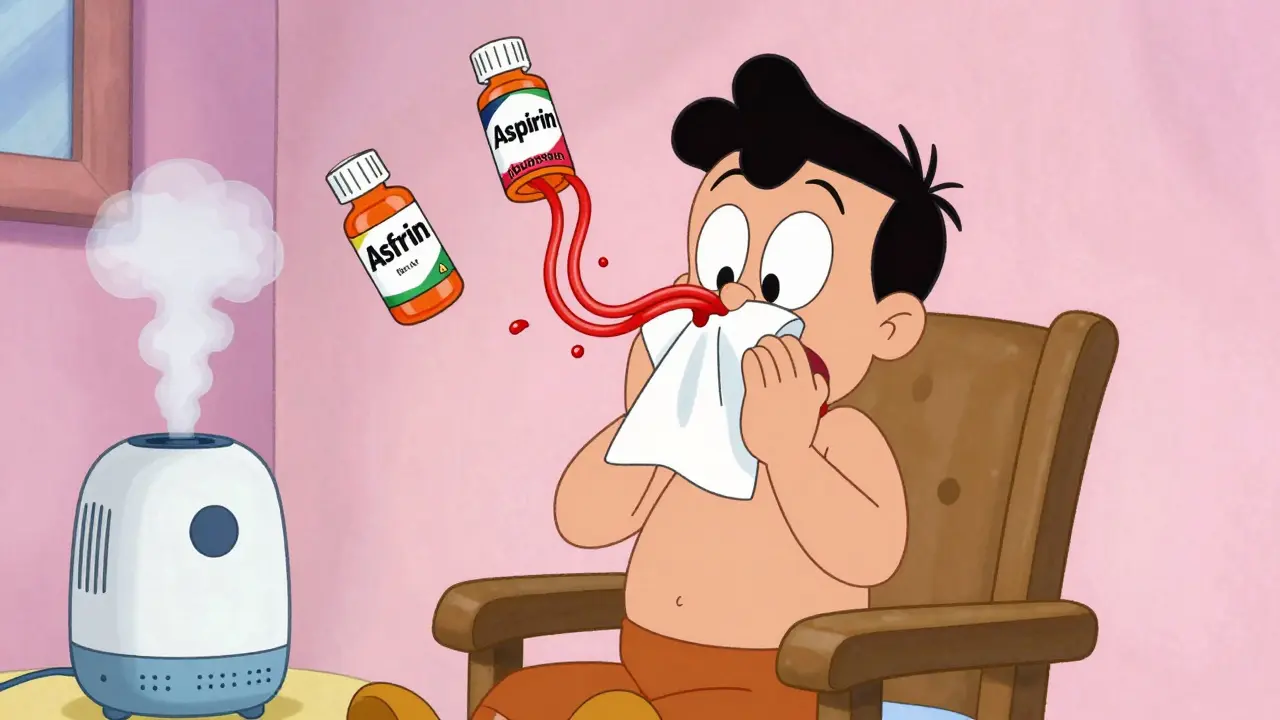
Everyone knows the sudden panic of a nosebleed - that warm trickle down the throat, the surprise of blood on a tissue, the instinct to tilt your head back. But if you’re taking any kind of regular medication, this common problem might not be random. It could be a direct side effect of what’s in your medicine cabinet.
About 60% of people experience a nosebleed at least once in their life, but only about 6% ever need medical help. Still, when nosebleeds keep happening - especially if you’re on medication - it’s not just annoying. It’s a signal. And that signal often points to your drugs.
Which Medications Cause Nosebleeds?
It’s not just the big, scary blood thinners. Even common over-the-counter pills can trigger nosebleeds. The main culprits fall into three groups: blood thinners, nasal drying agents, and painkillers.
NSAIDs like ibuprofen (Advil, Motrin), naproxen (Aleve), and aspirin are among the most frequent offenders. These drugs block enzymes that help platelets stick together to form clots. Even low-dose aspirin - the kind many people take daily to protect their heart - can make your nasal blood vessels more likely to bleed. You don’t need to take a lot. Just one pill can tip the balance.
Anticoagulants like warfarin (Coumadin) and antiplatelet drugs like clopidogrel (Plavix) are even more potent. These are prescribed for heart conditions, strokes, or blood clots. But they work by slowing down your body’s ability to stop bleeding. That’s great for preventing clots - but not so great when a tiny capillary in your nose breaks. Patients on these medications are at the highest risk.
Decongestants and antihistamines like oxymetazoline (Afrin) or oral allergy pills don’t thin blood. Instead, they dry out your nasal lining. When you use nasal sprays too long - more than three days - your nose gets used to them. Then, when the effect wears off, the blood vessels swell back up, become fragile, and bleed easily. Dry air, especially in winter, makes this worse.
Even heparin, a common injectable anticoagulant, can cause a rare but serious reaction called heparin-induced thrombocytopenia (HIT), which can lead to both clots and bleeding - including nosebleeds.
Why Your Nose Is So Vulnerable
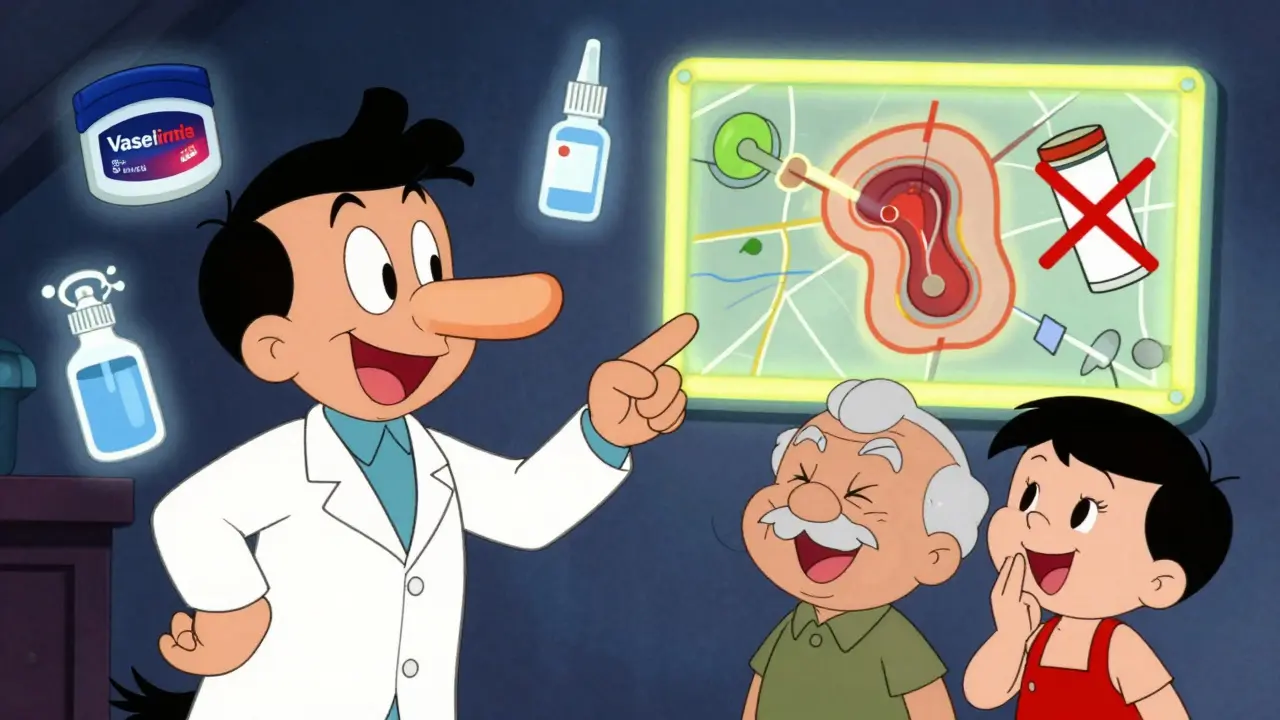
Your nose isn’t just a passage for air. Inside, there’s a dense network of tiny blood vessels called Kiesselbach’s plexus, right near the front of the nasal septum. This area is packed with capillaries that are easy to rupture. It’s why most nosebleeds start here.
When medications interfere with clotting or dry out the mucous membrane, this delicate area becomes a ticking time bomb. A slight bump, a dry night, or even a vigorous blow of the nose can be enough to set off a bleed. The combination of medication and environmental dryness - especially in winter - is a perfect storm.
Children are especially at risk because they tend to pick their noses. Older adults, especially those over 45, have thinner nasal tissues and more chronic health conditions. Pregnant women see increased blood flow to the nose, which can stretch vessels. Athletes and people with high blood pressure or atherosclerosis also face higher risks.
How to Prevent Medication-Induced Nosebleeds
The good news? You don’t have to stop your meds. You just need to protect your nose.
- Switch painkillers: If you’re taking ibuprofen or aspirin for headaches or aches, try acetaminophen (Tylenol) instead. It doesn’t affect platelet function. For fever or mild pain, it’s just as effective - without the bleeding risk.
- Moisturize daily: Apply a thin layer of petroleum jelly (Vaseline) inside each nostril, twice a day - morning and before bed. Nasal saline sprays or gels work too. They keep the lining soft and prevent cracking.
- Use a humidifier: Especially in winter, indoor air can drop below 30% humidity. A cool-mist humidifier in your bedroom helps keep nasal passages hydrated. You don’t need a fancy one - just something that adds moisture to the air.
- Stop picking or blowing too hard: Even gentle rubbing or a forceful sneeze can trigger a bleed. If you have to blow, do it gently. And if your nose itches, resist the urge. Use a saline spray instead.
- Limit decongestant sprays: Afrin and similar products are great for short-term relief. But if you use them longer than three days, you set up a cycle of rebound congestion and damage. Stick to saline sprays for daily use.
What to Do When a Nosebleed Happens
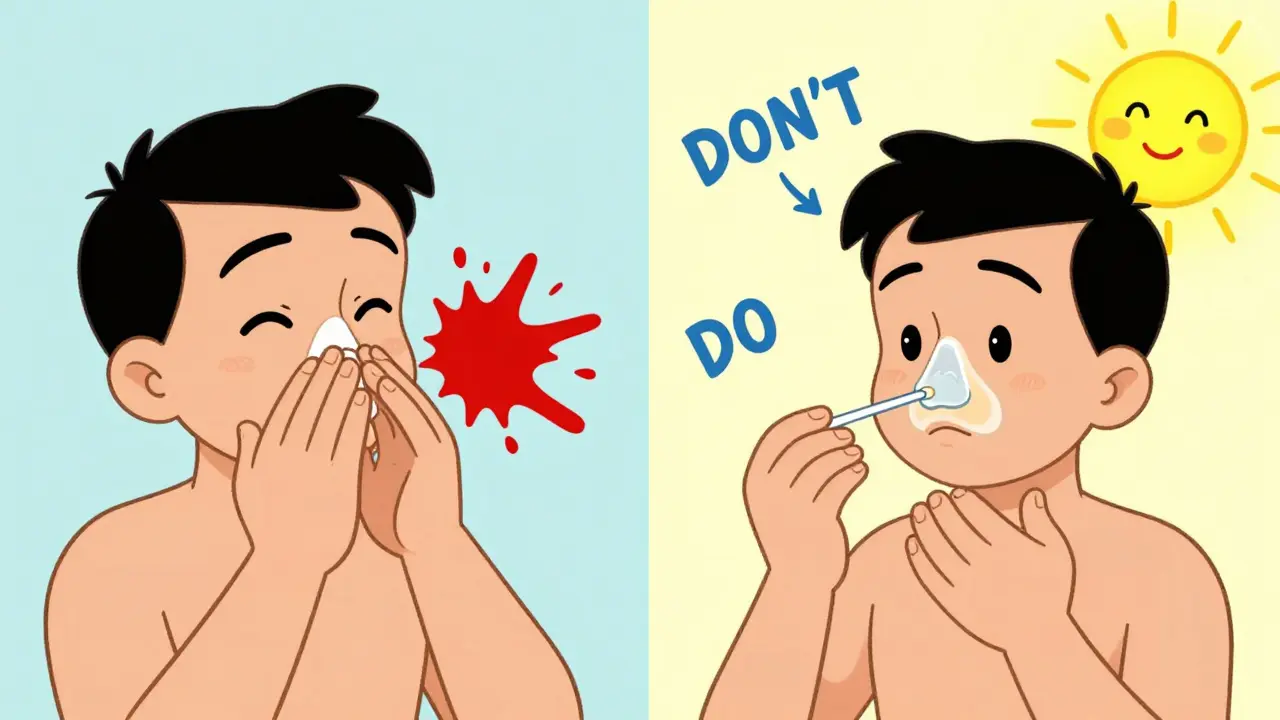
Don’t panic. Don’t tilt your head back. That just makes you swallow blood, which can upset your stomach or even trigger vomiting.
Here’s what actually works:
- Sit upright and lean slightly forward.
- Pinch the soft part of your nose - just below the bridge - with your thumb and index finger.
- Hold it for 10 to 15 minutes. Set a timer. Most people think they’ve held it long enough after five minutes. You haven’t.
- Breathe through your mouth. Don’t check if it’s stopped. Keep pinching.
- After 15 minutes, release gently. Avoid blowing your nose or bending over for the next few hours.
If the bleeding doesn’t stop after 20 minutes, or if you feel lightheaded, dizzy, or weak - get medical help immediately. Same goes if the bleed follows a fall, injury, or if you’re on blood thinners and it’s heavy.
When to Call Your Doctor
Not every nosebleed means you need to change your meds. But if any of these happen, talk to your doctor:
- You have more than three or four nosebleeds in a week
- The bleeding lasts longer than 20 minutes
- You’re bruising easily or bleeding from other places (gums, cuts)
- You’re on warfarin, clopidogrel, or aspirin and the nosebleed is frequent
- You’ve started a new medication recently
Your doctor or pharmacist may review your full medication list - including supplements and OTC drugs - to find the culprit. Sometimes, a small switch - like changing from ibuprofen to acetaminophen - makes all the difference. Never stop a prescribed medication on your own. The risk of a clot or heart event may be greater than the nosebleed.
The Role of Your Pharmacist
Pharmacists aren’t just people who hand out pills. They’re trained to spot drug interactions and side effects. If you’re having frequent nosebleeds, ask your pharmacist to review your entire medication list. They can flag risks you might not even realize are connected.
For example, combining aspirin with an NSAID like naproxen doubles the bleeding risk. Or taking an antihistamine with a nasal decongestant can dry out your nose faster than you think. Pharmacists can suggest alternatives or timing adjustments to reduce side effects without losing the benefit.
Final Thoughts
Nosebleeds from medication aren’t rare. They’re predictable. And they’re preventable. You don’t have to live with them. You don’t have to ignore them. The key is recognizing the link - and taking simple steps to protect your nose.
Moisturize. Avoid harsh sprays. Switch painkillers. Talk to your doctor. These aren’t complicated fixes. But they work.
Most people think nosebleeds are just a nuisance. But when they’re tied to your meds, they’re a warning. Listen to your body. Your nose is telling you something.


Elaine Parra
March 23, 2026 AT 20:46Anil Arekar
March 24, 2026 AT 13:57Rama Rish
March 25, 2026 AT 15:21Linda Foster
March 26, 2026 AT 10:50Kevin Siewe
March 27, 2026 AT 15:57Darlene Gomez
March 29, 2026 AT 14:42Danielle Arnold
March 31, 2026 AT 05:38Donna Fogelsong
April 1, 2026 AT 10:44Seth Eugenne
April 2, 2026 AT 06:08Alex Arcilla
April 3, 2026 AT 07:46Blessing Ogboso
April 4, 2026 AT 08:24