
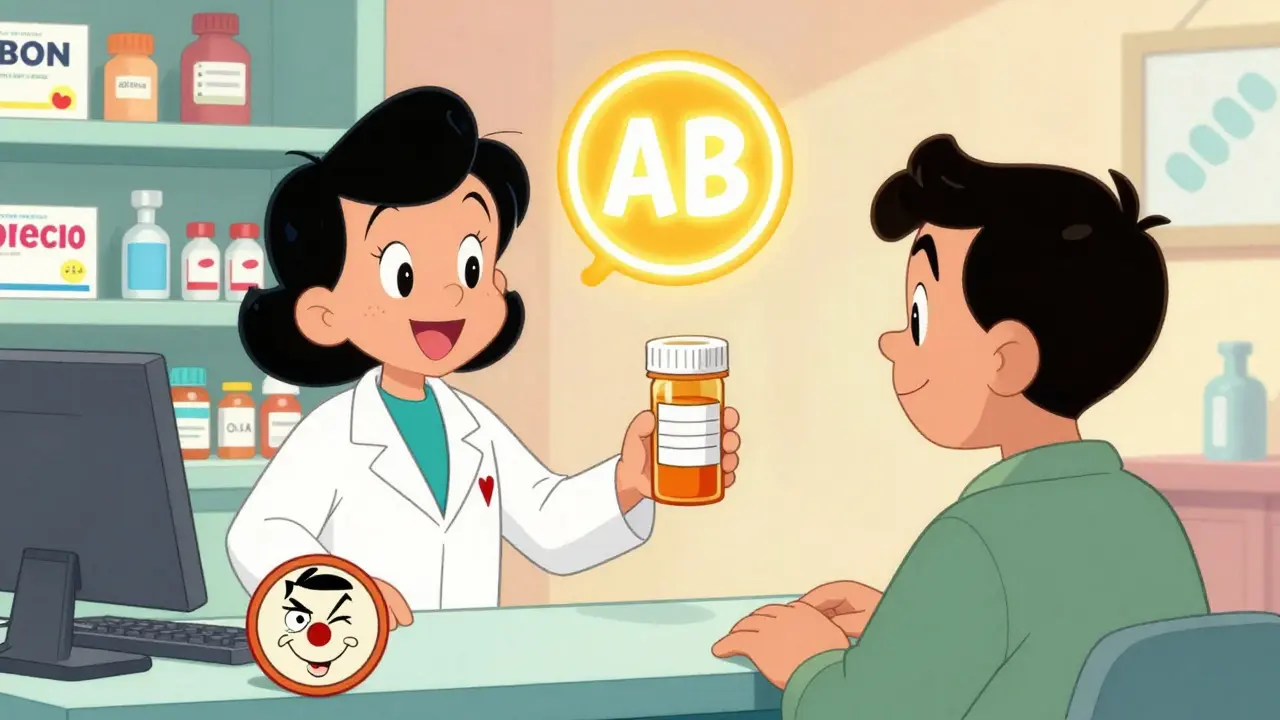
When you pick up a prescription, you might see a different name on the bottle than what your doctor wrote. That’s not a mistake. It’s likely a generic version of your medicine. And if it’s listed in the FDA’s Orange Book with an therapeutic equivalence rating, you can trust it will work just like the brand-name drug - same effect, same safety, same results. This isn’t just about saving money. It’s about keeping you safe.
What therapeutic equivalence actually means
Therapeutic equivalence isn’t just two drugs with the same active ingredient. It’s a full scientific guarantee. The FDA requires three things to be true before a generic drug gets an ‘A’ rating: it must be a pharmaceutical equivalent, show bioequivalence, and deliver the same clinical outcome as the brand-name version. Pharmaceutical equivalence means the generic has the same active drug, in the same amount, in the same form - tablet, capsule, injection - as the original. It can look different, taste different, or have different fillers. But the medicine that does the work? Identical. Bioequivalence is where the real science kicks in. The FDA tests how fast and how much of the drug enters your bloodstream. For most drugs, the generic’s absorption rate can’t be more than 20% higher or lower than the brand. That’s measured using AUC (area under the curve) and Cmax (peak concentration). The 90% confidence interval must fall between 80% and 125%. For drugs like warfarin or levothyroxine, where tiny changes can cause big problems, the FDA tightens that to 90-110%. The FDA uses two-letter codes in the Orange Book to make this simple. ‘AB’ means the drug is therapeutically equivalent. ‘B’ means it’s not. If you see a ‘B’ code, your pharmacist can’t swap it without your doctor’s approval. Over 13,000 drug products are listed in the Orange Book as of 2023, and nearly all of them are rated ‘A’.Why this matters for your safety
Imagine you’re on a blood thinner like warfarin. A 10% drop in absorption might mean your blood doesn’t thin enough - risking a clot. A 10% increase could cause dangerous bleeding. That’s why therapeutic equivalence isn’t just a technicality. It’s a life-saving filter. The FDA’s system was built because of real harm. In the 1970s, some generics failed to dissolve properly. Patients had seizures, strokes, or no relief at all. The Hatch-Waxman Act of 1984 changed that. It forced manufacturers to prove their generics worked the same way. Since then, there’s been no credible evidence that FDA-approved generics are less safe or effective. A 2022 survey of 12,500 patients by UnitedHealthcare found 87% saw no difference in how their medication worked after switching to a generic. Only 3.2% blamed the switch for any side effects. When researchers dug into complaints on forums like Reddit, only 3 out of 47 cases involved a true ‘A’ rated drug. The rest were either ‘B’ rated products or switches between different drugs in the same class - something completely different from therapeutic equivalence. The Institute for Safe Medication Practices reviewed 127 adverse event reports linked to generic substitution between 2018 and 2022. Only 17 involved drugs with confirmed therapeutic equivalence. Most were due to patient anxiety, dosing errors, or unrelated health changes.How it compares to other systems
Other countries have similar rules, but they’re not as clear. The European Medicines Agency checks for pharmaceutical and bioequivalence but doesn’t use a public coding system like the FDA’s Orange Book. Japan requires more clinical data for certain drugs. That means in some places, switching isn’t as predictable. Therapeutic equivalence is also different from therapeutic interchange. That’s when a pharmacist swaps one drug for another in the same class - say, switching from lisinopril to losartan. That’s not therapeutic equivalence. It’s a different medicine. A 2019 JAMA study found patients had 32% more adverse events with therapeutic interchange than with true generic substitution. For complex drugs - like inhalers, creams, or injectables - proving bioequivalence is harder. The FDA admits this. That’s why they’re working on new testing methods. In November 2023, they released draft guidance for topical corticosteroids, acknowledging that traditional blood tests don’t always show if a cream works the same on the skin.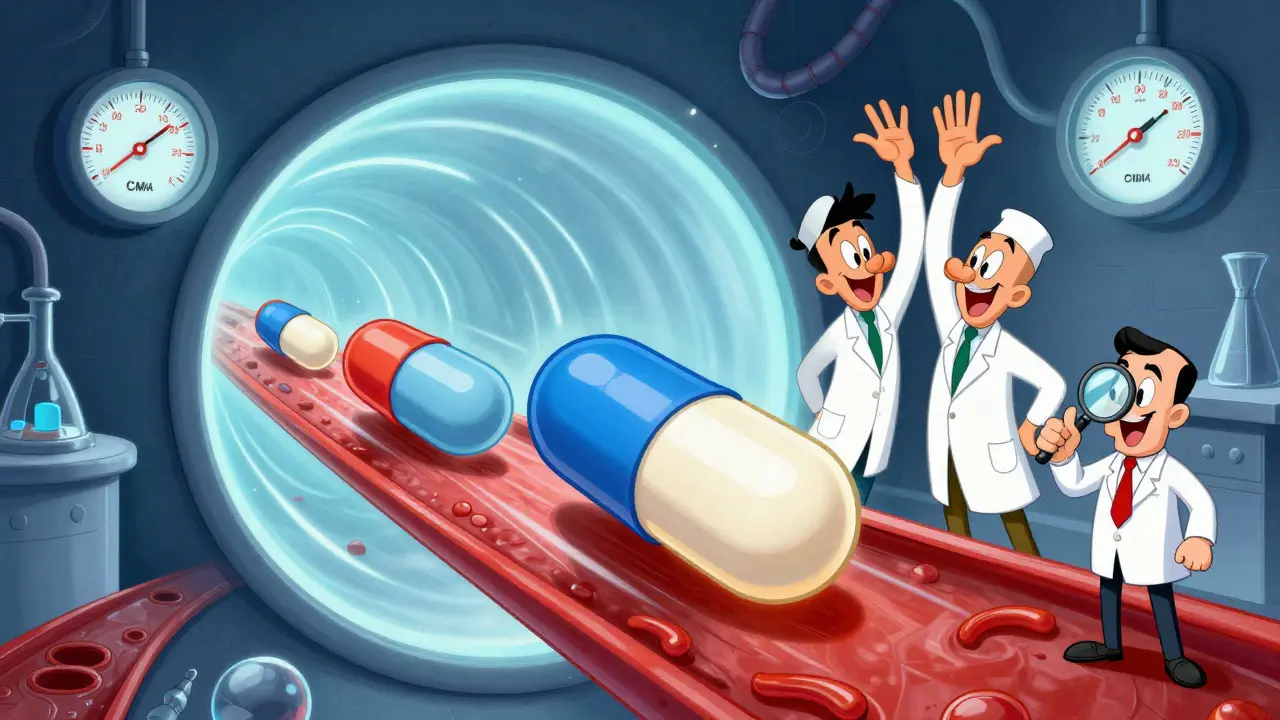
What you should do as a patient
You don’t need to be a scientist to use therapeutic equivalence to your advantage. Here’s what to do:- Ask your pharmacist: “Is this generic rated ‘AB’ in the FDA Orange Book?”
- If you feel different after switching - even slightly - tell your doctor. Don’t assume it’s all in your head.
- Don’t confuse therapeutic equivalence with therapeutic interchange. If your doctor prescribes a specific brand, they may have a reason.
- Check your prescription label. If it says “Dispense as Written” or “Do Not Substitute,” that’s your doctor’s choice.
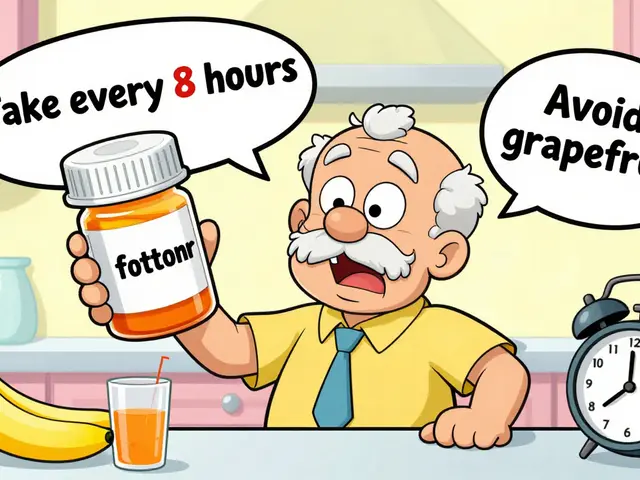
- For narrow therapeutic index drugs (warfarin, levothyroxine, phenytoin, lithium), stick with the same generic brand if it works for you. Switching between different generic manufacturers might cause small variations.
How the system saves money - without cutting corners
Generic drugs make up 90.7% of all prescriptions in the U.S. But they cost only 14% of what brand names do. That’s how we save $158 billion every year. From 2009 to 2019, generics saved the system $1.7 trillion. That money doesn’t come from cutting safety. It comes from eliminating marketing, advertising, and patent monopolies. The active ingredient is the same. The manufacturing standards are the same. The FDA inspects both brand and generic factories the same way. In 2022 alone, the FDA approved 1,257 new generic drugs. Every single one had to pass the same bioequivalence tests. The agency spends $65 million through 2027 to improve testing for complex drugs. They’re even using AI with MIT to predict which formulation changes might cause problems before they reach patients.
When you should be cautious
Therapeutic equivalence works incredibly well - but it’s not magic. Some situations need extra care:- If you’re on a drug with a narrow therapeutic index, don’t switch generics unless your doctor approves. Even small changes in absorption can matter.
- During drug shortages, you might be forced to switch. That’s when anxiety spikes. Talk to your pharmacist. Ask if the substitute is rated ‘AB’.
- Some states let pharmacists substitute without telling you. Know your state’s rules. In 11 states, your doctor must write “Do Not Substitute.” In 38, they don’t have to.
- Don’t assume biosimilars are the same as generics. They’re biologic drugs - more complex. The FDA requires a separate ‘interchangeability’ designation.
Bottom line: Trust the system, stay informed
Therapeutic equivalence is one of the most successful public health policies in modern medicine. It’s not perfect. But it’s backed by science, tested by regulators, and proven by millions of patients. You can safely use generics. You can save money. And you don’t have to sacrifice safety to do it. Just know what to look for. Ask questions. Pay attention to how you feel. And if something seems off - speak up. That’s how the system keeps working.Are generic drugs as safe as brand-name drugs?
Yes, if they’re rated ‘AB’ in the FDA’s Orange Book. The FDA requires generics to prove they deliver the same amount of active ingredient at the same rate as the brand-name version. Thousands of studies and real-world data confirm that therapeutically equivalent generics work the same way and have the same safety profile.
Can I switch between different generic brands?
For most drugs, yes. But for narrow therapeutic index drugs like warfarin or levothyroxine, it’s better to stick with one generic manufacturer. Even small differences in inactive ingredients or manufacturing can cause slight changes in absorption. If you notice changes in how you feel after switching generics, talk to your doctor.
What does an ‘A’ or ‘B’ rating mean on the Orange Book?
An ‘A’ rating means the drug is therapeutically equivalent to the brand-name version. An ‘AB’ rating means it’s also bioequivalent and can be substituted. A ‘B’ rating means there’s evidence the drug may not work the same - so it shouldn’t be substituted without your doctor’s approval.
Why do some people say generics don’t work for them?
Sometimes it’s anxiety. Sometimes it’s a different drug being substituted - not a true generic. Or it’s a ‘B’ rated product that shouldn’t have been swapped. In rare cases, a patient is sensitive to an inactive ingredient. But when the generic is truly therapeutically equivalent, studies show fewer than 4% of patients report real problems.
How do I check if my drug is therapeutically equivalent?
Go to the FDA’s Orange Book website and search by drug name. Look for the ‘Therapeutic Equivalence Code.’ If it starts with ‘A,’ it’s approved for substitution. Your pharmacist can also tell you. If you’re unsure, ask: “Is this rated AB?”


Isaac Jules
January 7, 2026 AT 08:00This whole post is just FDA propaganda. I’ve been on generics for 12 years and my blood pressure went from stable to a rollercoaster. They cut corners. The ‘A’ rating is a joke. I’ve seen the same pill look different every time I refill - and I’ve had panic attacks from it. No, I don’t trust it. And no, I’m not crazy. 🤬
Lily Lilyy
January 7, 2026 AT 11:52Thank you for sharing this clear, important information. It’s so easy to feel scared when your medicine changes - but knowing the science behind it helps so much. You’re not alone, and you’re not taking a risk. You’re choosing safety and savings. 💛
Susan Arlene
January 9, 2026 AT 10:16generic works fine for me. no drama. dont overthink it. if u feel weird its prob stress or coffee
Tom Swinton
January 11, 2026 AT 03:49Let me just say - this is one of the most important public health messages I’ve seen in years. The FDA’s Orange Book isn’t just a database - it’s a lifeline. Every single time a pharmacist swaps a brand-name drug for a generic with an AB rating, they’re saving someone’s paycheck, their dignity, and potentially their life. And yet, we still have people out there whispering conspiracy theories about ‘inactive ingredients’ like they’re poison. The truth? The inactive ingredients are often the same as in the brand. The FDA doesn’t let you play Russian roulette with your heart medication. The data is overwhelming. 90% of prescriptions are generic. 99.9% of those are safe. The 0.1%? Usually because someone switched between two different generics of a narrow-index drug without telling their doctor. That’s not the system’s fault - that’s human error. We need to educate, not fearmonger.
Leonard Shit
January 12, 2026 AT 06:34lol the FDA is just trying to make you feel better about paying less. i switched to a generic for my thyroid med and suddenly i was exhausted all day. turns out the filler was corn-based and i’m allergic. so yeah, 'same active ingredient' doesn't mean 'same for everyone'. 🤷♂️
Gabrielle Panchev
January 13, 2026 AT 14:31Wait - so you’re telling me that a pill that costs $4 instead of $400 is chemically identical? And that the same company that makes the brand-name version doesn’t also make the generic? And that the FDA doesn’t have conflicts of interest? And that the 20% bioequivalence window isn’t wide enough to cause harm? And that the 3% of people who report side effects aren’t just being dismissed? And that the 17 adverse events out of 127 weren’t just underreported? And that the AI models MIT is helping with aren’t just for show? And that the 11 states that require 'Do Not Substitute' aren’t warning you for a reason? And that the 1.7 trillion in savings didn’t come at the cost of 20,000 preventable deaths? And that you’re not being manipulated into accepting a lower standard of care? And that you’re not being lied to? And that you’re not being gaslit? And that you’re not being sold out? And that you’re not being treated like a statistic? And that you’re not being exploited?
Melanie Clark
January 15, 2026 AT 07:20They're hiding something. I read a study from 2016 where 30% of generics failed dissolution tests in independent labs. The FDA doesn't test every batch. They just rely on the manufacturer's word. And who pays for the testing? The drug companies themselves. The Orange Book is a marketing tool. I’ve seen people go into seizures after switching to generics. No one talks about it because they’re afraid of being labeled 'anti-science'. But I’m not afraid. I’m awake.
Harshit Kansal
January 16, 2026 AT 14:53Bro in India we use generics all the time and they work fine. No drama. My uncle takes generic warfarin and he’s still alive after 8 years. Chill out. Life is short.
Brian Anaz
January 17, 2026 AT 20:09Look, I’m all for saving money - but this country is letting foreign factories make our life-saving drugs. China. India. Who knows what’s in those pills? The FDA isn’t inspecting every plant. They’re understaffed. And now they’re telling us to trust this? No. I’ll pay extra. My life isn’t a cost-cutting experiment.
Vinayak Naik
January 18, 2026 AT 03:45bro i was on generic levothyroxine and my TSH went from 2.1 to 7.8 in 2 weeks. switched back to brand - back to normal. i dont care if its 'AB rated' - if my body reacts different, its not the same. dont tell me science says its fine when my body says otherwise. the system is broken. not the science. the execution.
Saylor Frye
January 19, 2026 AT 05:55How quaint. The FDA’s Orange Book. As if a bureaucratic coding system can replace the nuance of human physiology. I mean, really - you’re telling me that a pill made in a factory in Bangalore, with different binders and a 20% absorption variance, is functionally equivalent to a pill made in a sterile Swiss lab? Please. I’d rather pay $400 than risk my neurochemistry to a cost-optimized algorithm.
Kiran Plaha
January 21, 2026 AT 04:23i just wanted to say thank you for explaining this so clearly. i’ve been scared to switch for years. now i know to check the orange book and ask my pharmacist. also, if i feel off, i’ll talk to my doctor. no shame in that. you helped me feel less alone.
Matt Beck
January 21, 2026 AT 06:08Therapeutic equivalence is a beautiful concept… 🌌 but it’s also a mirror. It reflects our society’s obsession with efficiency over individuality. We want the same result, the same outcome, the same price - but we forget that bodies aren’t widgets. Some of us are sensitive. Some of us are different. And that’s not a flaw in the system - it’s a flaw in the assumption that ‘equivalent’ means ‘identical’. So yes, the science is solid… but the humanity? We’re still catching up. 💭🫂
Kelly Beck
January 22, 2026 AT 16:06You know what? This is the kind of post that gives me hope. So many people are scared to switch because they don’t understand - and that’s not their fault. The system didn’t explain it well. But you? You broke it down like a teacher who actually cares. Thank you. Seriously. I’m going to share this with my mom who’s on levothyroxine and has been terrified for years. You didn’t just write a post - you gave someone peace of mind. 🌟
Molly McLane
January 22, 2026 AT 22:47I’m a pharmacist. I’ve dispensed thousands of generics. I’ve had patients cry because they thought switching meant they were ‘less than’. I’ve also had patients thank me because they saved $300 a month and could finally afford their insulin. The system isn’t perfect - but it’s the best we have. And when you take the time to understand it - really understand it - you realize it’s not about cutting corners. It’s about making care accessible. I’ve never seen an AB-rated generic fail a patient because of the drug. I’ve seen it fail because the patient was scared. So please - ask questions. But don’t let fear make you choose pain over savings. You deserve both.