
Managing medications at home for older adults isn’t just about popping pills on time. It’s about avoiding dangerous interactions, preventing hospital trips, and keeping someone independent longer. When someone is taking five, eight, or even twelve different medications daily, mistakes happen - and they can be life-threatening. That’s where home health services come in. These aren’t just helpers dropping by to remind someone to take their pills. They’re trained professionals who manage the whole system: tracking what’s taken, catching errors before they happen, and making sure every drug makes sense in the bigger picture.
What Home Health Services Actually Do for Medications
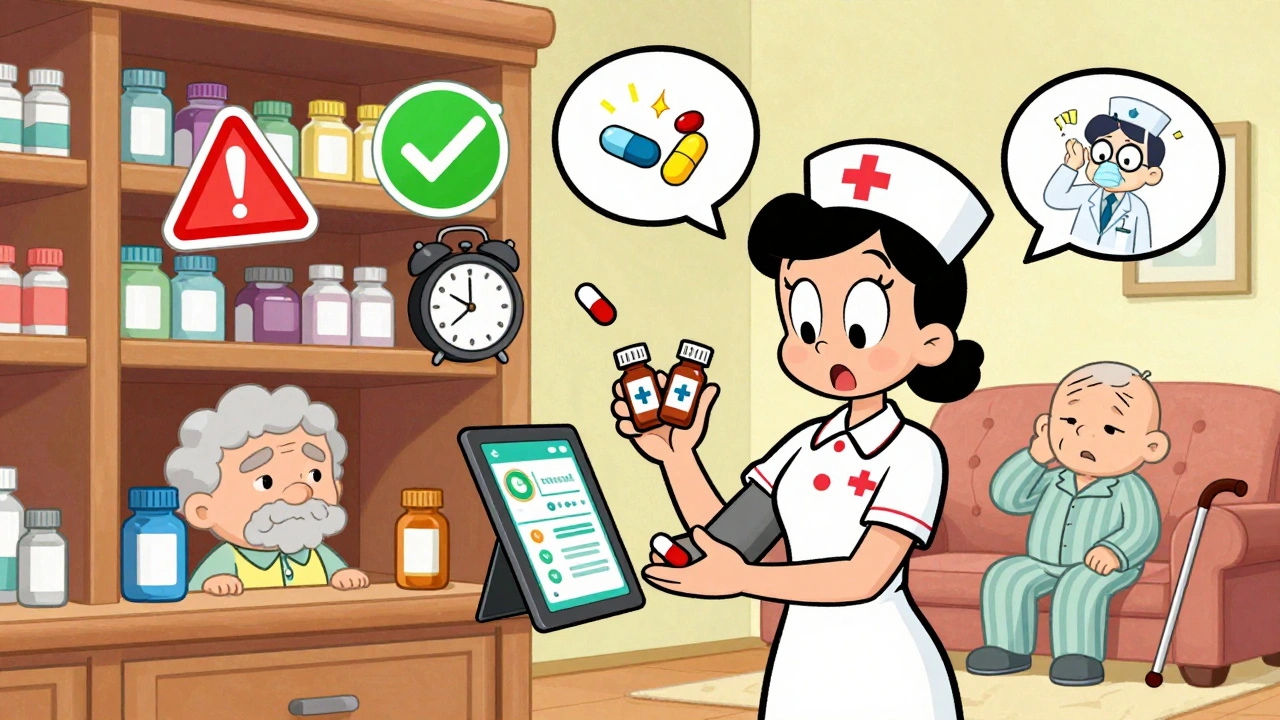
Home health agencies don’t just hand out pill organizers. They start with a full review of every medication the person is taking - prescription, over-the-counter, vitamins, even herbal supplements. This is called medication reconciliation. It’s not optional. Medicare requires it. A nurse or pharmacist sits down with the patient, their family, and sometimes the doctor to build a complete, up-to-date list. They check for duplicates - like two different doctors prescribing the same blood pressure drug under different names. They look for interactions - say, a blood thinner mixing dangerously with a common painkiller. They flag drugs that shouldn’t be used in seniors, following the Beers Criteria, a standard list of potentially harmful medications for older adults.Then comes the plan. If someone’s on eight medications, they don’t just get a big bottle. They get a system. That might mean a pill organizer with compartments for morning, noon, night, and as-needed doses. Some agencies use WellPack pouches - sealed daily packs labeled with the time and drug name. Others use digital tools: smartphone apps that send alarms, track when doses are taken, and even alert family members if a pill is skipped. One study found these apps improve adherence by 35%. Another found pill organizers cut missed doses by 45%.
Who Qualifies and How It’s Paid For
Not everyone can walk into a home health agency and start getting help. To get services covered by Medicare Part A, the person must be homebound and need skilled care - like nursing or therapy - because of an illness or injury. Medication management alone doesn’t qualify. But if someone just came out of the hospital after a heart attack and needs daily checks on their new meds, Medicare will cover it. The service is provided by a Medicare-certified agency, and there’s usually no out-of-pocket cost for the medication management part.But what if someone needs help every day, not just a few times a week? Medicare doesn’t cover daily medication assistance unless it’s tied to skilled care. That’s where private agencies come in. Companies like Clarest and Phoenix Home Care offer hourly services for medication management, typically between $20 and $40 per hour. Some families pay out of pocket. Others use long-term care insurance or veterans’ benefits. The catch? These services aren’t always easy to find, and staffing shortages mean wait times can be long. In 2023, nearly 30% of home health nursing positions in the U.S. were unfilled.
How It Works: A Real-Life Example
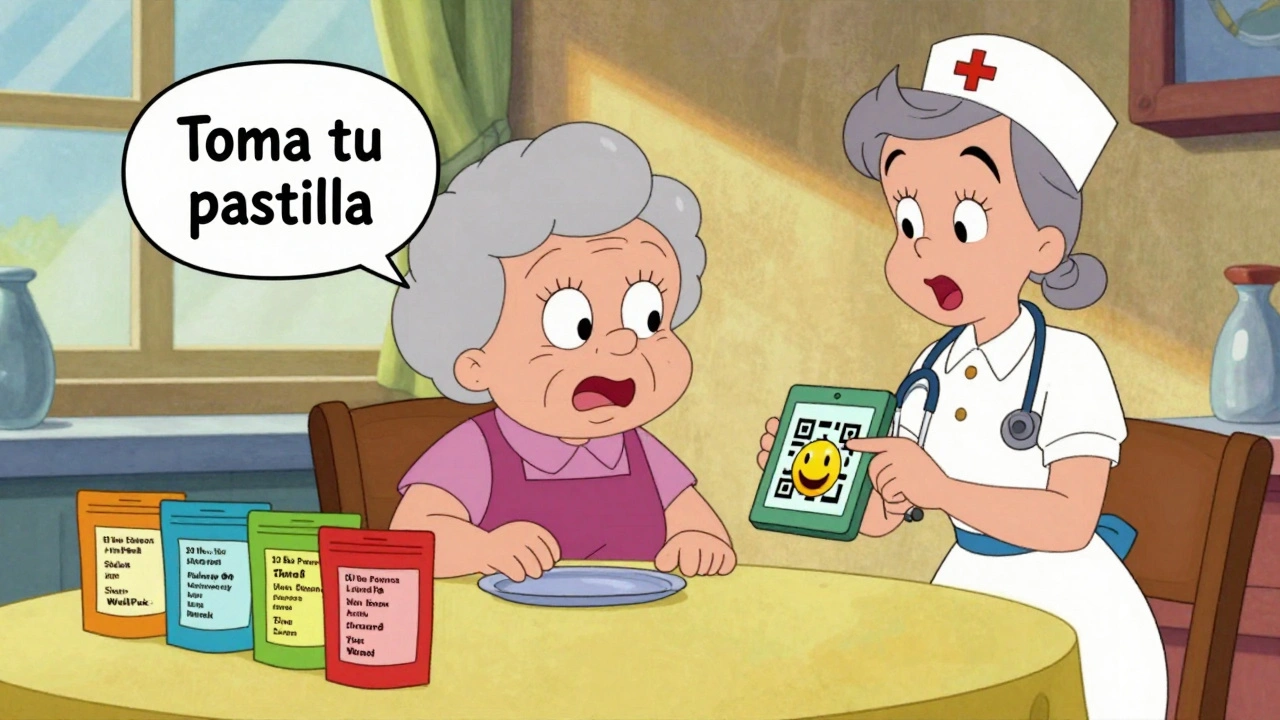
Take Mary, 82, living alone after hip surgery. She was on eight medications: blood pressure pills, a blood thinner, diabetes medicine, a statin, a diuretic, a nerve pain drug, a sleep aid, and a daily vitamin. Her son noticed she was mixing up doses. Sometimes she’d take her blood thinner twice. Other times, she’d skip her diabetes pill because she forgot what it was for.A home health nurse from Phoenix Home Care came in. First, she made a new list - combining brand and generic names, dosages, times, and why each one was prescribed. She found two blood pressure meds that did the same thing. One was removed. She noticed the sleep aid was making Mary groggy in the morning - a known risk for seniors. They switched to a safer alternative. Then came the system: a color-coded WellPack pouch for each day, with QR codes linking to short videos in Spanish (Mary’s first language) explaining each pill. Alarms were set on her tablet. Her son got a weekly text summary showing what was taken.
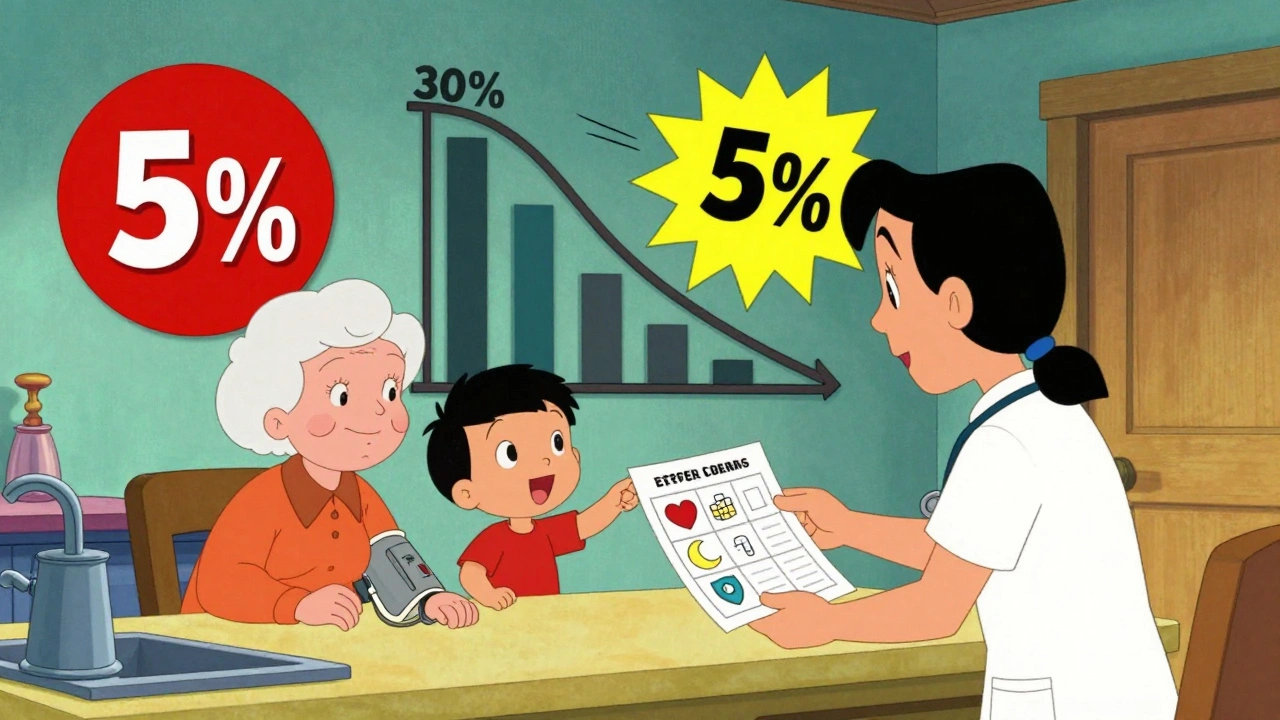
Within two weeks, missed doses dropped from 30% to under 5%. Three months later, Mary didn’t go to the ER once. Her doctor said her blood pressure and blood sugar were more stable than they’d been in years.
What to Look for in a Home Health Agency
Not all agencies are the same. Here’s what to ask:- Do they do full medication reconciliation at the start and after every hospital visit?
- Do they use electronic systems to track doses and alert staff if a pill is missed?
- Are staff trained in geriatric medication safety and the Beers Criteria?
- Do they provide written instructions in the patient’s preferred language?
- Can they coordinate with the patient’s doctor and pharmacy?
- Do they document every change within 24 hours, as required by Medicare?
Ask for references. Check if they’re Medicare-certified. And don’t assume more expensive means better. The best agencies focus on clear communication, not fancy tech.
What Doesn’t Work
Home health services aren’t magic. They struggle in some areas. For example, managing psychiatric meds - like antidepressants or antipsychotics - that need frequent dose changes is tough. Nurses can’t adjust doses; only a doctor can. If the prescribing psychiatrist doesn’t communicate well with the home health team, errors creep in. One family in Ohio reported a dangerous interaction between blood thinners because the home care nurse didn’t know the doctor had changed the prescription.Another problem: scheduling. Some meds need to be taken on an empty stomach. Others right before bed. If the nurse shows up at 10 a.m. but the pill needs to be taken at 8 a.m., it’s too late. Families need to plan around the meds - not the other way around.
And then there’s the paperwork. Even though CMS says all medication changes must be documented within 24 hours, only 58% of agencies actually do it. That means if something goes wrong, the record might be incomplete or outdated.
How Families Can Help
You don’t need to be a nurse to make this work. Here’s how you can help:- Keep a running list of all meds - including what they’re for and any side effects.
- Bring that list to every doctor visit. Ask: “Is this still needed?”
- Use a pill organizer. Even a simple one with AM/PM slots helps.
- Set phone alarms. Don’t rely on memory.
- Know the emergency plan: Who to call if a pill is missed? What symptoms mean danger?
- Learn the names of the meds - not just “the blue one.”
And if you’re the one managing the meds, don’t be afraid to ask for help. Home health services aren’t a sign of failure. They’re a tool to keep someone safe and living at home.
The Bigger Picture
The demand for home health medication services is growing fast. By 2027, the home healthcare market will be worth over $150 billion. Why? Because more people are aging at home. And more are on complex drug regimens. The good news? Studies show these services cut hospital readmissions by 20%. That’s not just better health - it’s saving families thousands. One study found each patient on professional medication management avoids about $1,200 in avoidable hospital costs every month.Technology is catching up, too. New apps now use biometric scans to confirm the right person took the right pill. Some systems even flag potential drug interactions before the nurse even arrives. By 2025, most agencies will have AI tools scanning for risks automatically.
But the real key isn’t the tech. It’s the person. A trained nurse who notices a patient’s hands are shaking too much to open a bottle. Who sees the confusion in their eyes when asked about their meds. Who calls the doctor because something doesn’t add up. That’s what makes the difference.
Can home health services give my parent their medications?
Yes, but only under specific rules. In most states, home health nurses and certified medication aides can administer prescribed medications - including injections - if they’re trained and supervised. They can’t change doses or prescribe new drugs. That’s still the doctor’s job. The key is they must follow a written plan approved by the patient’s provider.
Does Medicare cover home health medication management?
Medicare Part A covers medication management only when it’s part of a broader plan of skilled care - like after surgery, a stroke, or a serious illness. If someone just needs daily help taking pills without any other skilled need, Medicare won’t pay. But if they’re homebound and require nursing visits for wound care or physical therapy, medication management is included at no extra cost.
What if my parent forgets to take their meds even with reminders?
That’s when professional help becomes essential. Home health staff don’t just remind - they observe. If someone skips a dose, they document it and alert the nurse or doctor. Some agencies use smart pill dispensers that lock until the right time and send alerts if not opened. Others use video checks via tablet. The goal isn’t just to remind - it’s to prevent harm before it happens.
How often should medication lists be updated?
Every time there’s a change - new prescription, stopped drug, dosage change, or hospital discharge. Medicare requires agencies to reconcile medications at every care transition. Families should review the list at every doctor visit and update it immediately if anything changes. Outdated lists are one of the top causes of dangerous drug interactions.
Are home health services better than family caregivers managing meds alone?
Yes, especially for complex regimens. Studies show professional management reduces adverse drug events by 60% compared to self-management. Family caregivers are often overwhelmed, lack medical training, and miss hidden interactions. Home health staff are trained to spot red flags - like a drug that causes dizziness in seniors or a duplicate therapy. They also have direct access to pharmacists and doctors to resolve issues quickly.
What should I do if I suspect a medication error?
Don’t wait. Call the home health agency immediately. Ask to speak with the nurse in charge. Then contact the prescribing doctor. If symptoms are serious - confusion, bleeding, trouble breathing - go to the ER and bring the full medication list. Always keep a printed copy handy. Most agencies have a 24-hour emergency line. Use it.




Ollie Newland
December 5, 2025 AT 09:32Medication reconciliation is the unsung hero of geriatric care. Seriously, if every hospital discharge came with a full med review by a pharmacist, we’d cut ER visits by half. The Beers Criteria isn’t just a checklist-it’s a lifeline. Too many docs still prescribe benzos to 80-year-olds like it’s 1995. This post nails it: it’s not about reminders, it’s about systems.
Rebecca Braatz
December 7, 2025 AT 07:51YES. My grandma went from 11 meds to 5 in two weeks after home health stepped in. They didn’t just organize pills-they asked WHY each one was there. One was for a condition she’d outgrown. Another was a duplicate. She’s sleeping better, walking without a cane, and actually eating again. This isn’t ‘help’-it’s dignity.
Gareth Storer
December 8, 2025 AT 08:42So let me get this straight-we’re paying nurses $30/hour to remind people to take pills, but we won’t fix the system that gives seniors 12 conflicting drugs in the first place? The real problem is the pharmaceutical-industrial complex, not the lack of home health aides.
Pavan Kankala
December 10, 2025 AT 06:56Home health services? More like government-funded surveillance. Next they’ll be putting GPS trackers in pill bottles. Who’s really controlling the meds-the nurse, or the insurance company that wants to avoid hospital bills? This whole system is a trap to keep seniors docile and dependent.
Scott van Haastrecht
December 11, 2025 AT 19:12Let’s be real. 30% of home health nursing jobs are unfilled. That means the ‘professional’ who shows up to manage your parent’s meds might be a temp with 4 hours of training. The whole system is a house of cards held together by hope and Excel spreadsheets. Don’t trust the system-build your own.
Martyn Stuart
December 11, 2025 AT 21:53One thing this post doesn’t emphasize enough: documentation. Every single change-every dose adjustment, every new supplement-must be logged within 24 hours. If your agency doesn’t have a digital audit trail, you’re gambling with lives. I’ve seen families lose loved ones because the nurse wrote ‘stopped lisinopril’ on a sticky note-and then the note got lost.
Jessica Baydowicz
December 12, 2025 AT 02:38My aunt started using WellPack pouches and now she’s baking cookies again! She used to be so tired, she’d just sit on the couch. Now she knows what each pill does-she even tells the nurse when she thinks one’s unnecessary. It’s not just about safety-it’s about reclaiming your life. You’re not a patient. You’re a person.
Karl Barrett
December 13, 2025 AT 13:47There’s a philosophical layer here we ignore: medication management as an act of care versus an act of control. When we reduce a human being’s daily rhythm to a checklist of pills, we’re not just preventing errors-we’re erasing autonomy. The real triumph isn’t the 35% adherence boost-it’s when the patient starts asking, ‘Why am I taking this?’ and the system lets them.
Libby Rees
December 15, 2025 AT 05:07My mother’s home health nurse brought a printed medication list in Spanish, even though she’s been in the U.S. for 40 years. That small act meant more than all the tech in the world. Language isn’t just communication-it’s respect.
Shofner Lehto
December 15, 2025 AT 22:45Don’t forget: if your loved one is on blood thinners, even a minor fall can be deadly. Home health staff aren’t just watching for missed pills-they’re watching for subtle signs of internal bleeding. That’s why they’re trained. That’s why you pay for them. It’s not luxury. It’s prevention.
Yasmine Hajar
December 16, 2025 AT 07:40My dad’s doctor didn’t know he was taking turmeric supplements until the home health nurse flagged it. Turns out it was thinning his blood like warfarin. That one conversation saved him from a stroke. Professionals don’t just follow orders-they think. That’s the difference.
Alex Piddington
December 16, 2025 AT 20:08