
Side Effect Assessment Tool
This tool helps you assess whether your symptoms might be medication-related side effects. Based on your input, it will provide guidance on whether you should contact your doctor and how to discuss it effectively.
How to Use This Tool
1 - Describe your symptom(s)
2 - Tell us when it started and how severe it is
3 - We'll assess if it might be medication-related
4 - Get actionable guidance for your next doctor visit
Have you ever stopped taking a medication because you didn’t know what to expect? You weren’t alone. Nearly 7 out of 10 patients quit their prescriptions because of side effects they weren’t warned about. That’s not just bad luck-it’s a communication gap that’s costing people their health.
Why Talking About Side Effects Matters More Than You Think
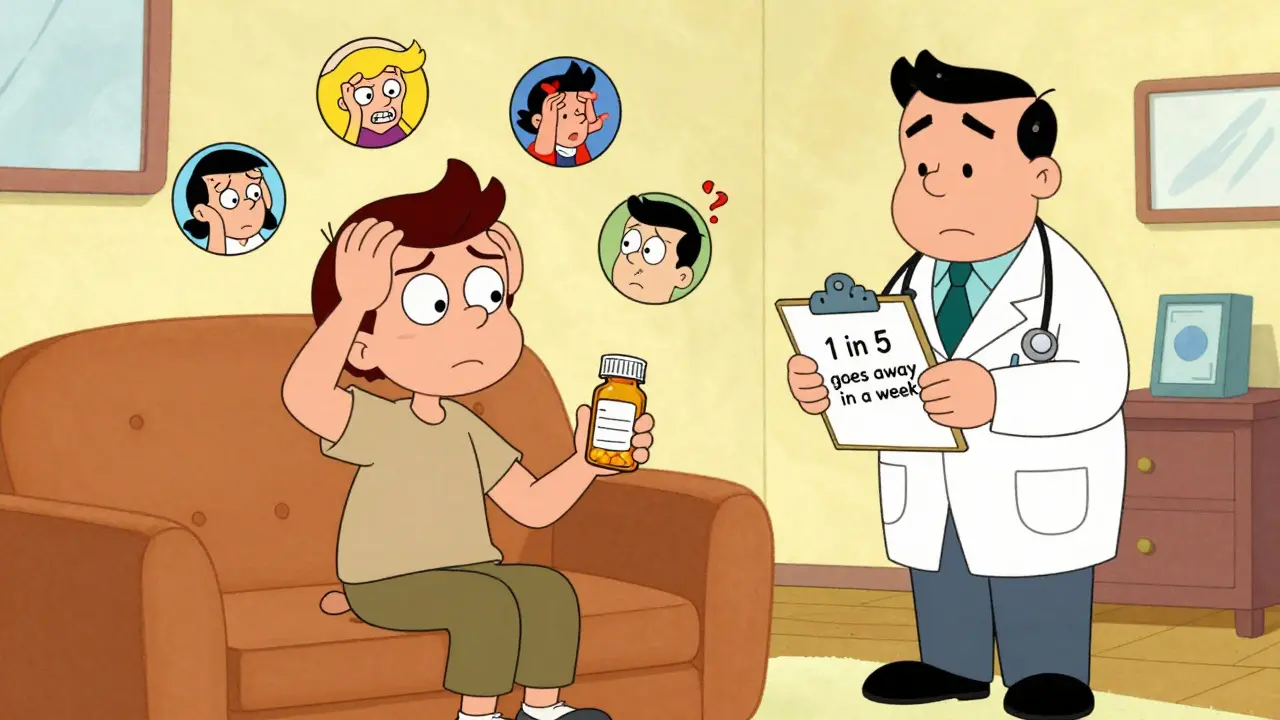
Doctors don’t skip talking about side effects because they’re careless. They’re pressed for time. In a typical 15-minute visit, they’re expected to review your blood pressure, check your labs, adjust your meds, and answer your questions-all while navigating an electronic health record. The average time spent discussing a new medication? Just under 2 minutes. But here’s the problem: when side effects aren’t clearly explained, patients don’t just forget-they misunderstand. One patient told me they stopped their blood pressure pill because they read “headache” on the label. They thought it meant “every day, all day.” In reality, it happens to 1 in 5 people-and only lasts a few days. That’s the difference between quitting a life-saving drug and sticking with it. The stakes are high. Poor communication about side effects contributes to 18% of all medication non-adherence. That’s not just about your health-it’s about hospital visits, emergency care, and even early death in chronic conditions like heart disease or diabetes.What Patients Actually Want to Know
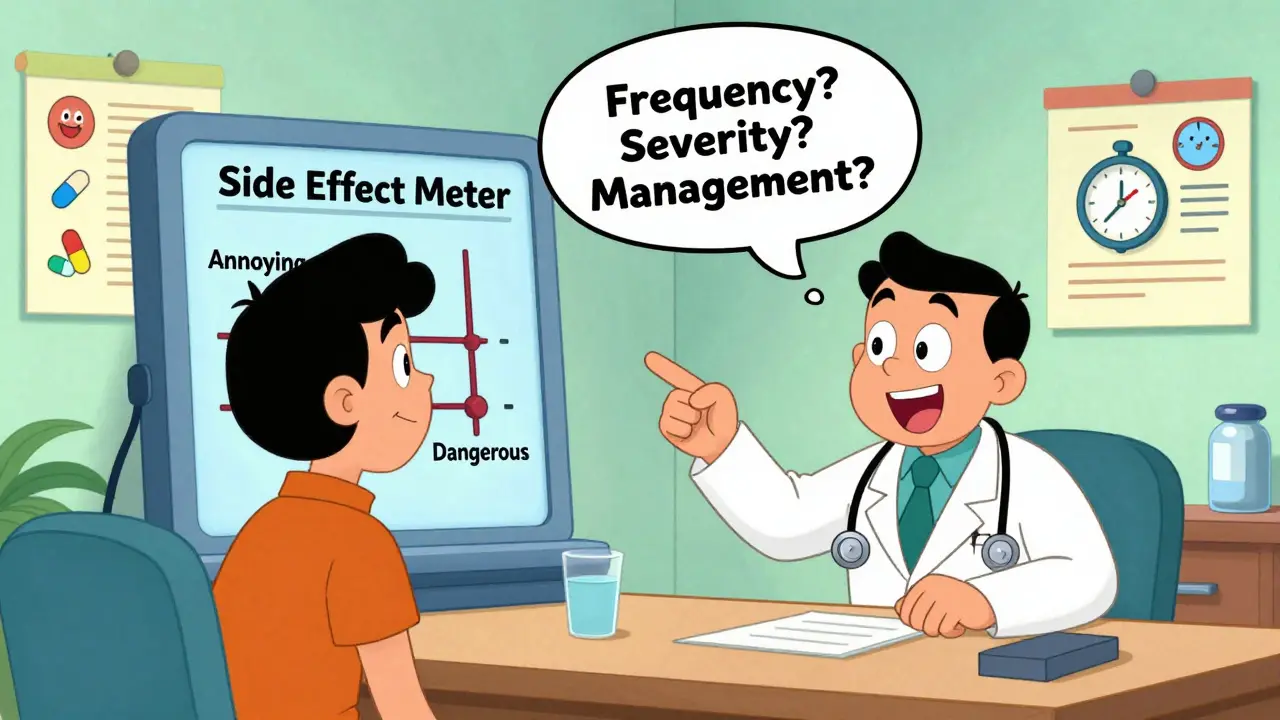
Most people assume doctors should just list every possible side effect. But research shows that’s not what helps. In fact, dumping every possible reaction-like “rare risk of liver failure” or “possible dizziness in 0.3% of users”-can make patients more anxious, not more informed. What works? Three things:- Frequency: Not just “some people get headaches.” Say “about 1 in 5 people feel a mild headache in the first week.”
- Severity: Separate the annoying from the dangerous. “Nausea is common. Liver damage is rare but serious.”
- Management: “If you get dizziness, sit down for 10 minutes. Don’t drive. It usually fades after a week.”
How to Ask the Right Questions
You don’t have to wait for your doctor to bring it up. Be direct. Here’s what to say:- “How common is this side effect?” Don’t accept “some people.” Ask for numbers: “Is it 1 in 10? 1 in 100?”
- “Is this something that goes away, or could it last?” Many side effects fade in days or weeks. Others need action.
- “What should I do if I feel this?” Don’t just wait. Know the red flags: “Call immediately if you get chest pain. If it’s just a headache, try this.”
- “Is there a way to reduce this side effect?” “Can I take it with food? At night? With a different pill?”
What Doctors Aren’t Telling You (But Should)
There’s a hidden problem called the nocebo effect. That’s when telling you about a side effect actually makes you more likely to feel it. If your doctor says, “Some people get nausea,” you might start noticing that twinge in your stomach-even if the drug isn’t causing it. That’s why smart doctors don’t just list risks. They frame them:- Instead of: “You might get diarrhea.”
- Say: “About 1 in 4 people get loose stools in the first week. It’s usually mild and goes away. If it lasts longer than 3 days, let us know.”
What to Do If You’ve Already Stopped Your Medication
If you’ve quit a drug because of side effects you didn’t expect, don’t feel guilty. You’re not alone. But now’s the time to restart the conversation. Here’s how:- Write down what happened: When did it start? How bad was it? Did you do anything that helped?
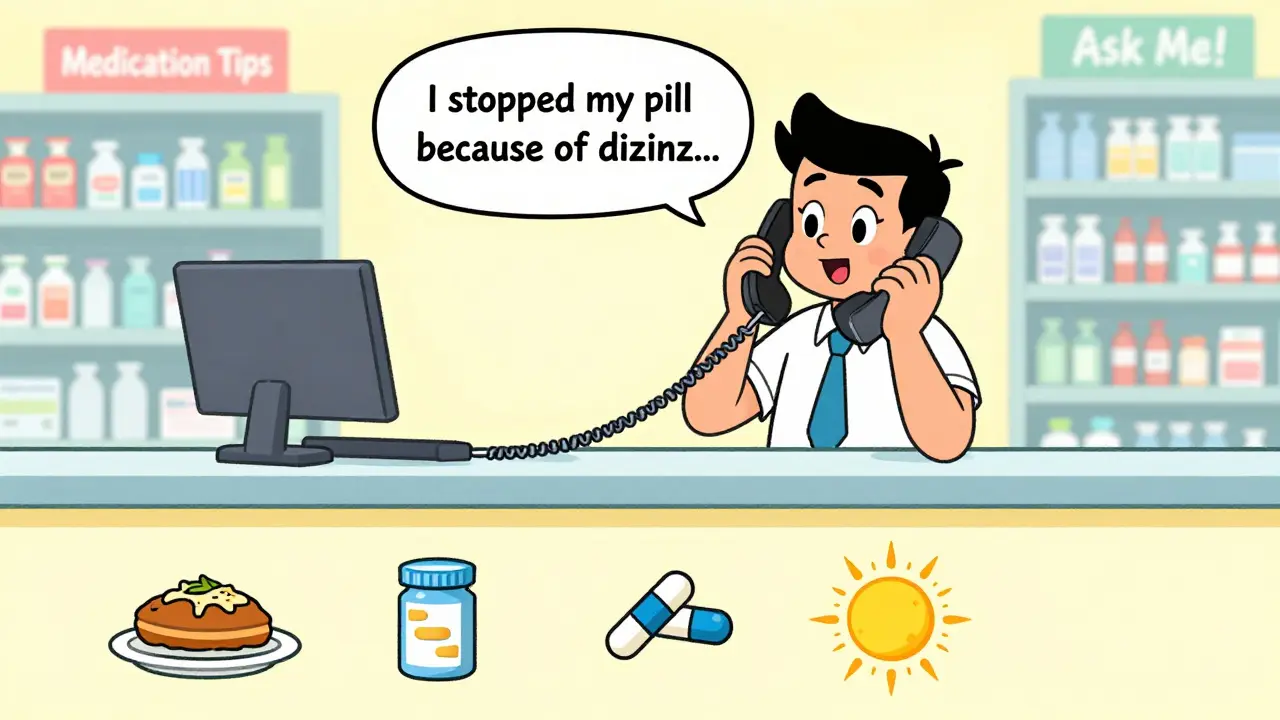
- Call your doctor’s office: Say, “I stopped my medication because I had [symptom]. I’d like to understand if it’s related and if there’s a better way to manage it.”
- Ask about alternatives: “Is there another drug that doesn’t cause this?”
- Request a follow-up: “Can we schedule a 10-minute call next week to check in?”
Tools That Actually Help
You don’t have to rely on memory. Here are practical tools you can use today:- Medication lists: Keep a simple paper or phone note with each drug, its purpose, and the side effects you were told about.
- Pre-visit questionnaires: Many clinics now ask you to fill out a form before seeing the doctor. Use it. Write: “I want to understand side effects for my new pill.”
- Pharmacist check-ins: Pharmacists spend 5-10 minutes with you when you pick up your prescription. Ask them: “What should I watch for?” They’re trained to explain this stuff.
- Electronic health portals: If your clinic has an online portal, check for side effect handouts linked to your prescriptions. Many now include videos or charts.
The Bigger Picture: Why This Isn’t Just About One Pill
Most people over 65 take 5 or more medications. That’s not just a list-it’s a web of interactions. One drug might cause dizziness. Another might make it worse. A third might hide the warning signs. That’s why side effect communication isn’t a one-time thing. It’s ongoing. Every time you get a new prescription, ask again. Every time you refill, check in. Side effects can show up weeks later. Or they can change when you add a new drug. The goal isn’t to scare you. It’s to give you control. When you know what to expect, you don’t panic. You adapt. You stay on track. And you live better.Final Thought: You’re the Boss of Your Body
Your doctor is a guide. But you’re the one living with the side effects. If something feels off, speak up. If the explanation feels vague, ask again. If you’re unsure whether a symptom is normal, call the office. You’re not being difficult-you’re being smart. The system isn’t perfect. But you have more power than you think. Ask for numbers. Ask for solutions. Ask for time. And if you don’t get it? Keep asking.How do I know if a side effect is serious or just annoying?
Serious side effects are rare but can be life-threatening-like chest pain, trouble breathing, swelling, or severe dizziness. Annoying ones are common and usually harmless-like mild headache, dry mouth, or tiredness. Your doctor should tell you which is which. If they don’t, ask: “Is this something I should call you about, or just wait and see?”
What if my doctor says, ‘It’s not a big deal’?
That’s not a valid answer. Even small side effects can make you quit your meds. Say: “I understand it’s common, but it’s affecting my daily life. Can we try a different dose, timing, or drug?” If they dismiss you again, ask for a referral to a pharmacist or specialist. You deserve to feel heard.
Can side effects get worse over time?
Yes. Some side effects appear after weeks or months, especially when you add new medications. Others get worse if you’re dehydrated, stressed, or have another health issue. That’s why it’s important to check in every time you refill a prescription-even if you feel fine.
Do I need to tell my doctor about side effects I didn’t mention before?
Absolutely. Many patients wait months to speak up because they think it’s “not important.” But doctors need the full picture. A small headache you ignored might be linked to a blood pressure issue. A nausea you thought was stress might be from a new drug. Always report it.
Is it okay to switch medications because of side effects?
Yes-if it’s done safely. Never stop cold turkey. Talk to your doctor first. Often, there’s another drug in the same class that doesn’t cause the same reaction. For example, if one statin gives you muscle pain, another might not. It’s trial and error, but you don’t have to suffer in silence.




Ryan Hutchison
January 17, 2026 AT 11:10This article is basically just telling people to be more assertive with their doctors, but let's be real-most docs don't care. I've been to 3 different clinics in the last year and every time I asked about side effects, they'd hand me a 12-page pamphlet and say 'read this.' No one's got time to read pamphlets. We need better systems, not more talking. The system is broken, and this is just Band-Aid advice for a gunshot wound.
Samyak Shertok
January 17, 2026 AT 13:43Oh wow, so now we're blaming doctors for not being personal life coaches? How quaint. In India, we don't have 15-minute visits-we have 3-minute ones, and the doctor's writing your prescription while eating his chai. You think saying '1 in 5 people get headaches' helps? Nah. You get the pill, you pray, you survive. This whole 'ask for numbers' thing is a luxury of the over-medicated West. We don't need education-we need access. And maybe less anxiety about every little burp.
Henry Ip
January 19, 2026 AT 13:27Love this. Real talk-most side effects fade fast. I was scared of my new blood pressure med because the label said 'dizziness' and I thought I'd fall over walking to the fridge. Turned out it was just for the first 3 days. Now I take it with dinner and it's fine. Just give it a week before you quit. And if you're unsure, call the pharmacy. They're way more patient than doctors.
waneta rozwan
January 20, 2026 AT 21:29Wow. Just... wow. So now we're supposed to treat our doctors like customer service reps? 'How common is this?' 'Can I get a refund?' This is why healthcare is collapsing. People don't want to be informed-they want to be coddled. You don't get to negotiate with biology. Either you take the pill or you don't. And if you're too fragile to handle a little nausea, maybe you shouldn't be on meds at all.
Nicholas Gabriel
January 22, 2026 AT 17:08Can I just say-this is the most important thing I've read all year? Seriously. I used to be the guy who quit meds after one bad night. Then I started asking: 'How long does this last?' and 'What do I do if it gets worse?' And guess what? My doctor actually listened. I even printed out the 22% stat and showed it to him. He said, 'I wish more patients did this.' So do it. Don't be shy. Your life matters more than their schedule.
Cheryl Griffith
January 23, 2026 AT 10:07I stopped my antidepressant because I thought the 'fatigue' meant I'd never have energy again. Turns out it was just the first two weeks. I felt so stupid. But I didn't go back until I had a panic attack. If you're reading this and you've quit something-don't beat yourself up. Just call your doctor. Say, 'I need help understanding what I felt.' They won't judge. They've heard it all before.
swarnima singh
January 24, 2026 AT 01:12people always say 'ask your doctor' like its so easy but what if your doctor is just a robot who reads from a script? i stopped my med because i got a headache and i thought i was gonna die. turns out it was just stress. but now i dont trust anyone. not even my pharmacist. the system is designed to make you feel crazy. and its working.
Isabella Reid
January 24, 2026 AT 22:19My mom’s on 7 meds. Every refill, we sit down and go through the side effects together. We use the pharmacy app to track what she feels each day. It’s not perfect, but it’s helped us catch two issues before they got bad. I think the real win here is consistency-not just asking once, but checking in every time. It’s like brushing your teeth. Small, regular habits save lives.
Jody Fahrenkrug
January 25, 2026 AT 12:55I just started a new med last week. Got a weird taste in my mouth. Didn’t panic. Didn’t Google it. Just wrote it down. Called my pharmacist when I picked up the next refill. They said, 'Yeah, that’s common. Drink more water.' Done. No drama. No guilt. Just simple. This article? Yeah. It’s just good sense.