
What Happens When the FDA Shows Up at Your Generic Drug Facility
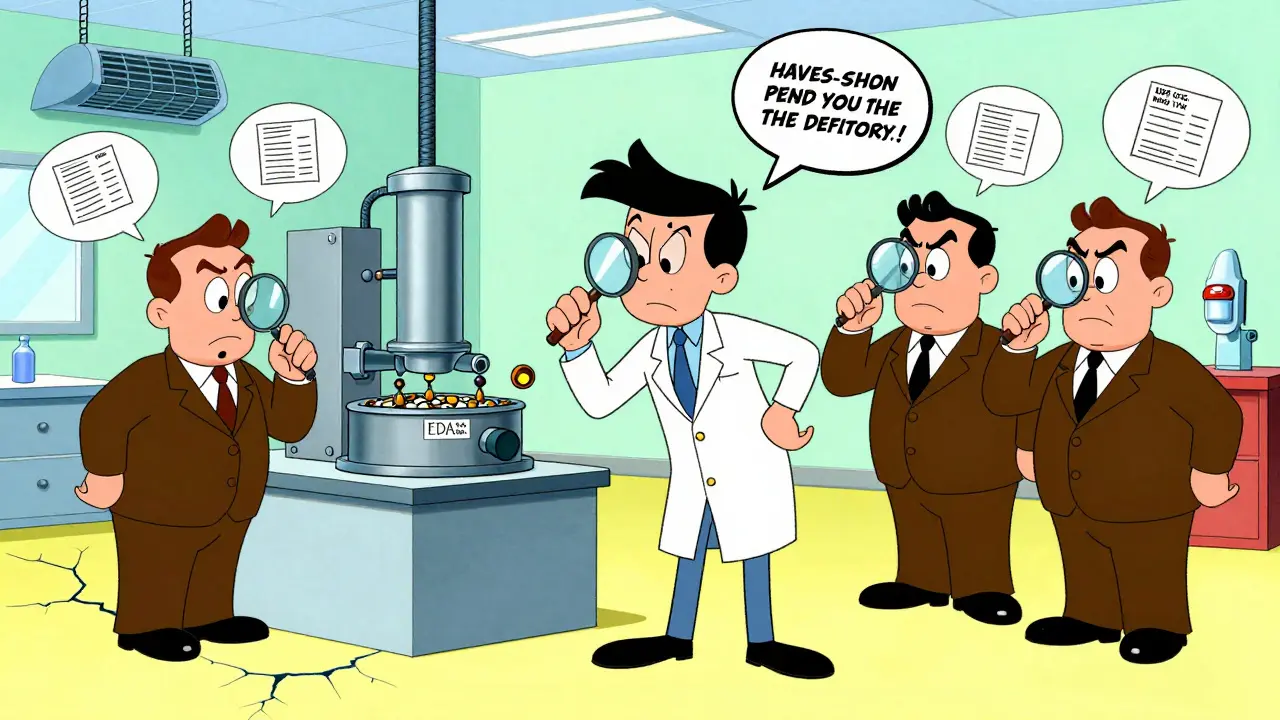
If you run a generic drug manufacturing plant, you know the FDA can show up anytime-no warning, no notice. It’s not a surprise visit meant to trap you. It’s a routine check to make sure your pills, capsules, and injectables are safe, consistent, and made the way they’re supposed to be. The FDA doesn’t inspect every facility every year. But if your site has had past issues, makes high-risk drugs, or gets a complaint from a patient, your name goes to the top of the list. And if you’re applying to sell a new generic drug in the U.S., you’re guaranteed an inspection before approval.
The Six Systems the FDA Checks Every Time
Every FDA inspection follows the same structure: the 6-System approach. These aren’t random areas-they’re the core of how you make medicine. The FDA looks at Quality, Facilities & Equipment, Materials, Production, Packaging & Labeling, and Laboratory Control. And here’s the catch: they always check the Quality System first. Why? Because if your quality culture is weak, everything else falls apart.
Let’s break it down. The Quality System means you have a dedicated team-separate from production-that can say no. They review every deviation, every failed test, every change in process. If your quality unit doesn’t have real authority, the FDA will flag it under 21 CFR 211.22(a). That’s one of the most common violations.
Facilities & Equipment? They’ll walk through your cleanrooms. Are the floors cracked? Are the HVAC filters changed on schedule? Is the water system tested daily for purity? They’ll check equipment logs. Did that tablet press get cleaned properly after the last batch? Was it qualified after the last repair? If you can’t prove it, they’ll write it down.
What They Look for in Your Records
It’s not just about what’s happening now. The FDA digs into your paper trail. They want to see:
- Deviation reports-every time something went wrong, and how you fixed it
- Non-conformance logs-raw materials that didn’t meet specs
- Equipment qualification records-proof your machines work the way you say they do
- Supplier approvals-where did your active ingredients come from? Did you test them?
- Process validation-did you prove your manufacturing method works consistently?
- Stability data-were your finished products stored under the exact conditions you told the FDA?
- Analytical method validation-can your lab actually measure the drug accurately?
They’ll ask to see the original data-not summaries. If your lab uses electronic records, they’ll check for audit trails. Did someone delete a failed test? Did someone change a result after the fact? Data integrity is now the #1 focus. A single manipulated record can sink your entire inspection.
Pre-Approval Inspections: The Make-or-Break Moment
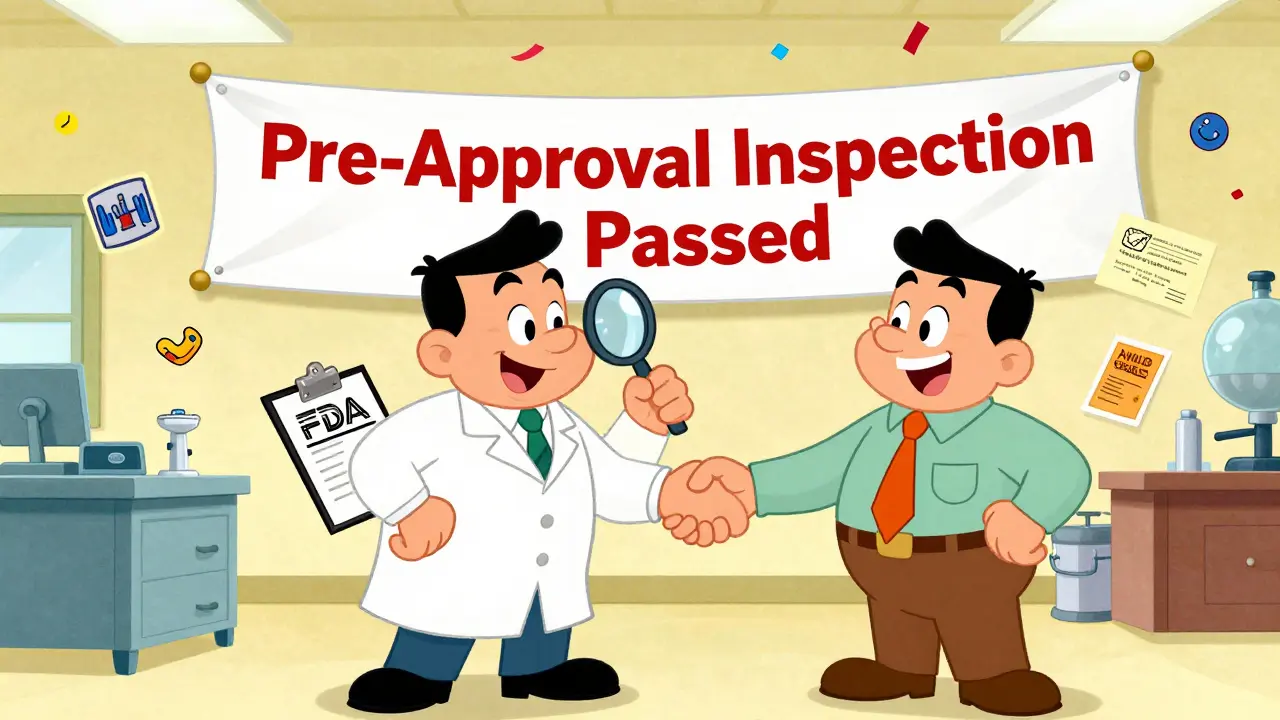
If you’re submitting a new generic drug application, you’re not just waiting for approval-you’re waiting for the FDA to confirm your facility can actually make it. This is called a Pre-Approval Inspection (PAI). It’s not a formality. It’s a deep dive.
The inspectors ask three questions:
- Can this facility produce the drug exactly as described in your application?
- Is the information you submitted backed up by your actual records?
- Is everything complete and accurate-or did you leave something out?
They’ll compare your application to your facility layout, your SOPs, your equipment manuals. They’ll check if your analytical methods match what you filed. They’ll pull a stability sample from your storage room and verify the temperature log. If your application says the drug is stored at 2-8°C, but your fridge is set to 10°C? That’s a problem. Even if the drug is fine, the inconsistency raises red flags.
The FDA 483: What It Means When They Hand You a Form
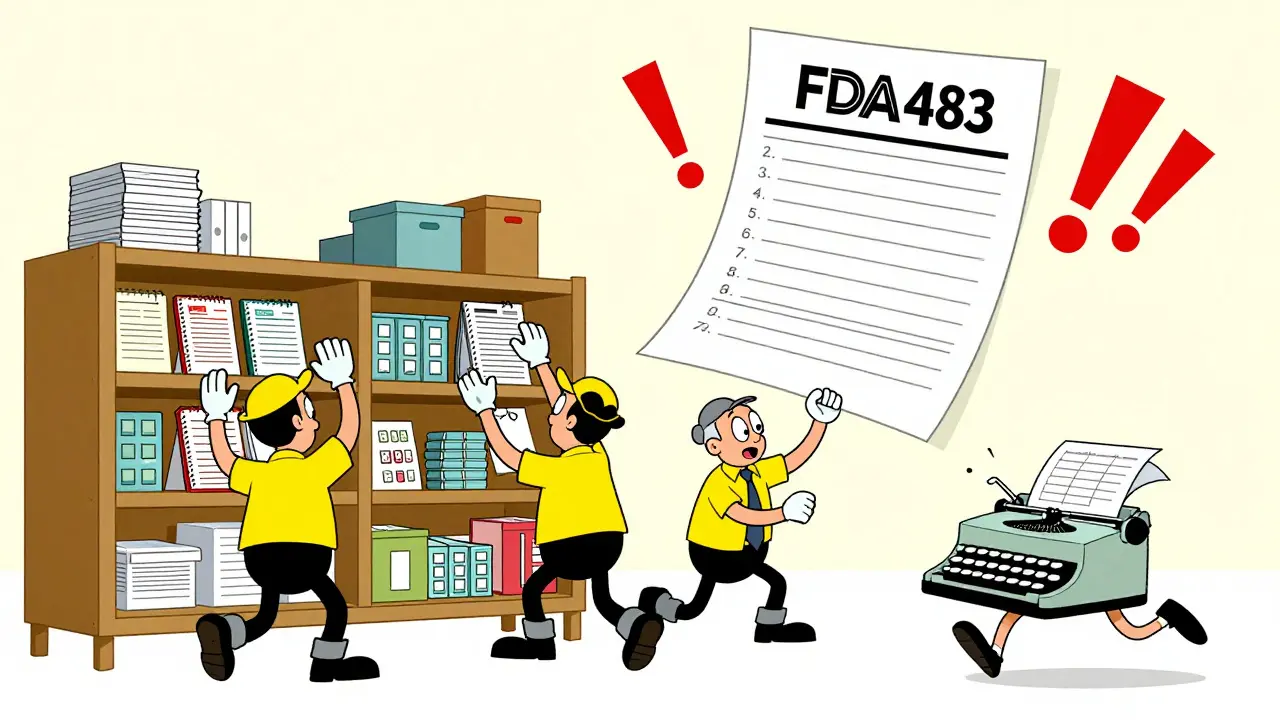
If the inspectors find issues, they’ll give you Form FDA 483. This isn’t a citation. It’s not a fine. It’s a list of observations-things they saw that don’t meet CGMP standards. They list them in order of seriousness. The first item is usually the biggest concern.
Common 483 items:
- Lack of documented investigation into failed tests
- Unvalidated cleaning procedures
- Missing or incomplete batch records
- Inadequate training records
- Unapproved changes to manufacturing processes
You have 15 business days to respond. Your response isn’t just an apology. It needs to show you understand the problem, why it happened, and how you’re fixing it permanently. A weak response like “we’ll train our staff better” won’t cut it. You need a root cause analysis. You need a timeline. You need proof the fix works.
What Happens After the Inspection
The FDA doesn’t just walk out and forget you. They write a full report called the Establishment Inspection Report (EIR). This becomes part of your permanent record. If your facility is found to be in a “state of control”-meaning everything’s running as it should-you’re good. If not, they may issue a warning letter. That’s serious.
Warning letters mean you’re on the FDA’s radar. They’ll come back. And if you don’t fix the issues, they can block your product from entering the U.S. market. You might even face import alerts-your shipments get stopped at the border.
But there’s good news. More than 90% of inspections result in acceptable compliance. Most companies get it right. The ones that don’t? They’re usually trying to cut corners on documentation or ignore quality culture. The FDA isn’t out to shut you down. They want you to make safe medicine. They just need proof you’re serious about it.
How to Get Ready-Without Panicking
You don’t wait until the FDA knocks. You stay ready every day. Here’s what works:
- Run mock inspections. Bring in an outside expert to walk through your facility like the FDA would. Record everything. See where your gaps are.
- Keep your facility clean and organized. Clutter hides problems. If your warehouse is a mess, they’ll assume your quality system is too.
- Train your staff to speak up. If someone notices a problem, they need to know how to report it. No fear of retaliation.
- Update your SOPs regularly. If your procedures are outdated, your inspections will be too.
- Use the PreCheck program. If you’re building a new facility or scaling up, the FDA now offers early feedback during design and construction. Submit a Type V Drug Master File. Get their input before you spend millions.
The best facilities don’t prepare for inspections. They live by them. Every day. Every batch. Every record. That’s how you build trust.
The Bigger Picture: Why This Matters
Generic drugs make up 90% of all prescriptions filled in the U.S. But they’re not cheap because they’re low quality. They’re cheap because competition drives prices down-and the FDA ensures they’re just as safe as brand-name drugs.
When the FDA inspects a facility in India, China, or the U.S., they’re protecting patients everywhere. A single batch of contaminated generic medicine can hurt thousands. That’s why the process is so strict. It’s not about control. It’s about safety.
And the FDA knows this. That’s why they’ve added programs like PreCheck and post-warning letter meetings. They’re not just enforcers-they’re partners in quality. If you’re committed, they’ll help you get there.


Alec Amiri
January 22, 2026 AT 23:27Akriti Jain
January 24, 2026 AT 20:17Kenji Gaerlan
January 25, 2026 AT 19:56Patrick Roth
January 25, 2026 AT 22:59Tatiana Bandurina
January 26, 2026 AT 09:10Keith Helm
January 27, 2026 AT 19:15Neil Ellis
January 27, 2026 AT 22:46Rob Sims
January 28, 2026 AT 02:27Philip House
January 28, 2026 AT 19:37Daphne Mallari - Tolentino
January 28, 2026 AT 20:13Oren Prettyman
January 29, 2026 AT 00:42