
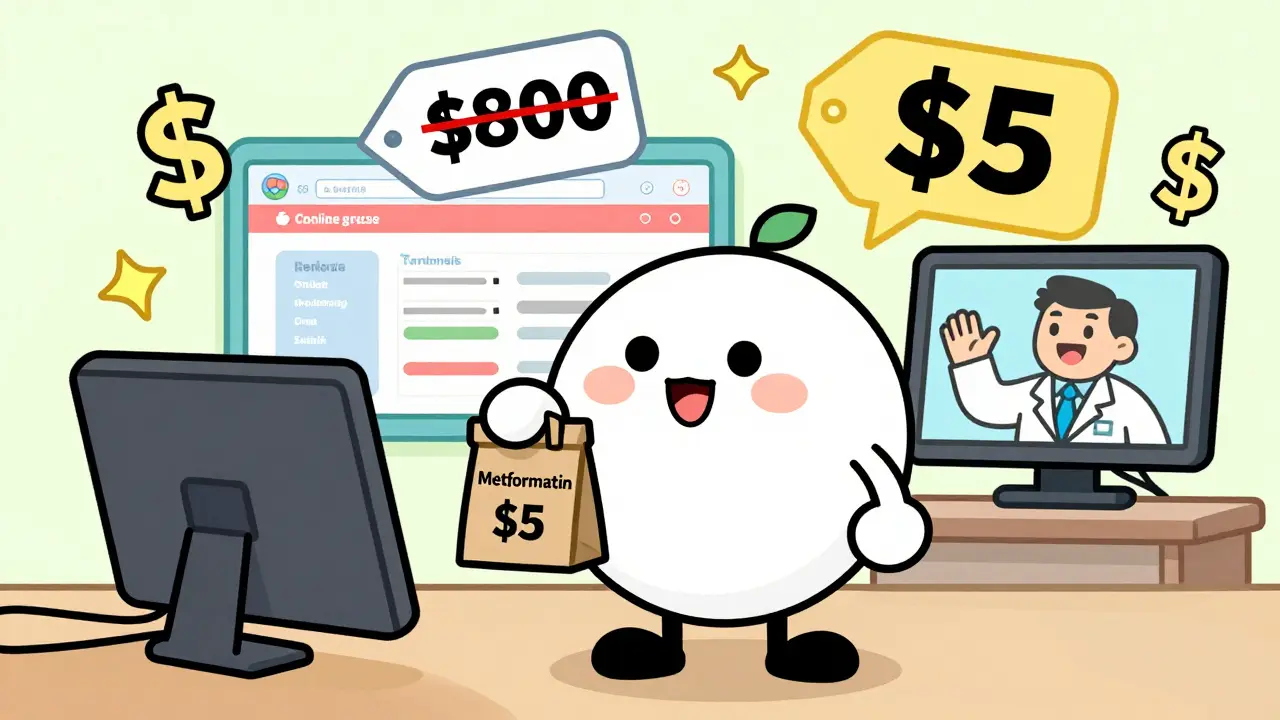
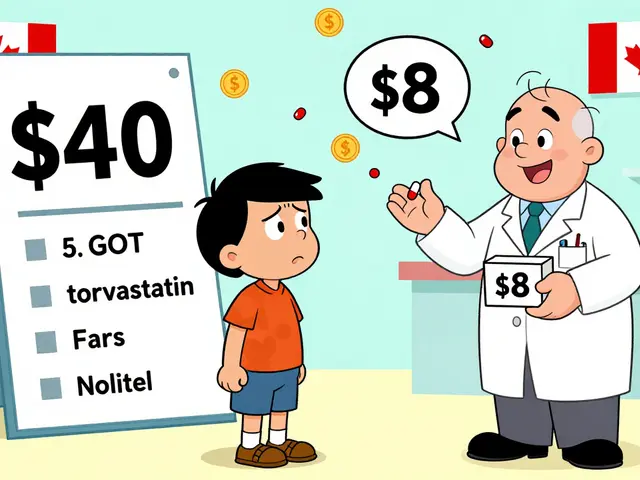
When you need a generic medication like metformin, lisinopril, or atorvastatin, you might think your insurance is the best deal. But what if you could pay less by skipping insurance altogether? That’s the promise of direct-to-consumer generic pharmacies-online services that sell meds at cost-plus prices, no insurance needed. Sounds too good to be true? It’s not. But it’s not a magic bullet either.
What Exactly Are Direct-to-Consumer Pharmacies?
These are online pharmacies that sell generic drugs directly to you, without going through your insurance company or a pharmacy benefit manager (PBM). No copays. No formularies. No hidden rebates. You pay cash, and the price is clear upfront.
Companies like Mark Cuban Cost Plus Drug Company, Amazon Pharmacy, Costco, Walmart, and Health Warehouse built these models between 2020 and 2021. They’re not trying to replace your insurance-they’re trying to fix the broken system that makes $500 pills for drugs that cost $2 to make.
Mark Cuban’s company, for example, adds just 15% to the actual cost of the drug. No middlemen. No negotiated discounts that never reach you. That’s why some people are saving hundreds of dollars per month.
Where Do You Save the Most?
Not all drugs are created equal. The biggest savings come from expensive generics-the ones that still cost $100 to $800 a month even though they’ve been off-patent for years. Think drugs like nateglinide, pramlintide, or insulin analogs that aren’t technically brand-name but still carry premium prices.
A 2024 study in the Journal of General Internal Medicine looked at 88 of these high-cost generics. Here’s what they found:
- Amazon Pharmacy had the lowest price on 47% of them
- Mark Cuban Cost Plus Drug Company had the best price on 26%
- Costco won on 13%
- Health Warehouse had the lowest price on 14%
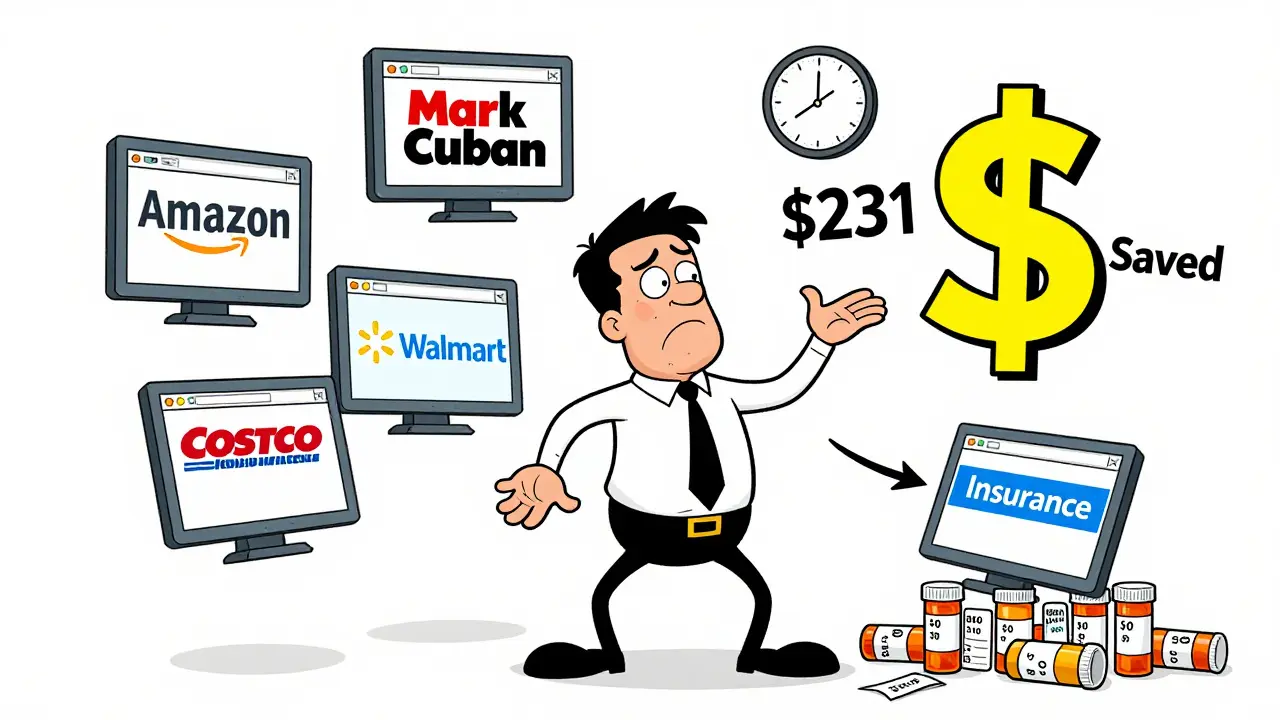
The median savings? $231 per prescription. That’s a 76% drop compared to what you’d pay at a regular pharmacy using GoodRx. For someone taking three of these drugs a month, that’s over $700 saved in a single month.
But here’s the catch: these savings vanish for common generics. For drugs like lisinopril, simvastatin, or levothyroxine, the savings are much smaller-around $19 per prescription. At that point, your insurance copay might be $10 or even $0. So why bother?
Why Insurance Sometimes Beats Cash Pay
It’s not as simple as “cash is always cheaper.” If you’re on a good insurance plan, your copay for common generics might be lower than what you’d pay at any DTC pharmacy. A 2023 study by CVS Health’s research team looked at 79 neurological generics. They found that for most of them, insured patients paid less out-of-pocket than they would if they bought the same drugs directly.
Mark Cuban’s pharmacy only carried 33 of the 79 drugs. Of those 33, only two were cheaper than what insured patients paid. That’s not a fluke. Many DTC pharmacies don’t stock specialty or less common generics. If your doctor prescribes a drug that’s not on their list, you’re out of luck.
And here’s the real kicker: one in five of the most expensive generics aren’t available at any DTC pharmacy. That means if you need one of those, your insurance might be your only option.
Who Benefits the Most?
There’s no one-size-fits-all answer. But here’s who wins big:
- The uninsured-If you’re paying full retail, DTC pharmacies are often the cheapest option by far.
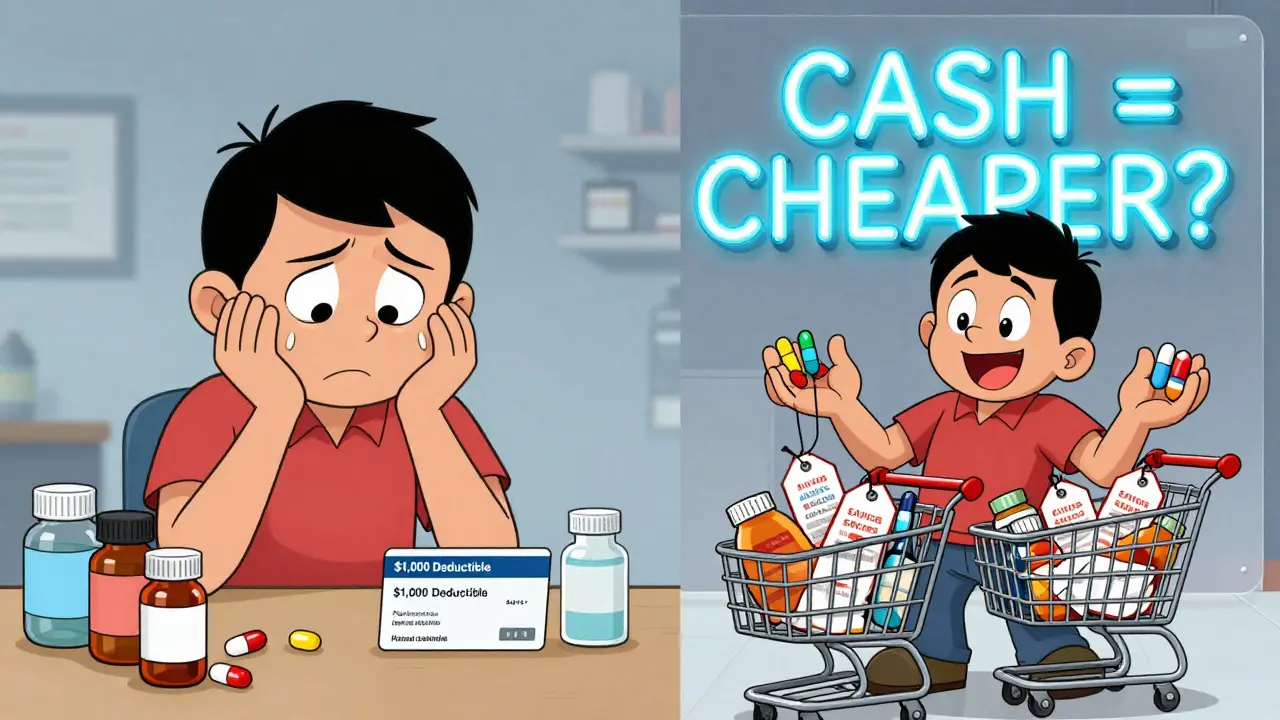
- People with high-deductible plans-If you haven’t met your deductible yet, paying cash might be cheaper than your $100 copay.
- People taking multiple expensive generics-If you’re on three or four high-cost drugs, the savings add up fast.
- People who don’t mind shopping around-You have to check Amazon, Mark Cuban, Costco, and Walmart for each drug. It’s not automatic.
Who loses?
- People on good insurance plans-Your copay might already be $5 or free. Why spend 20 minutes comparing prices?
- People on complex regimens-If you take 10 different meds, checking each one across five sites is a full-time job.
- People who need rare or specialty generics-If your drug isn’t stocked, you’re back to square one.
The Time Cost of Saving Money
Saving $200 on a prescription sounds great-until you realize you have to check five different websites, compare dosages, verify shipping times, and make sure the pharmacy ships to your state. And you have to do this every time your prescription renews.
There’s no app that tells you, “This drug is cheapest at Amazon today.” No tool that compares your insurance copay to all DTC options in real time. You’re on your own.
That’s why many people stick with their local pharmacy-even if it’s more expensive. Convenience matters. If you’re managing diabetes, heart disease, and depression, you don’t want to spend your Sunday afternoon playing pharmacy detective.
What About Costco and Walmart?
Costco and Walmart aren’t DTC pharmacies in the same way as Mark Cuban’s or Amazon’s. They’re brick-and-mortar stores with online options. But they’ve quietly become the most reliable cash-pay options for most people.
According to USC Schaeffer Center data, 90% of commonly prescribed generics in Medicare Part D cost less than $20 for a 30-day supply at Costco. That’s cheaper than most insurance copays. And you don’t need a membership to buy online.
Walmart’s $4 list still exists for many generics. Amazon Pharmacy has been aggressive with pricing, but delivery can take 3-5 days. Mark Cuban’s site is transparent but has a limited selection. Health Warehouse is reliable but slower to update prices.
The truth? For common drugs, you’re better off checking Costco or Walmart first. For expensive ones, check Amazon and Mark Cuban. And always compare with your insurance’s price.
What Should You Do?
Here’s a simple plan:
- Find out what your insurance copay is for your meds. Call your pharmacy or check your plan’s website.
- Search for each drug on Amazon Pharmacy, Mark Cuban Cost Plus Drug Company, and Costco’s online pharmacy.
- Compare the cash prices. Don’t forget to factor in shipping.
- If the cash price is lower than your copay, buy it cash. If not, use your insurance.
- Do this every time you refill. Prices change monthly.
It’s not glamorous. But if you’re paying hundreds a month for meds, it’s worth the 15 minutes.
The Bigger Picture
DTC pharmacies aren’t the future of pharmacy care. They’re a symptom of a broken system. They exist because PBMs and insurers let drug prices spiral out of control. They’re not fixing the problem-they’re giving you a workaround.
But for now, they’re the best tool we have to fight back. If you’re paying full price, you’re being overcharged. If you’re on insurance and your copay is high, you might be leaving money on the table.
Knowledge is power. And in this case, knowing where to buy your pills can save you hundreds-or even thousands-each year.

Shanna Sung
January 4, 2026 AT 03:27Brendan F. Cochran
January 4, 2026 AT 23:12jigisha Patel
January 6, 2026 AT 22:49Ethan Purser
January 8, 2026 AT 09:20Doreen Pachificus
January 10, 2026 AT 03:54en Max
January 11, 2026 AT 13:54Angie Rehe
January 12, 2026 AT 12:09Enrique González
January 12, 2026 AT 17:54Aaron Mercado
January 13, 2026 AT 10:02saurabh singh
January 13, 2026 AT 14:33Dee Humprey
January 15, 2026 AT 00:13Jay Tejada
January 16, 2026 AT 01:06Allen Ye
January 17, 2026 AT 16:55mark etang
January 19, 2026 AT 16:26